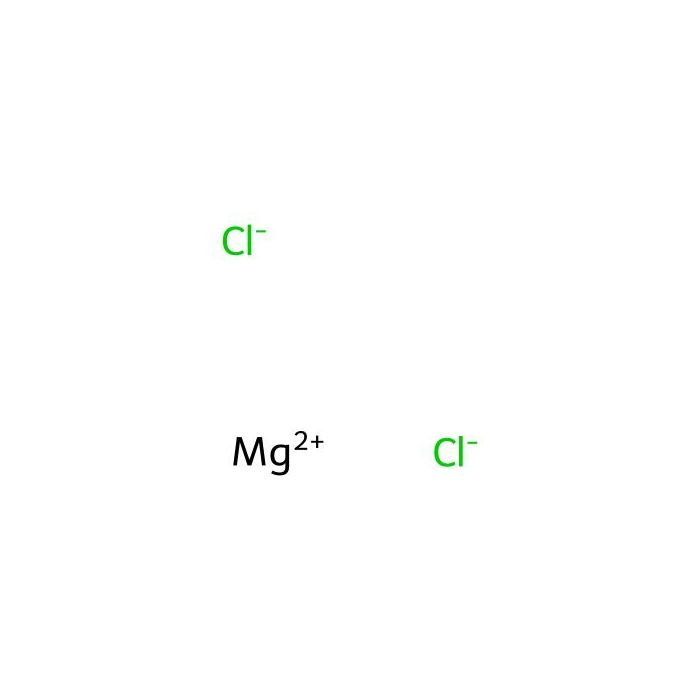
Magnesium chloride solution - Suitable for molecular biology, 1.00 M±0.01 M , CAS No.7786-30-3

CAS: 7786-30-3 Cat. No.: M434106 Formula: MgCl2 Molecular Weight: 95.21 EC Number: 232-094-6
AVAILABLE TO ORDER
GRADE & PURITY Suitable for molecular biology ? Molecular-biology grade — free of nucleases and contaminants that degrade DNA/RNA. Use in cloning, PCR, and nucleic-acid work needing clean reagents. 1.00 M±0.01 M
Synonyms
magnesium(II) chloride|MAGNESIUM CHLORIDE [MI]|Magnesium chloride anhydrous|magnesium(II)chloride|4,4 inverted exclamation mark -dichlorobenzophenone|Cramp-Z|Fibro Flex|bis(4-chlorophenyl)-methanol|MAGNESIUM CHLORIDEDietary Supplement|MAGNESIUM CHLORIDE [WHO-DD]|Benzophenone,4'-dimethoxy-|Magnesiumchlorid|Chloride, Magnesium|USEPA/OPP Pesticide Code: 013902|magnesium (II) chloride|[MgCl2]|Anhydrous magnesium chloride|MAGNESIUM CHLORIDE ANHYDROUS [HSDB]
Storage
Room temperature
★
Size
USA
Germany (EU)*
Price
Qty
10×1ml
M434106-10×1ml
Made to order · 8–12 wks

$117.90

$138.90
Save $21.00 (15.12%)
100ml
M434106-100ml
Made to order · 8–12 wks

$227.90

$265.90
Save $38.00 (14.29%)
Enter a quantity for the sizes you want to add.

Overview

Magnesium is a typical ionic halide, and is very soluble in water. Magnesium has a variety of biological roles in enzymology, cell membrane/wall structure, muscle cell physiology, and nucleic acid structure. Magnesium is an essential co-factor in many enzymes, including DNAse, some restriction enzymes, and Ribonuclease H. Magnesium chloride is widely used to supply the magnesium ion in various molecular biology applications, including PCR reactions.


Application

Magnesium chloride is widely used to supply the magnesium ion in various molecular biology applications, including PCR reactions and buffers. It was used to prepare buffer to lyse cells for immunoprecipitation and to prepare serum-free medium for electrophysiological studies of rat brain slice cultures.

Specifications

Synonyms
magnesium(II) chloride | MAGNESIUM CHLORIDE [MI] | Magnesium chloride anhydrous | magnesium(II)chloride | 4,4 inverted exclamation mark -dichlorobenzophenone | Cramp-Z | Fibro Flex | bis(4-chlorophenyl)-methanol | MAGNESIUM CHLORIDEDietary Supplement | MAGNESIUM CHLORIDE [WHO-DD] | Benzophenone,4'-dimethoxy- | Magnesiumchlorid | Chloride, Show more
Specifications & Purity
Suitable for molecular biology, 1.00 M±0.01 M
Storage
Room temperature
Grade
Suitable for molecular biology
Names and Identifiers
Isomeric SMILES
Cl[Mg]Cl
WGK Germany
1
Molecular Weight
95.21

Advanced Data

Certificates (CoA,COO,BSE/TSE and Analysis Chart)
C of A & Other Certificates(BSE/TSE, COO):
Analytical Chart:

Find and download the COA for your product by matching the lot number on the packaging.

5 results found

Lot NumberCertificate TypeDateItem
E2627001E2627001Certificate of AnalysisMay 28, 2026 M434106
A2605416A2605416Certificate of AnalysisJan 13, 2026 M434106
I2504004I2504004Certificate of AnalysisSep 11, 2025 M434106
E2521117E2521117Certificate of AnalysisMay 23, 2025 M434106
D2411115D2411115Certificate of AnalysisApr 17, 2024 M434106
Chemical and Physical Properties
Boil Point(°C)1412°C
Melt Point(°C)714°C
Molecular Weight95.210 g/mol
XLogP3
Hydrogen Bond Donor Count0
Hydrogen Bond Acceptor Count2
Rotatable Bond Count0
Exact Mass93.9227 Da
Monoisotopic Mass93.9227 Da
Topological Polar Surface Area0.000 Ų
Heavy Atom Count3
Formal Charge0
Complexity0.000
Isotope Atom Count0
Defined Atom Stereocenter Count0
Undefined Atom Stereocenter Count0
Defined Bond Stereocenter Count0
Undefined Bond Stereocenter Count0
The total count of all stereochemical bonds0
Covalently-Bonded Unit Count3
Documents & Articles
Molecular Biology Grade
Differences Between Transformation and Transfection
CRISPR Gene-Editing Therapies
FAQ on Molecular Interaction Assays
RNA Pull-Down Standard Operating Procedure (SOP)
Electrophoretic Mobility Shift Assay (EMSA) Standard Operating Procedure (SOP)
Alkaline Phosphatase (AP) and Horseradish Peroxidase (HRP) Colorimetric Detection Systems—A Complete Guide: Mechanisms of Soluble Colorimetric vs. Precipitating Substrates, Selection, and Troubleshooting (with Product Navigator Tables 1–3)
Practical Guide to Sodium Carboxymethyl Cellulose (CMC-Na): Thickening/Stabilizing Mechanisms, Key Controls for Solution Preparation, and Selection Navigation (including Table 1 and Tables A–C)
A Review of Ten Commonly Used Techniques for Detection, Quantification, and Interaction Analysis in Nucleic Acid Research
Selection of Common Research Salts: A Task Map for Alkali Metal Salts & Alkaline Earth Metal Salts (with Product Tables 1–6)
Deoxyribonuclease (DNase): DNA Hydrolytic Cleavage Properties, Methodological Value, and Multi-Context Applications
EMSA PAGE Precast Gels: Principle Alignment, Performance Advantages, and Application Scenarios
Micrococcal Nuclease (MNase): A Technical Review of Enzymatic Properties, Reaction Control, and Research and Biomanufacturing Applications
Hemicellulases: A Review of Substrate Specificity, Catalytic Systems, and Research and Industrial Applications
Chitinases: Substrate-Specific Degradation Mechanisms, Enzymatic Properties, and Application Directions
Review of Glucose-6-phosphate Dehydrogenase (G6PD): Structural Features, Metabolic Functions, and Research Applications
From Sucrose to Monosaccharides: Key Enzymatic Nodes and Regulatory Logic in Sugar Conversion
Sulfation Landscape Remodeling and Its Biological Effects
Acetyl-Group Metabolic Enzyme Network and In Vitro Enzymology Analysis
Metabolic Basis and Research Framework of Glycerol Utilization and Metabolic Reprogramming
The Positioning of pNPP in ALP Testing: Quantitative Detection Logic, Application Scenarios, and Selection Criteria
Selection Logic, Operating Parameters, and Application Boundaries of Common Cell Culture Coating Solutions
Experimental Judgment in mRNA In Vitro Transcription: Template Design, 5′ Capping, and dsRNA Control
Comparison of Magnesium (Mg) Content Detection Methods: Principles and Application Selection of Titration, Colorimetry, AAS, ICP-OES, and ICP-MS
Protocol for Phosphoglucose Isomerase (PGI) Activity Assay
Mutant Library Construction, Screening, and Performance Optimization in Protein-Directed Evolution
Regioselective Deprotonative Metalation of Pyridines: C–H Acidity, Coordination Effects, and Metal Systems
Citations of This Product
Solution Calculators
Reviews

Customer Reviews

Frequently Asked Questions

What does Suitable for molecular biology mean?
Suitable for molecular biology indicates that the product has been processed and tested for molecular biology and proteomics. Typical specifications include low or undetectable nuclease/protease activity, low endotoxin, controlled microbial limits and high lot-to-lot reproducibility.
How should this product be stored?
Store at room temperature.
What are the CAS number, molecular formula and molecular weight?
The CAS Number is 7786-30-3, the molecular formula is MgCl2, and the molecular weight is 95.21 g/mol.
What documentation is provided?
Available product documentation, including Certificates of Analysis (COA), Safety Data Sheets (SDS), and specification sheets, is shown in the product document area. Document availability and access follow the current site policy.

Shall we send you a message when we have discounts available?

Remind me later

Thank you! Please check your email inbox to confirm.

Oops! Notifications are disabled.