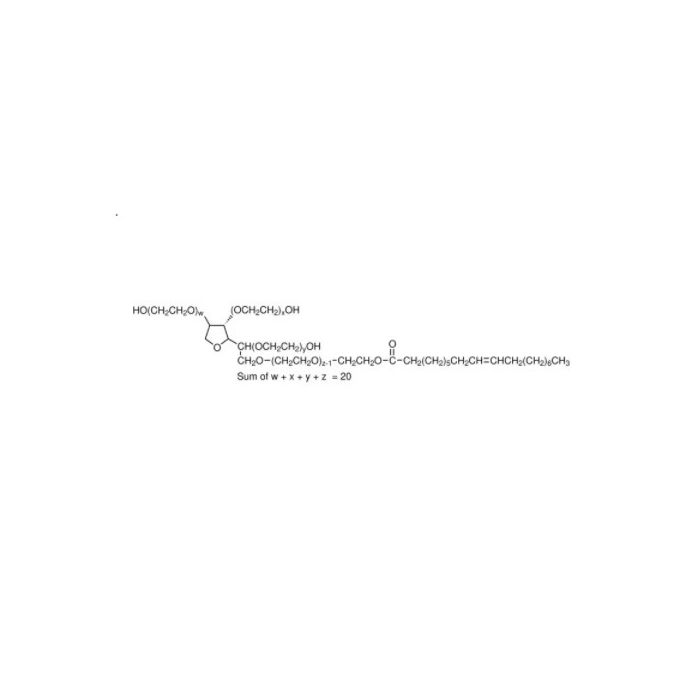
Tween 80 - for cell culture , CAS No.9005-65-6

CAS: 9005-65-6 Cat. No.: T118633 EC Number: 500-019-9
AVAILABLE TO ORDER
GRADE & PURITY for Cell culture ? Cell-culture grade — low endotoxin and contaminants to support viable cell growth. Use in mammalian/other cell culture media and supplements.
Synonyms
2-[2-[3,4-bis(2-hydroxyethoxy)oxolan-2-yl]-2-(2-hydroxyethoxy)ethoxy]ethyl octadec-9-enoate | DTXSID10864155 | 2-{2-[3,4-Bis(2-hydroxyethoxy)tetrahydro-2-furanyl]-2-(2-hydroxyethoxy)ethoxy}ethyl 9-octadecenoate | MFCD00082107
Storage
Room temperature
Shipped In
Normal
★
Size
USA
Germany (EU)*
Price
Qty
500ml
T118633-500ml
5 In stock
—
$46.90
Enter a quantity for the sizes you want to add.
🧪
Why this grade

for cell culture for Cell culture for sensitive chromatographic and analytical workflows requiring minimal baseline interference.

🌡

Storage & shipping

Room temperature Ships Normal Check lot-specific COA for exact specifications.

📋

Quality documents

SDS, COA, datasheet, and spec sheet available for download. Lot-specific COA accessible via lot number lookup.

📚

Literature proof

Cited in 641 peer-reviewed publications across chromatography, organic synthesis, and cross-coupling reactions.

Overview

Non-ionic detergent used for selective protein extraction and isolation of nuclei from mammalian cell lines. 

Specifications

Synonyms
2-[2-[3,4-bis(2-hydroxyethoxy)oxolan-2-yl]-2-(2-hydroxyethoxy)ethoxy]ethyl octadec-9-enoate | DTXSID10864155 | 2-{2-[3,4-Bis(2-hydroxyethoxy)tetrahydro-2-furanyl]-2-(2-hydroxyethoxy)ethoxy}ethyl 9-octadecenoate | MFCD00082107
Specifications & Purity
for cell culture
Storage
Room temperature
Shipped In
Normal
Grade
for Cell culture
Names and Identifiers
Pubchem Sid
Pubchem Sid Url
https://pubchem.ncbi.nlm.nih.gov/substance/508812884
Canonical Smiles
CCCCCCCC/C=C/CCCCCCCC(=O)OCCOCC(C1C(CC(O1)OCCO)OCCO)OCCO
IUPAC Name
2-[2-[3,4-bis(2-hydroxyethoxy)oxolan-2-yl]-2-(2-hydroxyethoxy)ethoxy]ethyl octadec-9-enoate
InChIKey
HDTIFOGXOGLRCB-UHFFFAOYSA-N
INCHI
1S/C32H60O10/c1-2-3-4-5-6-7-8-9-10-11-12-13-14-15-16-17-30(36)40-25-24-37-26-28(38-21-18-33)32-31(41-23-20-35)29(27-42-32)39-22-19-34/h9-10,28-29,31-35H,2-8,11-27H2,1H3
Isomeric SMILES
CCCCCCCCC=CCCCCCCCC(=O)OCCOCC(C1C(C(CO1)OCCO)OCCO)OCCO
WGK Germany
1

Documentation

📋 Safety Data Sheet (SDS)

Comprehensive hazard, handling, storage, and regulatory compliance document.

Download SDS →

✅ Certificate of Analysis (COA)

Lot-specific quality data. Enter your lot number to retrieve the exact COA.

Look up COA →

📊 Datasheet

Quick-reference summary of product specifications and applications.

View datasheet →

🔬 Specification Sheet

Full quality attributes and acceptance criteria for this grade.

View spec sheet →

Advanced Data

Taxonomic Classification

Taxonomy Tree

KingdomOrganic compounds
SuperclassLipids and lipid-like molecules
ClassFatty Acyls
SubclassFatty acid esters
Intermediate Tree Nodes Not available
Direct ParentFatty acid esters
Alternative Parents Oxolanes  Carboxylic acid esters  Oxacyclic compounds  Monocarboxylic acids and derivatives  Dialkyl ethers  Primary alcohols  Organic oxides  Hydrocarbon derivatives  Carbonyl compounds  
Molecular FrameworkAliphatic heteromonocyclic compounds
Substituents Fatty acid ester - Oxolane - Carboxylic acid ester - Carboxylic acid derivative - Dialkyl ether - Ether - Monocarboxylic acid or derivatives - Organoheterocyclic compound - Oxacycle - Organic oxide - Carbonyl group - Alcohol - Organooxygen compound - Hydrocarbon derivative - Primary alcohol - Organic oxygen compound - Aliphatic heteromonocyclic compound
DescriptionThis compound belongs to the class of organic compounds known as fatty acid esters. These are carboxylic ester derivatives of a fatty acid.
External Descriptors a small molecule
3D Structure
Interactive Chemical Structure Model


Certificates(CoA,COO,BSE/TSE and Analysis Chart)
C of A & Other Certificates(BSE/TSE, COO):
Analytical Chart:

Find and download the COA for your product by matching the lot number on the packaging.

8 results found

Lot NumberCertificate TypeDateItem
H2604144Certificate of AnalysisJul 02, 2026 T118633
H2604183Certificate of AnalysisJul 02, 2026 T118633
I2504225Certificate of AnalysisAug 27, 2025 T118633
D2515290Certificate of AnalysisApr 01, 2025 T118633
D2528306Certificate of AnalysisApr 01, 2025 T118633
F2425065Certificate of AnalysisJun 28, 2024 T118633
A2312256Certificate of AnalysisDec 14, 2022 T118633
B2221218Certificate of AnalysisFeb 11, 2022 T118633
Chemical and Physical Properties
SolubilitySolubility in water: Completely miscible; Soluble in Alcohol,Toluene
Refractive Index1.471-1.473
Flash Point(°F)>235.4 °F
Flash Point(°C)>110℃
Boil Point(°C)100 °C
Melt Point(°C)–21 °C
Molecular Weight604.800 g/mol
XLogP34.800
Hydrogen Bond Donor Count3
Hydrogen Bond Acceptor Count10
Rotatable Bond Count31
Exact Mass604.419 Da
Monoisotopic Mass604.419 Da
Topological Polar Surface Area133.000 Ų
Heavy Atom Count42
Formal Charge0
Complexity632.000
Isotope Atom Count0
Defined Atom Stereocenter Count0
Undefined Atom Stereocenter Count4
Defined Bond Stereocenter Count0
Undefined Bond Stereocenter Count1
The total count of all stereochemical bonds1
Covalently-Bonded Unit Count1
Documents & Articles
Tween 20 and Tween 80 as Non-Ionic Surfactants: Structure, Properties, and Applications
For Cell Culture
How to Choose Between Tween 20, Tween 60, and Tween 80?
NPE (NP-n) Selection Guide: How EO Number Affects Solubility, HLB, Cloud Point, and CMC | With an Aladdin Product Reference Table
A Practical Guide to Fragrance Compositions: Turning a Black-Box Formula into an Engineerable System—Compatibility, Stability, Controlled Release, Traceability, and Selection
A Panoramic Guide to Surfactants: Definitions & Mechanisms, Key Metrics, Application Scenarios, and Selection Navigation (Tables 1–3)
Why Acridine Can Turn “Trace Molecules” into a Measurable Light Signal: A Mechanistic, Selection, and Troubleshooting Guide to Acridinium Ester Chemiluminescent Immunoassays (Including Product Tables 1–4)
Lipase (Triacylglycerol Hydrolase): Interfacial Catalysis, Selectivity Classes, and Assay/Application Systems
Phytase: Enzymological Properties, Mechanism of Action, and Applications in Feed and Food
Chitinases: Substrate-Specific Degradation Mechanisms, Enzymatic Properties, and Application Directions
Glutaraldehyde-mediated Microbial Inactivation: Chemical Mechanisms, Determinants, and Key Validation Considerations
Review of the Structural Characteristics, Biological Functions, and Application Advances of Lycopene
Preparation Methods and Precautions for Silane Coupling Agent Primer Solutions
Experimental Research on Candidate Probiotics: From Strain Identification and Mechanistic Evaluation to Product Selection
Solvents, Co-solvents, and Solubilization Systems in Home and Personal Care Formulations: Classification, Functions, and Selection Guide
Why Limonene Can Soften Greasy Soils Yet Is Difficult to Dissolve in Water: Understanding the Cleaning Mechanism and Formulation Applications of Naturally Derived Solvents from Molecular Structure
Interfacial Mechanism and Formulation Applications of AEO-9 (Fatty Alcohol Polyoxyethylene Ether): An Analysis of Emulsification, Wetting, Oil Soil Removal, and Co-Formulation Compatibility
Analysis of the Foaming Performance Differences Between K12 and AOS: Structure, Acid–Base Stability, and Formulation Selection
Structural Characteristics, Low-Temperature Flowability, and Home-Care Cleaning Applications of Palm-Derived Isomeric Alcohol Polyoxyethylene Ether PLE-S9
Structure, Properties, and Mechanisms of Powdered Fragrances and Fragrance Delivery Materials: Stability, Release Mechanisms, and Selection Logic
Structural Logic of Nonionic Surfactants: Mechanisms of Action, Classification Features, and Selection Principles
Understanding the Four Classes of Surfactants Through Molecular Charge: Application Logic of Anionic, Cationic, Amphoteric and Zwitterionic, and Nonionic Surfactants in Personal Care and Home Care
Mechanistic Analysis of Topical Glutathione in Skincare: Cellular Redox Regulation, Skin Delivery Challenges, and SLN-Based Delivery Strategies
Antioxidant Mechanisms, Stability, and Delivery Strategies of Resveratrol in Skincare Research
Antioxidant Mechanisms of Ferulic Acid in Skincare, Vitamin C/E Synergy, and Stable Delivery Applications
Mechanism of Action of Tranexamic Acid in Pigmentation Care: From the Plasmin System to Regulation of Inflammation-Driven Pro-Melanogenic Signaling
Moisturizing Mechanisms of Tremella fuciformis Polysaccharides: From Polysaccharide Structure and Hydration Rheology to Dynamic Film Formation on the Skin Surface
The Logic of Biomimetic Peptide Action in Skin: Sequence and Conformation, Skin Delivery, Stability, and Target Matching
How Coenzyme Q10 Acts on the Skin: Mitochondrial Electron Transfer, Antioxidant Protection of Membrane Lipids, and Lipid-Carrier Delivery
Citations of This Product
Solution Calculators
Reviews

Customer Reviews

Need help choosing the grade?

Our grade selection guide covers purity, stabilizer status, and application suitability for all variants in our catalog.

View for Cell culture grade guide →

Shall we send you a message when we have discounts available?

Remind me later

Thank you! Please check your email inbox to confirm.

Oops! Notifications are disabled.