Hsp70 Mouse mAb - Primary antibody, specific to HSPA1A, Mouse IgG2b

Cat. No.: Ab108897
Disponible para pedir
CALIDAD & PUREZA Carrier Free ? Carrier-free — supplied without added carrier protein/stabilizer. Use when carriers (e.g. BSA) would interfere with conjugation or sensitive assays. ExactAb™ ? ExactAb™ — Aladdin's antibody line emphasizing precision and validated quality. Use for reliable, specificity-validated antibody applications. Azide Free ? Azide-free — without sodium azide preservative. Use in conjugations, cell work, or assays where azide is toxic or inhibitory. Validated ? Validated grade — performance confirmed in defined applications before release. Use when you want documented assurance the reagent works as stated. High Performance ? High-performance grade with optimized purity and performance characteristics. Use for sensitive analyses where ordinary grades fall short. See COA
Application
IF/ICC, IHC, WB
Host species
Mouse
Reactive species
Human
Isotype
Mouse IgG2b
Clone Number
2#
Conjugation
Unconjugated
★
Talla
USA
Alemania (EU)*
Precio
Cantidad
10μl
Ab108897-10μl
4 Disponible
—
99,90US$
50μl
Ab108897-50μl
4 Disponible
—
259,90US$
100μl
Ab108897-100μl
3 Disponible
—
419,90US$
1ml
Ab108897-1ml
Fabricado bajo pedido en EE. UU. · 2–4 semanas ·
—
2.799,90US$
Enter a quantity for the sizes you want to add.
🧪
Por qué esta calidad

Carrier Free, ExactAb™, Azide Free, Validated, High Performance, See COA Azide Free,Carrier Free,ExactAb™,High Performance,Validated para flujos de trabajo cromatográficos y analíticos sensibles que requieren una interferencia mínima de la línea base.

🌡

Almacenamiento y envío

Store at -20°C,Avoid repeated freezing and thawing Envío Ice chest + Ice pads. Consulte el COA específico del lote para conocer las especificaciones exactas.

📋

Documentos de calidad

SDS, COA, ficha técnica y hoja de especificaciones disponibles para descargar. COA específico del lote accesible mediante búsqueda por número de lote.

📚

Prueba documental

Citado en 0 publicaciones revisadas por pares sobre cromatografía, síntesis orgánica y reacciones de acoplamiento cruzado.

Descripción general

Mouse anti Human Hsp70 Antibody, Monoclonal (2#), could be used for WB, IHC, ICC, IF and so on.

Application:

WB: 0.01-3µg/mL IHC: 5-20µg/mL ICC/IF: 5-20µg/mL

Protein Function

In cooperation with other chaperones, the Hsp70 family stabilize preexistent proteins against aggregation and mediate the folding of newly translated polypeptides in the cytosol as well as within organelles. These chaperones participate in all these processes through their ability to recognize nonnative conformations of other proteins. They bind extended peptide segments with a net hydrophobic character exposed by polypeptides during translation and membrane translocation, or following stress-induced damage. In case of rotavirus A infection, serves as a post-attachment receptor for the virus to facilitate entry into the cell.Tissue specificity: HSPA1B is testis-specific.

Especificaciones

Product Name
Hsp70 Mouse mAb - Primary antibody, specific to HSPA1A, Mouse IgG2b
Sinónimos
DnaK type molecular chaperone HSP70 1 antibody | Epididymis secretory protein Li 103 antibody | FLJ54303 antibody | FLJ54370 antibody | FLJ54392 antibody | FLJ54408 antibody | FLJ75127 antibody | Heat shock 70 kDa protein 1 antibody | Heat shock 70 kDa pr
Especificaciones y pureza
Carrier Free, ExactAb™, Azide Free, Validated, High Performance, See COA
Especies hospedadoras
Mouse
Especificidad
HSPA1A
Inmunógeno
Recombinant HSPA1A expressed in E.coli (AA 1-641)
Control positivo
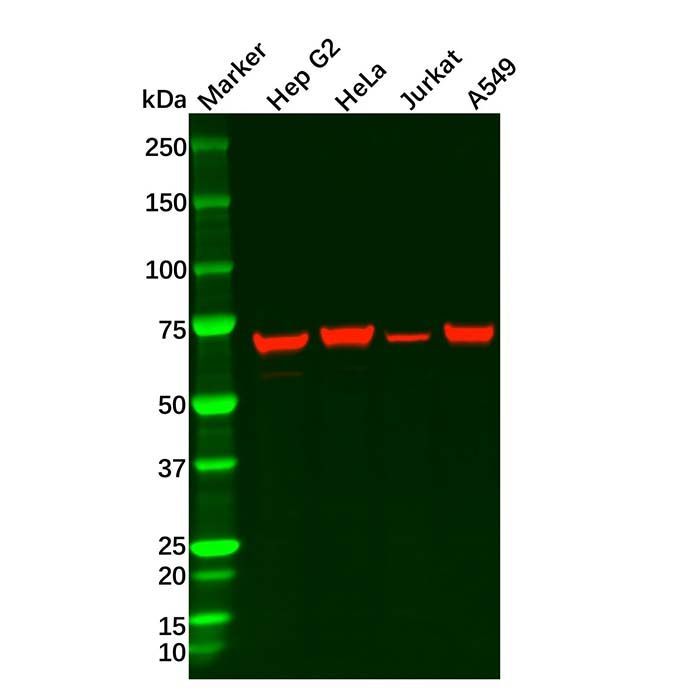
WB: Hep G2, HeLa, Jurkat and A549 cell lysates. IHC: Human breast cancer, prostate tissues. ICC/IF: Hep G2 cells.
Conjugación
Unconjugated
Grado
Azide Free, Carrier Free, ExactAb™, High Performance, Validated
Isotipo
Mouse IgG2b
Tipo de cadena ligera
kappa
SDS-PAGE
150 kDa
Método de purificación
Protein A + Protein G purified
Concentración
See COA
Product Line
Productos biológicos
Almacenamiento y envío
Forma
Liquid
Condiciones de almacenamiento de almacenamiento
Store at -20°C,Avoid repeated freezing and thawing
Enviado en
Ice chest + Ice pads
Estabilidad y almacenamiento
Store at 4℃ short term (1-2 weeks). Store at -20℃ long term (24 months). Upon receipt, it is recommended to aliquot. Avoid freeze/thaw cycle.
Imágenes

Hsp70 Mouse mAb (Ab108897) - Western Blot
All lanes: Hsp70 Mouse mAb (Ab108897) at 1/1000 dilution
Samples: Lysates at 20 µg per lane
Secondary: Goat Anti-Mouse IgG H&L (HRP) (Ab138040) at 1/20000 dilution

Predicted band size: 70 kDa
Observed band size: 70 kDa
Exposure time: 0.8 s

Hsp70 Mouse mAb (Ab108897) - IF/ICC
FITC staining on IF
Samples: Human Hep G2 cell
Primary Ab: 20 μg/mL Hsp70 Mouse mAb (Ab108897)
Second Ab: 1 μg/mL FITC-Linked Caprine Anti-Mouse IgG Polyclonal Antibody.

Hsp70 Mouse mAb (Ab108897) - IHC
DAB staining on IHC
Samples: Human Breast cancer Tissue
Primary Ab: 20 µg/mL Hsp70 Mouse mAb (Ab108897)
Second Ab: 2 µg/mL HRP-Linked Caprine Anti-Mouse IgG Polyclonal Antibody.

Hsp70 Mouse mAb (Ab108897) - IHC
DAB staining on IHC
Samples: Human Prostate Tissue
Primary Ab: 20 µg/mL Hsp70 Mouse mAb (Ab108897)
Second Ab: 2 µg/mL HRP-Linked Caprine Anti-Mouse IgG Polyclonal Antibody.

Aplicación
Aplicación
Dilution info
WB

0.01-3 µg/mL

IHC

5-20 µg/mL

IF/ICC

5-20 µg/mL

Documentación

📋 Hoja de datos de seguridad (SDS)

Documento completo sobre peligros, manipulación, almacenamiento y cumplimiento normativo.

<<<<<<< HEAD Descargar SDS → ======= Descargar SDS → >>>>>>> release248-p3

✅ Certificado de análisis (COA)

Datos de calidad específicos del lote. Introduzca su número de lote para obtener el COA exacto.

Buscar COA →

📊 Ficha técnica

Resumen de referencia rápida de las especificaciones y aplicaciones del producto.

Ver ficha técnica →

🔬 Hoja de especificaciones

Atributos de calidad completos y criterios de aceptación para esta calidad.

Ver hoja de especificaciones →

Datos avanzados

Objetivos asociados (humanos)
HSPA1A Tchem Heat shock 70 kDa protein 1A (0 Activities)
Activity TypeActivity Value -log(M)Mechanism of ActionActivity ReferencePublications (PubMed IDs)
HSPA1A Tchem Heat shock 70 kDa protein 1 (164 Activities)
Activity TypeRelationActivity valueUnitsAction TypeJournalPubMed IddoiAssay Aladdin ID
Mecanismos de acción
Certificados (CoA, COO, BSE/TSE y tabla de análisis)
C of A & Other Certificates(BSE/TSE, COO):
Analytical Chart:

Find and download the COA for your product by matching the lot number on the packaging.

3 results found

Lot NumberCertificate TypeFechaArticulo
ZJ24F0404796ZJ24F0404796Certificate of AnalysisFeb 10, 2026 Ab108897
ZJ23F1101839ZJ23F1101839Certificate of AnalysisNov 29, 2023 Ab108897
ZJ23F1101840ZJ23F1101840Certificate of AnalysisNov 29, 2023 Ab108897
Preguntas frecuentes y artículos
Calculadoras de soluciones
Reseñas

Reseñas de cliente

Application Protocols

Tested applications, recommended dilutions, and positive-control samples for this specific item are not specified; refer to the CoA/Spec Sheet.

General best-practice frameworks (not item-specific):

  • Aliquoting: Thaw on ice, mix gently, and aliquot into single-use volumes to avoid repeated freeze–thaw. Use low-bind tubes.
  • Western blot: Load a heat-shock positive lysate (e.g., cells incubated at 42–45°C for 30–60 min) alongside a negative control. Optimize blocking reagent (BSA vs milk) according to detection system.
  • IF/ICC: Fix (e.g., 4% paraformaldehyde), permeabilize (0.1–0.3% Triton X-100 if intracellular), block (1–5% BSA/serum), incubate with primary antibody, then fluorophore-conjugated secondary matched to mouse IgG subclass.
  • IHC: Perform antigen retrieval (citrate pH ~6 or Tris–EDTA pH ~9), block endogenous peroxidase if using HRP, and include isotype controls.
  • IP/Co-IP: Pre-clear lysates, titrate antibody-to-lysate protein ratio, and validate specificity by competitive elution or detection of known interacting partners.
  • ELISA: Use azide-free buffers for HRP/TMB systems; establish a standard curve with recombinant Hsp70 to quantify.

Documentation: Record lot number, storage history, and working dilutions for repeatability. For precise, item-validated conditions, consult the CoA/Spec Sheet.

Biological Roles

Target: Hsp70 (heat shock protein 70 family) — general biology (literature; not item-specific claims).

  • Function (literature): Hsp70 proteins are ATP-dependent molecular chaperones that assist in nascent polypeptide folding, prevent aggregation, facilitate refolding of stress-denatured proteins, and coordinate protein translocation across membranes. They cooperate with co-chaperones (e.g., Hsp40/DNAJ, nucleotide exchange factors) to cycle between high- and low-affinity substrate states.
  • Cellular localization (literature): Predominantly cytosolic for HSPA1A/HSPA1B; other family members localize to organelles (ER: BiP/GRP78, mitochondria: mortalin/GRP75). Inducible and constitutive isoforms display distinct stress responsiveness.
  • Regulation (literature): Transcription driven by heat shock factor 1 (HSF1) under proteotoxic stress (heat, oxidative stress, toxins). Post-translational modifications modulate activity and interactions.
  • Interactome (literature): Binds exposed hydrophobic segments of client proteins; interacts with components of the proteostasis network, proteasome, and autophagy pathways.
  • Experimental utility (general): Antibody detection of Hsp70 is widely used as a marker of cellular stress responses, protein-folding capacity, and quality control mechanisms across many model systems.

Note: Specific isoform recognition, epitope mapping, and cross-species reactivity for Hsp70 Mouse mAb are not specified for this item; refer to the CoA/Spec Sheet for definitive target details relevant to your system.

Buffer Applications

Appropriate buffer systems are essential for antibody performance. This product is carrier-free and azide-free; select buffers that preserve activity while matching your assay.

General buffer systems (not item-specific):

  • PBS, pH 7.2–7.6: Widely used for storage, dilutions, WB, IF/ICC, IHC. Add 0.05% Tween-20 (PBST) for washing steps to reduce nonspecific binding.
  • TBS, pH 7.4–8.0: Preferred for alkaline phosphatase detection and in workflows where phosphate may interfere.
  • Blocking buffers: 3–5% BSA or casein in PBS/TBS for WB and IHC/IF; choice depends on secondary antibody and detection chemistry. Serum from the host species of the secondary can reduce Fc-mediated background.
  • Antigen retrieval (IHC): Citrate buffer (10 mM, pH ~6.0) or Tris–EDTA (10 mM Tris, 1 mM EDTA, pH ~9.0) for heat-induced epitope retrieval; optimize by tissue and fixation.
  • Storage additives: If compatible with downstream assays, 10–50% glycerol can be added to aliquots for −20°C storage to mitigate freeze–thaw; no preservatives are included by default in this product.

Practical tips:

  • Filter-sterilize buffers (0.22 μm) and use aseptic technique because the product is azide-free.
  • Match salt and detergent concentrations between antibody diluent and wash buffers to stabilize binding equilibria and reduce background.

Item-specific buffer composition, pH, and recommended diluents are not specified; refer to the CoA/Spec Sheet.

Green Alternatives

This product is an aqueous antibody reagent; green chemistry considerations focus on buffer selection, preservative choices, and minimizing hazardous waste rather than solvent replacement.

Greener practice options (general guidance):

  • Buffer systems: Prefer PBS or TBS prepared from high-purity salts and ultrapure water. These buffers are non-volatile and low-toxicity compared to organic solvent systems.
  • Preservatives: Being azide-free eliminates the handling of sodium azide, a toxic and environmentally persistent biocide. If preservation is needed, consider low-toxicity alternatives at minimal effective concentrations and validate assay compatibility.
  • Blocking agents: Use biodegradable proteins (e.g., casein, BSA) sourced responsibly; avoid milk powders with phosphatases when using AP detection.
  • Detection systems: Favor HRP chemiluminescence substrates with reduced hazardous by-products or fluorescent readouts that avoid chromogenic heavy metals. Dispose of substrates according to local regulations.
  • Process efficiency: Aliquot to reduce freeze–thaw waste; optimize antibody titers to minimize consumption; consolidate washing steps with automated platforms to reduce buffer volumes.

Trade-offs (general):

  • Azide-free formulations improve environmental and biosafety profiles but may require stricter aseptic handling or cold-chain vigilance to avoid contamination.
  • Some green preservatives (e.g., ProClin-type isothiazolinones) can interfere with sensitive enzymes or cell assays; always perform compatibility checks.

Always follow institutional green-lab guidelines and dispose of proteinaceous and chemiluminescent waste streams appropriately.

Pharmaceutical Uses

This product is designated For research use only and is not intended for human or veterinary diagnostic or therapeutic applications.

Formulation/manufacturing context (general, non-clinical):

  • Carrier-free, azide-free antibodies are commonly selected for custom conjugation (fluorophores, enzymes, nanoparticles) or as analytical reagents in bioprocess development (e.g., ELISA-based product quality assays) where excipients and preservatives could interfere.
  • For process analytics, low-background reagents facilitate sensitive detection of stress markers (e.g., Hsp70) in cell culture monitoring. Any use in GMP/QC environments requires independent qualification and documentation.
  • Exact compliance with pharmacopeial monographs is not claimed; no pharmacopeia status is provided for this item.

Item-specific regulatory/clinical use claims are not provided; consult your institutional quality unit if adapting research reagents into regulated workflows. Always refer to the CoA/Spec Sheet for available quality attributes (purity, host, isotype) if required for documentation.

Physical Properties

This product is a protein-based monoclonal antibody; conventional small-molecule physical constants (bp, mp, logP, refractive index) do not apply.

Item-specific properties:

  • Appearance: Not specified for this item; refer to CoA/Spec Sheet.
  • Molecular weight: Not specified for this item; refer to CoA/Spec Sheet.
  • Concentration/formulation: Not specified for this item; refer to CoA/Spec Sheet.
  • Buffer composition: Carrier-free and azide-free (from Product Data). Specific buffer salts, pH, and stabilizers are not specified for this item; refer to CoA/Spec Sheet.

General, literature-based notes for antibodies (not item specifications):

  • Typical IgG molecular mass is ~150 kDa (literature), with light-chain dimers (~25 kDa each) and heavy-chain dimers (~50 kDa each), but actual mass depends on isotype and glycosylation.
  • Solubility: Antibodies are water-soluble proteins in physiological buffers (e.g., PBS, TBS) at neutral pH; stability is influenced by ionic strength and excipients (e.g., trehalose, glycerol) — none are specified for this item.
  • Stability considerations: Avoid repeated freeze–thaw to minimize aggregation and activity loss (Product Data: “Avoid repeated freezing and thawing”). Aliquoting before storage is recommended.
  • Storage conditions: Store at −20°C (Product Data). For some antibodies, −80°C can further extend shelf life, but this is general guidance and not item-specific.

For definitive, lot-specific physical details (concentration, pH, excipients), consult the product CoA/Spec Sheet.

Quality and Grades

The following quality descriptors are provided for this item; definitions are given to clarify their practical implications for experimental design.

Item-specific quality descriptors (from Product Data):

  • Carrier Free: Supplied without protein carriers (e.g., BSA, gelatin). Advantages include clean conjugation chemistry (e.g., enzyme/fluorophore labeling) and minimized background in sensitive assays. Users may add their own stabilizers post-aliquoting if compatible with assays.
  • Azide Free: No sodium azide preservative. Beneficial for live-cell applications, enzyme activity assays (e.g., HRP), and conjugation workflows that are azide-sensitive (e.g., click-chemistry variants). Requires rigorous aseptic handling to avoid microbial contamination.
  • ExactAb™: Brand/line indicator. Specific platform attributes (e.g., recombinant production, lot-to-lot consistency) are not specified for this item; refer to CoA/Spec Sheet for details.
  • Validated, High Performance: Indicates in-house validation to meet performance expectations; exact validation methods (WB, IHC, IF, ELISA, etc.), species reactivity, and sensitivity/linearity data are not specified for this item; refer to CoA/Spec Sheet.

What this means in practice (general):

  • Expect low background from absence of carriers and azide; however, the formulation may be less resistant to handling stress. Aliquoting and cold-chain adherence are critical.
  • For regulated workflows, document batch/lot and request CoA including purity, endotoxin (if applicable), and residual host-cell proteins, if relevant.

If you require application-specific validation (e.g., WB on mouse lysates), consult the CoA/Spec Sheet or request validation data for your intended use.

Reaction and Applications

As an antibody reagent, Hsp70 Mouse mAb is used in immunoassay “binding reactions” rather than chemical synthesis. The following outlines typical research applications and practical considerations. Item-specific tested applications are not provided and should be confirmed from the CoA/Spec Sheet.

Typical applications (general):

  • Western blot (WB): Detection of denatured Hsp70 in cell/tissue lysates following SDS-PAGE and transfer.
  • Immunofluorescence (IF)/immunocytochemistry (ICC): Localization of Hsp70 in fixed cells/tissues; permeabilization and blocking conditions can strongly influence signal.
  • Immunohistochemistry (IHC): Detection in formalin-fixed paraffin-embedded (FFPE) or frozen sections with appropriate antigen retrieval.
  • Immunoprecipitation (IP)/Co-IP: Enrichment of Hsp70 or its complexes from lysates for downstream MS or WB.
  • ELISA: Plate-based quantification using captured or directly coated antigen; azide-free formulation favors HRP-based detection.

Practical tips (general):

  • Optimize antibody dilution via checkerboard titration; use positive controls known to express Hsp70 (e.g., heat-shocked cells) and negative/knockdown controls when available.
  • Maintain cold conditions and include protease inhibitors in lysis buffers to preserve Hsp70 and complexes.
  • For conjugations (biotin, HRP, fluorophores), carrier-free formulation enables efficient labeling; control degree of labeling to preserve affinity/signal.

Note: Specific reactivity, clones, and validated applications for this product are not specified; verify with the CoA/Spec Sheet prior to critical experiments.

Reaction Conditions

Not directly applicable in the context of chemical reactions. For immunoassay “binding reactions,” conditions depend on the platform and are typically optimized empirically.

General guidance for common assay conditions (literature/best practice; not item-specific):

  • Western blot: Primary antibody incubations commonly at 4°C overnight or 1–2 h at room temperature in PBS/TBS with 1–5% BSA. Wash with PBST/TBST. Optimize concentrations per membrane and antigen load.
  • IHC/IF: Blocking for 30–60 min; primary incubation 1–16 h depending on antigen abundance and fixation; antigen retrieval buffers and permeabilizers (e.g., 0.1–0.3% Triton X-100) as required.
  • ELISA: Coating antigen overnight at 4°C; primary incubation 1 h at room temperature; stringent washes to reduce background. Use azide-free buffers for HRP-based detection.
  • IP/Co-IP: Incubate lysates with antibody 1–4 h at 4°C with gentle mixing, capture with Protein A/G resins appropriate for the mouse isotype (isotype is not specified; test A vs G binding).

Item-specific working dilutions, incubation times, and verified platforms are not specified for this item; refer to the CoA/Spec Sheet and perform pilot optimizations.

Safety and Handling

This is a research-use-only antibody preparation. While proteins are generally considered low hazard, proper laboratory hygiene and PPE are required.

GHS/SDS information (item-specific):

  • Signal word: Not specified for this item; refer to SDS.
  • H-statements: Not specified for this item; refer to SDS.
  • GHS classification/pictograms: Not specified for this item; refer to SDS.

Handling recommendations (general best practices):

  • Wear appropriate PPE: lab coat, gloves, and eye protection when handling solutions and during aliquoting.
  • Work on ice for prolonged manipulations to reduce proteolysis or denaturation.
  • Use sterile technique to prevent microbial contamination, especially as the product is azide-free (no biocidal preservative).

Incompatibilities and cautions (general):

  • Avoid repeated freeze–thaw cycles (Product Data). Aliquot upon first thaw to single-use volumes.
  • Avoid strong oxidizers, extreme pH (<5 or >9), and high shear or vigorous vortexing that can denature or aggregate antibodies.
  • Do not add sodium azide if downstream applications involve peroxidase-based detection or live-cell exposure; azide inhibits HRP and is toxic to cells.

First aid (general guidance; defer to SDS):

  • Skin/eye contact: Rinse with water. Remove contaminated clothing.
  • Ingestion/inhalation: Seek medical advice if exposure is suspected.

Always consult the SDS for authoritative safety, spill response, and disposal guidance for your specific lot.

Solvent Selection

Antibodies are handled in aqueous buffers rather than organic solvents. This product is carrier-free and azide-free; compatible aqueous systems and excipients should be selected based on the intended application.

General buffer guidance (not item-specific):

  • Primary buffers: PBS (10–50 mM phosphate, ~150 mM NaCl, pH 7.2–7.6) or TBS (25–50 mM Tris, ~150 mM NaCl, pH 7.4–8.0) commonly maintain antibody stability.
  • pH/ionic strength: Neutral pH with physiological ionic strength reduces aggregation and nonspecific binding. Low-salt conditions can favor conjugation reactions.
  • Additives (if compatible with downstream use): 10–50% glycerol for freeze–thaw protection; 0.1–0.5% trehalose or sucrose as lyoprotectants; 0.01–0.1% nonionic detergents (e.g., Tween-20) for surface passivation. None are included by default in this item per Product Data; add only as needed.
  • Preservatives: Product is azide-free; if storage at 2–8°C is necessary and compatible, users may add alternative preservatives (e.g., ProClin) with awareness of assay interference. For HRP-based assays or cell work, avoid azide.

When to choose PBS vs TBS (general comparison):

  • PBS: Preferred for most immunoassays and mammalian protein work; phosphate can interfere with some metal-catalyzed conjugations.
  • TBS: Preferred for alkaline phosphatase detection (phosphate inhibits AP) and some membrane-based assays.

Avoid organic solvents (e.g., DMSO, acetonitrile) that denature proteins unless used at very low percentages in specialized protocols.

Storage and Reconstitution

Item-specific storage/shipping:

  • Storage conditions: Store at −20°C. Avoid repeated freezing and thawing (Product Data).
  • Shipping: Ice chest + ice pads (Product Data) — maintain cold chain upon receipt.

Reconstitution and handling:

  • Physical state (liquid vs lyophilized) and initial concentration are not specified for this item; refer to the CoA/Spec Sheet.
  • If lyophilized (general guidance, not item-specific): Reconstitute with sterile, neutral pH buffer (e.g., PBS) to the desired concentration. Allow to dissolve gently on ice without vigorous mixing. If conjugation is planned, choose a carrier-free, amine-compatible buffer (avoid Tris for NHS-ester labeling).
  • If received in solution (general guidance): Mix gently by inversion; avoid vortexing. Inspect for turbidity/precipitation.

Aliquoting and long-term stability (general):

  • Aliquot into low-bind, sterile tubes sized for single use. For −20°C storage, consider adding glycerol (10–50%) to user-prepared aliquots if compatible with downstream assays; do not add sodium azide if planning HRP-based detection or live-cell work.
  • Avoid multiple freeze–thaw cycles; thaw on ice and keep cold during use.

Shelf life and specifications:

  • Appearance, exact buffer composition, pH, protein concentration, and expiry are not specified for this item; refer to the CoA/Spec Sheet.
  • For any deviations from recommended storage, perform small-scale functional checks before critical experiments.
Structure and Identity

Hsp70 Mouse mAb is a monoclonal antibody reagent directed against the heat shock protein 70 (Hsp70) target, supplied as a carrier-free, azide-free, high-performance antibody for research use.

  • SKU: Ab108897
  • Product name: Hsp70 Mouse mAb (monoclonal antibody)
  • Category: Antibody (research-use only)

Item-specific identifiers:

  • Molecular formula: Not applicable to proteins in the conventional small-molecule sense; not specified for this item; refer to CoA/Spec Sheet.
  • Molecular weight: Not specified for this item; refer to CoA/Spec Sheet.
  • CAS, CID, InChIKey, SMILES: Not applicable for antibodies; not specified for this item; refer to CoA/Spec Sheet.

Structural features (general, literature-based):

  • Monoclonal antibodies are typically IgG-class immunoglobulins composed of two heavy chains and two light chains, each with variable domains conferring antigen specificity and constant domains dictating effector function.
  • The “Mouse mAb” designation indicates the hybridoma source species is mouse; exact isotype (e.g., IgG1, IgG2a, kappa/lambda) is not specified for this item; refer to CoA/Spec Sheet.
  • The antigen target is Hsp70 (heat shock 70 kDa protein family, literature), a conserved chaperone; epitope and clonality details are not specified for this item; refer to CoA/Spec Sheet.

2D/primary structure description (general):

  • Immunoglobulin domains are β-sandwich folds with complementarity-determining regions (CDRs) in the variable domains forming the antigen-binding site; precise sequence and CDR composition for this antibody are not specified for this item; refer to CoA/Spec Sheet.
Synthetic Utility

Not typically applicable. Hsp70 Mouse mAb is a biological affinity reagent rather than a synthetic building block or catalyst. It is not used in organic synthesis or small-molecule transformations.

For users seeking to derivatize this antibody (general guidance):

  • Conjugation chemistries (e.g., NHS–ester to lysines, maleimide to reduced cysteines, enzymatic Fc glycan remodeling) can be employed to attach fluorophores, enzymes, or affinity tags. The carrier-free formulation is conducive to such modifications.
  • Maintain mild, aqueous conditions (near-neutral pH, isotonic buffers) to preserve antibody structure and binding; remove amine-containing buffers (e.g., Tris) before NHS ester labeling, and avoid reducing agents during maleimide conjugations.

Item-specific conjugation readiness, buffer composition, and reactive-site availability are not specified; verify via CoA/Spec Sheet and small-scale pilot reactions.

Target Specificity

Antigen target (from Product Name): Hsp70 (heat shock protein 70 family).

Item-specific details:

  • Clone identifier: Not specified for this item; refer to CoA/Spec Sheet.
  • Isotype (e.g., IgG subclass, light chain): Not specified for this item; refer to CoA/Spec Sheet.
  • Species reactivity (e.g., human, mouse, rat, etc.): Not specified for this item; refer to CoA/Spec Sheet.
  • Epitope/isoform specificity (e.g., HSPA1A vs HSPA1B vs GRP78): Not specified for this item; refer to CoA/Spec Sheet.
  • Cross-reactivity and negative controls: Not specified for this item; refer to CoA/Spec Sheet.

Notes (general):

  • Hsp70 family members share high sequence identity; antibodies may be isoform-specific or cross-reactive depending on epitope. Validate on defined controls (e.g., heat-shocked vs baseline cells, CRISPR/siRNA knockdown).
  • For Protein A/G binding during IP, binding efficiency depends on mouse IgG subclass; test both A and G resins when isotype is unknown.

Preguntas frecuentes

What does ExactAb? mean?
ExactAb? indicates the product has been validated for use in rigorous antibody validation workflows. Validation may include positive/negative control samples, signal-to-noise testing, and protocol-specific QC. Lot-specific test data is published on the Certificate of Analysis where available.
What does Carrier Free mean?
Carrier Free indicates that the material has been processed and tested for specialty industrial processing. Specifications focus on the impurities that affect performance in that application — for example, metal content for electronics, particle size for batteries, refractive index for optics, or moisture content for moisture-sensitive processes.
How should this product be stored?
Store at ?20 °C. Avoid repeated freeze–thaw cycles. Aliquot into single-use volumes before freezing.
How is this product shipped?
This product ships in an insulated container with ice pads. Unpack on arrival and transfer it to the storage condition stated above.
What documentation is provided?
Available product documentation, including Certificates of Analysis (COA), Safety Data Sheets (SDS), and specification sheets, is shown in the product document area. Document availability and access follow the current site policy.
Which species reactivity has this antibody been validated against?
Validated reactivity is listed on the PDP and on each lot's datasheet. We validate against the most commonly tested species for the target (Hsp70 Mouse mAb); cross-reactivity in untested species may exist but is not guaranteed. Contact technical support for specific species inquiries.

¿Necesita ayuda para elegir la calidad?

Nuestra guía de selección de calidades cubre la pureza, el estado del estabilizador y la idoneidad de la aplicación para todas las variantes de nuestro catálogo.

Ver la guía de calidades Carrier Free → Ver la guía de calidades Validated → Ver la guía de calidades ExactAb™ → Ver la guía de calidades Azide Free → Ver la guía de calidades High Performance →

Artículos relacionados

Goat Anti-Mouse IgG H&L Antibody - Secondary antibody, for ELISA,LF,GICA various applications, from Mouse, generated in Goat
Goat Anti-Mouse IgG H&L (HRP) - Secondary antibody, for WB,ELISA,IHC-P various applications, from Mouse, generated in Goat, IgG
Rabbit Anti-Mouse IgG H&L (HRP) - Secondary antibody, IgG
Rabbit Anti-Mouse IgG antibody - Secondary antibody
Goat Anti-Mouse IgG H&L (FITC) - Secondary antibody
Goat Anti-Mouse IgG H&L (TRITC) - Secondary antibody
Goat Anti-Mouse IgG H&L Antibody - Secondary antibody, Goat IgG
Goat Anti-Mouse IgG H&L (Cy5) - Secondary antibody
Goat Anti-Mouse IgG H&L (HRP) - Secondary antibody
Goat Anti-Mouse IgG H&L (Biotin) - Secondary antibody
Rabbit Anti-Mouse IgG (HRP) - Secondary antibody
Rabbit Anti-Mouse IgG (Biotin) - Secondary antibody
Goat Anti-Mouse IgG H&L (HRP) - Secondary antibody, Goat IgG
Goat Anti-Mouse IgG H&L (TRITC) - Secondary antibody, Goat IgG
Goat Anti-Mouse IgG H&L (Biotin) - Secondary antibody, Goat IgG
Goat Anti-Mouse IgG H&L (FITC) - Secondary antibody, Goat IgG
Goat Anti-Mouse IgG H&L (Cy5) - Secondary antibody, Goat IgG
Goat Anti-Mouse IgG H&L (PE) - Secondary antibody, Goat IgG
Goat Anti-Mouse IgG H&L (APC) - Secondary antibody, Goat IgG
Goat Anti-Mouse IgG H&L (Alkaline Phosphatase) - Secondary antibody, Goat IgG
Goat Anti-Mouse IgG H&L (AF405) - Secondary antibody, Goat IgG
Goat Anti-Mouse IgG H&L (AF647) - Secondary antibody, Goat IgG
Hsp70 Mouse mAb - Primary antibody, specific to Hsp70, Mouse IgG1
MAb de ratón Hsp70 - Primary antibody, specific to Hsp70, Mouse IgG2a
MAb de ratón Hsp70 - Primary antibody, specific to Hsp70, Mouse IgG1
Goat Anti-Mouse IgG H&L (AF555) - Secondary antibody, specific to Mouse IgG, Goat IgG
Goat Anti-Mouse IgG H&L (AF700) - Secondary antibody, specific to Mouse IgG, Goat IgG
Goat Anti-Mouse IgG H&L (PE-Cy5) - Secondary antibody, specific to Mouse IgG
Centrose patent anti-dysadherin (anti-Dysadherin) - Primary antibody, specific to FXYD5
Goat Anti-Mouse IgG H&L (AF488) - Secondary antibody
Goat Anti-Mouse IgG H&L (PE-Cy7) - Secondary antibody
Goat Anti-Mouse IgG H&L (AF750) - Secondary antibody
Goat Anti-Mouse IgG H&L (AF546) - Secondary antibody
Goat Anti-Mouse IgG H&L (Oregon Green 488) - Secondary antibody
Goat Anti-Mouse IgG H&L (Cy3) - Secondary antibody

¿Quieres que te enviemos un mensaje cuando tengamos descuentos disponibles?

Recordármelo más tarde

¡Gracias! Por favor, revisa tu bandeja de entrada de correo electrónico para confirmar.

¡Vaya! Las notificaciones están desactivadas.