Tinnitus animal model modeling experiments
Tinnitus animal model modeling experiments
Tinnitus research also requires animal models, but previous tinnitus research has mostly been limited to humans, which has greatly restricted in-depth understanding of tinnitus mechanisms. It is impossible for animals to express their subjective sensations verbally, and humans and animals cannot communicate with each other verbally, so the only way to determine whether an animal feels tinnitus is by observing some kind of behavioral response or physiological reaction.
Principle
The basic principle of tinnitus animal modeling experiments is mostly the Pavlovian conditioned reflex principle. Salicylic acid can cause tinnitus and hearing loss, and this phenomenon is reversible, tinnitus disappears and hearing is restored after stopping the drug. Therefore, many scholars use salicylic acid as a drug for animal modeling.
Operation method
Tinnitus animal model modeling experiments
Principle
The basic principle of tinnitus animal modeling experiments is mostly the Pavlovian conditioned reflex principle. Salicylic acid can cause tinnitus and hearing loss, and this phenomenon is reversible, tinnitus disappears and hearing is restored after stopping the drug. Therefore, many scholars use salicylic acid as a drug for animal modeling.
Materials and Instruments
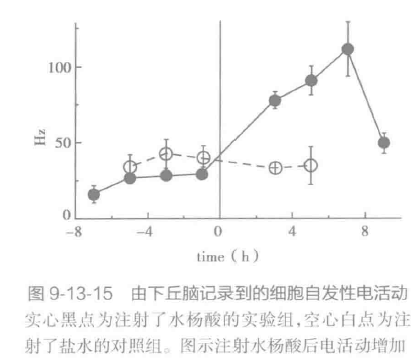
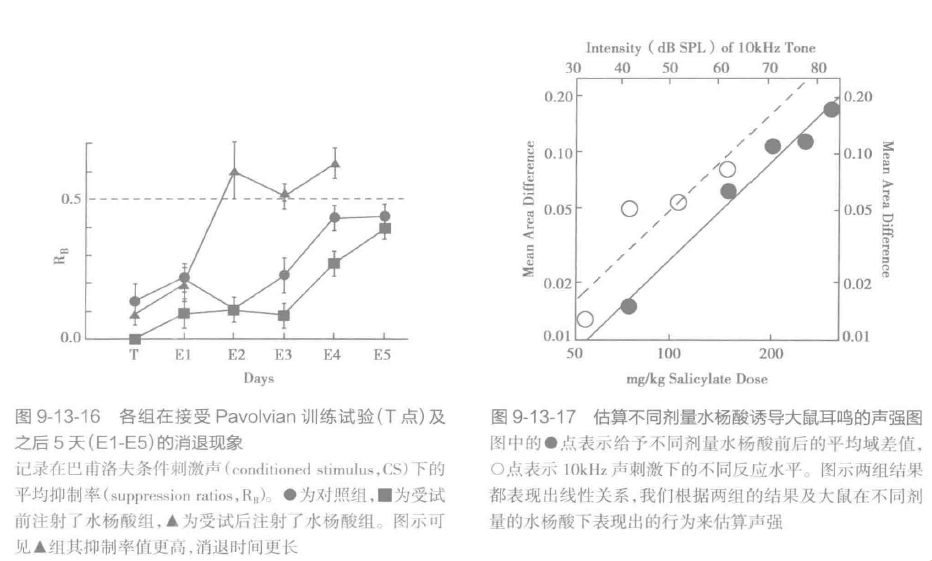
Equipment: Move The basic process of tinnitus animal modeling experiments can be divided into the following steps: A. At present, only guinea pigs and rats have been reported to establish animal models of tinnitus, and other animals have not been reported in the literature. In fact, dogs, cats, mice, etc. are also able to be used as experimental animals. Animals that are particularly prone to panic are not suitable for behavioral experiments. B. Conditioned reflex training was performed in a separate acoustically isolated room, and each animal was trained once a day for 30 minutes. The conditioned stimulus was a random stop of the background sound (55 dB SPL white noise), which was presented 5 times for 30 s each, around the 3rd, 9th, 17th, 24th, and 29th minute. The unconditioned stimulus was an electric shock, 1.5 mA for 0.5 s, given once at the 9th, 18th, or 27th second of the conditioned stimulus. C. During training, the animals were supplied with water at a rate of 7 to 10 drops/minute in a volume of 15 to 20 mL, and the number of times the water was sucked was recorded with an automatic counter. The number of water intake when the conditioned stimulus appeared was B, and the average number of water intake every 30 seconds when the conditioned stimulus did not appear was A. The rate of water intake R = B/(A + B). E. Then sodium salicylate was injected subcutaneously in a dosage of 250 mg/kg or 350 mg/kg, and the tinnitus (Fig. 9-13) was induced in Tinnitus was then induced in rats by subcutaneous injection of sodium salicylate at a dose of 250 mg/kg or 350 mg/kg (Figure 9-13-15, Figure 9-13-16 and Figure 9-13-17). For more product details, please visit Aladdin Scientific website.
55 dB SPL white noise, automatic counters, etc.