
Histone Deacetylase Inhibitors
Histone Deacetylase Inhibitors
Histone deacetylase (HDAC) inhibitors represent a class of cytostatic compounds that suppress tumor cell proliferation across diverse experimental models. Their antitumor activity is mediated through the induction of cell cycle arrest, differentiation, or programmed cell death (apoptosis).
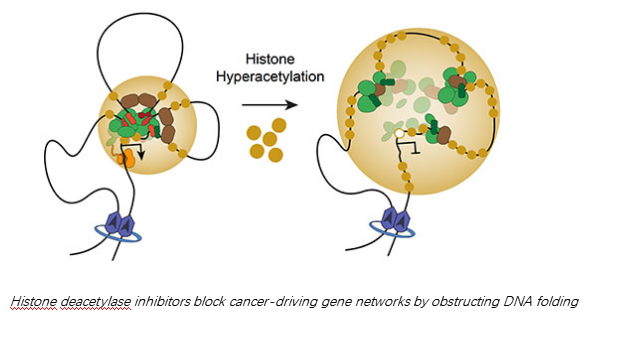
Gene expression is tightly regulated by the dynamic packaging of DNA around histone proteins. Histone acetyltransferases (HATs) add acetyl groups to lysine residues on histones, relaxing chromatin structure and enabling transcriptional activity. In contrast, HDACs remove these acetyl groups, leading to condensed chromatin and reduced transcription. By blocking HDAC activity, inhibitors promote the accumulation of hyperacetylated histones, thereby facilitating gene transcription in multiple chromatin regions.
One notable effect of HDAC inhibition is the induction of p21, a key regulator of the tumor suppressor protein p53. HDAC inhibitors also influence the expression of retinoblastoma (Rb), a critical protein involved in cell cycle
control and suppression of uncontrolled proliferation. Furthermore, HDAC inhibitor–mediated chromatin remodeling and changes in DNA methylation have been shown to impede growth and metastatic potential in central nervous system cancers such as gliomas.
Aladdin offers a broad selection of HDAC inhibitors widely applied in research related to cancer biology, antiviral therapy, immune regulation, inflammation, and neuroprotection. Find the detailed production in the below sheet.
| Aladdin catalog | Product name | purity |
Apicidin | ≥98% | |
Belinostat | ≥98%,10mM in DMSO | |
Butyric acid | analytical standard, Standard for GC ≥99.5%(GC), ≥99% , for synthesis, AR ≥99%, ≥99.5% | |
Chrysin | ≥98%, analytical standard ≥98%, 10mM in DMSO | |
CUDC-907 | ≥98%,, 10mM in DMSO | |
Entinostat (MS-275) | ≥98%,, 10mM in DMSO | |
Isoliquiritigenin | ≥98%, analytical standard, 10mM in DMSO | |
LBH-589 | ≥98%,10mM in DMSO | |
MGCD-0103 | ≥98%,10mM in DMSO | |
Sodium 4-Phenylbutyrate | ≥98%,10mM in DMSO | |
Phenylhexyl isothiocyanate | ≥98% | |
Romidepsin | ≥98%,10mM in DMSO | |
Scriptaid | ≥99%,10mM in DMSO | |
Sodium butyrate | ≥98%, BioReagent ≥99%, GMP. 10mM in Water | |
Trichostatin A | ≥98%, ≥95% | |
Tubacin | ≥96% | |
Tubastatin A HCl | ≥98%,10mM in DMSO | |
Valproic acid (sodium) | ≥98%,10mM in DMSO,GMP | |
Vorinostat | ≥99%,10mM in DMSO |
References:
1. Dokmanovic M, Clarke C, Marks PA. Mol Cancer Res. 2007 Oct;5(10):981-9.
2. Yin D, Ong JM, Hu J, et al. Clin Cancer Res. 2007 Feb 1;13(3):1045-52.
3. Horing E, Podlech O, Silkenstedt B, et al. Anticancer Res. 2013 Apr;33(4):1351-60.
4. Sharma V, Koul N, Joseph C, et al. J Cell Mol Med. 2010 Aug;14(8):2151-61.
Aladdin: https://www.aladdinsci.com/