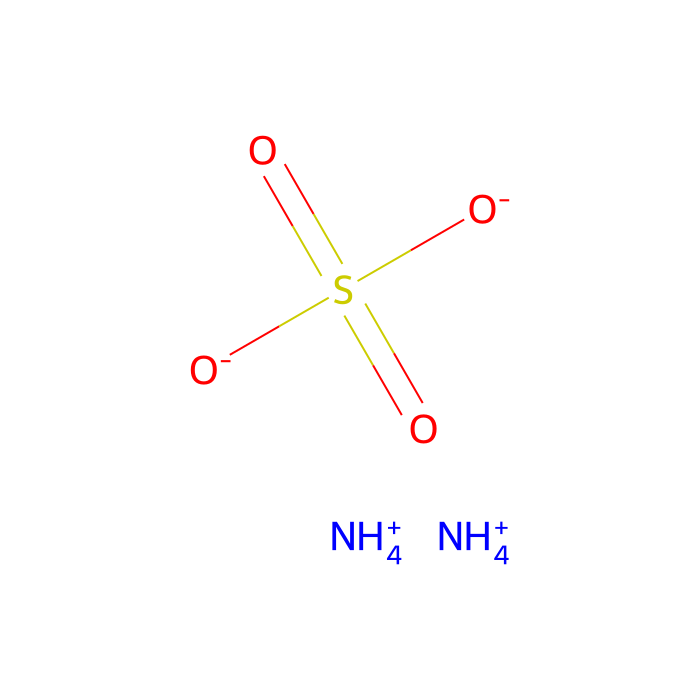
Ammonium sulfate - Suitable for molecular biology, ≥99% , CAS No.7783-20-2

CAS: 7783-20-2 Cat. No.: A112103 Formula: (NH4)2SO4 Molecular Weight: 132.14 EC Number: 231-984-1
AVAILABLE TO ORDER
GRADE & PURITY Suitable for molecular biology ? Molecular-biology grade — free of nucleases and contaminants that degrade DNA/RNA. Use in cloning, PCR, and nucleic-acid work needing clean reagents. ≥99%
Synonyms
Ammonium sulfate ((NH4)2SO4) | Ammonium sulfate, 99+% (ACS) | AMMONIUM SULPHATE (2:1) | AMMONIUM SULFATE | Ammonium sulfate, ultrapure | Ammonium Sulfate ACS grade | CHEBI:62946 | Sulfuric acid-d2, di(ammonium-d4) salt (8CI,9CI) | BFNBIHQBYMNNAN-UHFFFAOYS
Storage
Room temperature
Shipped In
Normal
★
Size
USA
Germany (EU)*
Price
Qty
100g
A112103-100g
5 In stock
2 In stock
$11.90
500g
A112103-500g
3 In stock
3 In stock
$20.90
12×500g
A112103-12×500g
Made to order · 8–12 wks
$199.90
Enter a quantity for the sizes you want to add.
🧪
Why this grade

Suitable for molecular biology, ≥99% Suitable for molecular biology for sensitive chromatographic and analytical workflows requiring minimal baseline interference.

🌡

Storage & shipping

Room temperature Ships Normal Check lot-specific COA for exact specifications.

📋

Quality documents

SDS, COA, datasheet, and spec sheet available for download. Lot-specific COA accessible via lot number lookup.

📚

Literature proof

Cited in 423 peer-reviewed publications across chromatography, organic synthesis, and cross-coupling reactions.

Overview

Ammonium sulfate is a versatile inorganic sulfate salt, plays crucial role in biochemical research, molecular biology, and cell culture. It serves as an indispensable tool for purifying antibodies and precipitating or fractionating proteins. Furthermore, it is instrumental in crystallographic analysis of nucleic acids and proteins and also used as a nitrogen supplement in synthetic laboratory media. Our premium-grade Ammonium Sulfate is meticulously crafted to be DNase, RNase, and Protease-free, ensuring its suitability for cutting-edge research.

Specifications

Synonyms
Ammonium sulfate ((NH4)2SO4) | Ammonium sulfate, 99+% (ACS) | AMMONIUM SULPHATE (2:1) | AMMONIUM SULFATE | Ammonium sulfate, ultrapure | Ammonium Sulfate ACS grade | CHEBI:62946 | Sulfuric acid-d2, di(ammonium-d4) salt (8CI,9CI) | BFNBIHQBYMNNAN-UHFFFAOYS
Specifications & Purity
Suitable for molecular biology, ≥99%
Application
Ammonium sulfate helps in quick precipitation of celluar proteins. Ammonium sulfate may be used for the precipitation or fractionation of proteins or for purification of antibodies. It is also useful for crystallographic analysis of nucleic acids and prot
Storage
Room temperature
Shipped In
Normal
Grade
Suitable for molecular biology
Purity
≥99%
Names and Identifiers
Pubchem Sid
Pubchem Sid Url
https://pubchem.ncbi.nlm.nih.gov/substance/488195668
Canonical Smiles
[NH4+].[NH4+].[O-]S(=O)(=O)[O-]
IUPAC Name
diazanium;sulfate
InChIKey
BFNBIHQBYMNNAN-UHFFFAOYSA-N
INCHI
1S/2H3N.H2O4S/c;;1-5(2,3)4/h2*1H3;(H2,1,2,3,4)
Isomeric SMILES
[NH4+].[NH4+].[O-]S(=O)(=O)[O-]
WGK Germany
1
RTECS
BS4500000
Molecular Weight
132.14
Reaxy-Rn
11343144
Reaxys-RN_link_address
https://www.reaxys.com/reaxys/secured/hopinto.do?context=S&query=IDE.XRN=11343144&ln=

Documentation

📋 Safety Data Sheet (SDS)

Comprehensive hazard, handling, storage, and regulatory compliance document.

<<<<<<< HEAD Download SDS → ======= Download SDS → >>>>>>> release248-p3

✅ Certificate of Analysis (COA)

Lot-specific quality data. Enter your lot number to retrieve the exact COA.

Look up COA →

📊 Datasheet

Quick-reference summary of product specifications and applications.

View datasheet →

🔬 Specification Sheet

Full quality attributes and acceptance criteria for this grade.

View spec sheet →

Advanced Data

Taxonomic Classification

Taxonomy Tree

KingdomInorganic compounds
SuperclassHomogeneous non-metal compounds
ClassNon-metal oxoanionic compounds
SubclassNon-metal sulfates
Intermediate Tree Nodes Not available
Direct ParentNon-metal sulfates
Alternative Parents Organic sulfuric acids  Inorganic oxides  
Molecular FrameworkNot available
Substituents Non-metal sulfate - Sulfuric acid - Inorganic oxide
DescriptionThis compound belongs to the class of inorganic compounds known as non-metal sulfates. These are inorganic non-metallic compounds containing a sulfate as its largest oxoanion.
External Descriptors ammonium salt - inorganic sulfate salt
3D Structure
Interactive Chemical Structure Model


Certificates (CoA,COO,BSE/TSE and Analysis Chart)
C of A & Other Certificates(BSE/TSE, COO):
Analytical Chart:

Find and download the COA for your product by matching the lot number on the packaging.

56 results found

Lot NumberCertificate TypeDateItem
I2610188I2610188Certificate of AnalysisAug 31, 2026 A112103
I2610189I2610189Certificate of AnalysisAug 31, 2026 A112103
I2610191I2610191Certificate of AnalysisAug 31, 2026 A112103
I2610190I2610190Certificate of AnalysisAug 31, 2026 A112103
J2430221J2430221Certificate of AnalysisJul 30, 2026 A112103
A2306049A2306049Certificate of AnalysisJul 06, 2026 A112103
D2601332D2601332Certificate of AnalysisMar 25, 2026 A112103
D2601311D2601311Certificate of AnalysisMar 25, 2026 A112103
D2601306D2601306Certificate of AnalysisMar 25, 2026 A112103
D2601159D2601159Certificate of AnalysisMar 25, 2026 A112103
L2516171L2516171Certificate of AnalysisDec 08, 2025 A112103
L2516158L2516158Certificate of AnalysisDec 08, 2025 A112103
L2516163L2516163Certificate of AnalysisDec 08, 2025 A112103
A2429321A2429321Certificate of AnalysisOct 29, 2025 A112103
G2514085G2514085Certificate of AnalysisJun 25, 2025 A112103
G2514084G2514084Certificate of AnalysisJun 25, 2025 A112103
I2522112I2522112Certificate of AnalysisJun 25, 2025 A112103
I2522113I2522113Certificate of AnalysisJun 25, 2025 A112103
I2522166I2522166Certificate of AnalysisJun 25, 2025 A112103
G2514086G2514086Certificate of AnalysisJun 25, 2025 A112103
C2524178C2524178Certificate of AnalysisFeb 10, 2025 A112103
C2524177C2524177Certificate of AnalysisFeb 10, 2025 A112103
C2524176C2524176Certificate of AnalysisFeb 10, 2025 A112103
C2524175C2524175Certificate of AnalysisFeb 10, 2025 A112103
A2306038A2306038Certificate of AnalysisOct 18, 2024 A112103
J2430219J2430219Certificate of AnalysisOct 17, 2024 A112103
J2430220J2430220Certificate of AnalysisOct 17, 2024 A112103
H2420247H2420247Certificate of AnalysisAug 02, 2024 A112103
H2420249H2420249Certificate of AnalysisAug 02, 2024 A112103
H2420250H2420250Certificate of AnalysisAug 02, 2024 A112103
H2420248H2420248Certificate of AnalysisAug 02, 2024 A112103
E2420614E2420614Certificate of AnalysisApr 15, 2024 A112103
E2420613E2420613Certificate of AnalysisApr 15, 2024 A112103
E2420612E2420612Certificate of AnalysisApr 15, 2024 A112103
E2420596E2420596Certificate of AnalysisApr 15, 2024 A112103
G2221183G2221183Certificate of AnalysisApr 07, 2024 A112103
C2425110C2425110Certificate of AnalysisMar 14, 2024 A112103
C2425105C2425105Certificate of AnalysisMar 14, 2024 A112103
C2425104C2425104Certificate of AnalysisMar 14, 2024 A112103
C2425103C2425103Certificate of AnalysisMar 14, 2024 A112103
A2429319A2429319Certificate of AnalysisJan 15, 2024 A112103
A2429320A2429320Certificate of AnalysisJan 15, 2024 A112103
B2418147B2418147Certificate of AnalysisJan 15, 2024 A112103
H2324035H2324035Certificate of AnalysisAug 07, 2023 A112103
H2324036H2324036Certificate of AnalysisAug 07, 2023 A112103
K2303072K2303072Certificate of AnalysisAug 07, 2023 A112103
A2306039A2306039Certificate of AnalysisNov 21, 2022 A112103
A2306056A2306056Certificate of AnalysisNov 21, 2022 A112103
A2306057A2306057Certificate of AnalysisNov 21, 2022 A112103
J2210136J2210136Certificate of AnalysisAug 22, 2022 A112103
J2210075J2210075Certificate of AnalysisAug 22, 2022 A112103
J2210073J2210073Certificate of AnalysisAug 22, 2022 A112103
J2210071J2210071Certificate of AnalysisAug 22, 2022 A112103
G2221179G2221179Certificate of AnalysisJul 11, 2022 A112103
G2221181G2221181Certificate of AnalysisJul 11, 2022 A112103
G2221182G2221182Certificate of AnalysisJul 11, 2022 A112103
Chemical and Physical Properties
SolubilitySoluble in water. Insoluble in alcohol and acetone
SensitivityMoisture sensitive.
Melt Point(°C)>280 °C
Molecular Weight132.140 g/mol
XLogP3
Hydrogen Bond Donor Count2
Hydrogen Bond Acceptor Count4
Rotatable Bond Count0
Exact Mass132.02 Da
Monoisotopic Mass132.02 Da
Topological Polar Surface Area90.600 Ų
Heavy Atom Count7
Formal Charge0
Complexity62.200
Isotope Atom Count0
Defined Atom Stereocenter Count0
Undefined Atom Stereocenter Count0
Defined Bond Stereocenter Count0
Undefined Bond Stereocenter Count0
The total count of all stereochemical bonds0
Covalently-Bonded Unit Count3
Documents & Articles
Nucleic Acid Electrophoresis Additional Considerations–7 Aspects
Nucleic acid electrophoresis applications - preparative and analytical electrophoresis
Guidelines for troubleshooting nucleic acid electrophoresis
Molecular Biology Grade
Common Methods for Protein Precipitation
Buffer Additives to Prevent Protein Precipitation
Salting-In and Salting-Out: “Salt” Strategies in Protein Purification
How to Choose the Best Protein Purification Technique
What is Ion Exchange Chromatography Used For? 4 Important Applications for Protein Purification
His-Tag Protein Purification: Common Troubleshooting Questions and Practical Solutions
Scientific Decision-Making for Chromatography Buffer Selection: Tris-HCl vs Phosphate Systems
Phycocyanin: A Review of Sources, Structural Features, Production Processes, Applications, and Claimed Benefits
Whey Protein: Composition Profile, Manufacturing Routes, and Key Product-Type Essentials
Structural Characteristics, Operational Methods, and Separation Applications of Dextran Gels
Protein Structure Analysis: An Experimental Path from Defining the Question to Functional Validation
What Is Synthetic Biology? The Industrialization Pathway from Upstream Reagent Toolchains to Biomanufacturing Applications
Effects of Sample Processing on Natural Glycoside Composition—Tissue Disruption, Endogenous Enzymatic Transformation, Drying, and Pre-Extraction Treatment
Citations of This Product
Solution Calculators
Reviews

Customer Reviews

Application Protocols

No manufacturer-verified, item-specific application protocols were provided for this SKU. The following are high-level, literature-based outlines; adapt to your system and consult detailed methods.

  • Example: 0–60% ammonium sulfate cut for protein enrichment (literature)

    • Cool sample and salt to 4 °C. While stirring, add ammonium sulfate to reach desired percent saturation (consult tables). Equilibrate 30 min, centrifuge 15 min at ~15,000 × g. Collect pellet (or supernatant) as dictated by your target’s solubility.
  • Example: Preparing saturated stock at 4 °C (literature)

    • Add excess solid ammonium sulfate to ice-cold ultrapure water, stir until no more dissolves, confirm temperature, decant supernatant, and filter-sterilize (0.22 µm). Store tightly capped to minimize evaporation and crystallization.
  • Example: HIC loading buffer setup (literature)

    • Prepare buffer (e.g., 50 mM phosphate, pH 7.0) and adjust to 1.0–1.5 M ammonium sulfate. Clarify by filtration before column loading to maximize binding and reduce fouling.

Note: Validate recovery, activity, and purity for your specific biomolecule. For RNase/DNase-sensitive applications, confirm the grade on the CoA for this lot.

Biological Roles
  • General biochemical context (literature)

    • The ions derived from ammonium sulfate participate in fundamental cellular chemistry: ammonium (NH4+) is a conjugate acid of ammonia, entering nitrogen assimilation pathways (e.g., glutamine synthetase/glutamate dehydrogenase), while sulfate (SO4)2− is a source for sulfur assimilation (APS/PAPS pathways) leading to cysteine and sulfate ester biosynthesis in organisms capable of assimilation.
    • In vitro, high concentrations modulate protein solvation and hydration shells, reflecting Hofmeister series behavior; sulfate is strongly kosmotropic, promoting structure formation in water and stabilizing folded states at moderate ionic strength.
  • Practical implications for lab workflows (literature)

    • At moderate concentrations, can stabilize some enzymes by suppressing proteolysis and aggregation; at higher concentrations, drives precipitation enabling purification and fractionation.
    • Ammonium vs. sodium/potassium counterions: Ammonium can slightly acidify solutions and may volatilize as ammonia at elevated pH; this can be advantageous or detrimental depending on the assay.
  • Not a biological buffer per se

    • Ammonium sulfate solutions exhibit limited buffering capacity; pH is governed by ammonium/ammonia equilibrium and background buffer components.

Note: These are general biological roles of the ions; they do not constitute clinical or therapeutic claims.

Buffer Applications

Ammonium sulfate is not a dedicated buffering agent; however, it is routinely used to set ionic strength and drive precipitation in aqueous systems.

  • Practical use in solutions (literature)

    • Percent saturation concept: Protein fractionation relies on the percent saturation of ammonium sulfate in water at a given temperature. Reference saturation tables (e.g., at 0–4 °C) to calculate grams of salt needed per volume of solution for a target cut.
    • pH considerations: Solutions are typically mildly acidic (≈pH 5–6). For pH-sensitive proteins, add ammonium sulfate to an appropriate external buffer (e.g., 50 mM phosphate, HEPES, MES) to maintain pH.
    • Preparation tips: Cool both the sample and solid salt; add salt gradually with gentle stirring to avoid local supersaturation and heat release; verify final volume changes in precise workflows.
  • Compatibility (literature)

    • Avoid combining with buffers/ions that generate insoluble sulfates (e.g., Ba2+, Sr2+, Pb2+). With Mg2+ and Ca2+, solubility limits may be approached at high sulfate.
  • Example guidance (literature)

    • For a 50% saturation at 4 °C, consult published tables to determine the grams of ammonium sulfate to add per liter of solution; adjust empirically based on sample volume increase after salt addition.
Green Alternatives

Ammonium sulfate is an inorganic salt with relatively low inherent hazard; environmental impacts are primarily related to nitrogen and sulfate loading in wastewater.

  • Greenness context (literature)

    • Advantages: Nonflammable, low volatility, minimal worker exposure risk aside from dust; aqueous processing avoids organic solvents.
    • Drawbacks: High salt waste streams require appropriate disposal; eutrophication potential if discharged untreated.
  • Alternatives by function (literature)

    • Protein precipitation:
      • PEG precipitation: Lower ionic strength waste; often milder to proteins; can be more expensive; PEG removal may be necessary downstream.
      • Organic solvents (ethanol/isopropanol/acetone): Effective but flammable; may denature sensitive proteins and introduce VOC emissions.
      • Ammonium acetate or sodium sulfate: Different selectivity/solubility; may ease downstream desalting but can have lower efficiency.
  • Comparison snapshot (literature)

    • Ammonium sulfate: High selectivity via Hofmeister effect; inexpensive; generates high-salt effluent.
    • PEG: Tunable by MW/concentration; gentle; polymer carryover.
    • Alcohols: Rapid precipitation; safety and denaturation concerns.

Recommendations

  • Implement salt recovery or high-capacity desalting (e.g., diafiltration) to reduce wastewater impact.
  • Opt for lower-salt precipitants (PEG) when compatible with product quality and process economics.
Pharmaceutical Uses

No therapeutic or clinical claims are made for this product. The following reflects general, non-clinical manufacturing and analytical contexts.

  • Bioprocessing roles (literature)

    • Protein capture and fractionation: Employed in upstream/downstream processing to precipitate target proteins or remove impurities via selective cuts.
    • Crystallization: Common precipitant in protein crystallography supporting structure-based drug discovery.
    • Chromatography interfacing: High-salt load conditions (e.g., 1–2 M) can promote binding in hydrophobic interaction chromatography (HIC); subsequent step-down gradients aid elution.
  • Formulation/excipient context (literature)

    • Occasionally used to stabilize enzymes during intermediate storage (not as a final dosage excipient). Final drug products rarely contain high ammonium sulfate due to patient safety and compatibility considerations; extensive desalting is standard.
  • Regulatory/quality notes

    • For cGMP use, confirm compliance of the specific lot with relevant pharmacopeial monographs if required by your process. For this SKU: only “Suitable for molecular biology” is stated; pharmacopeial status is Not specified for this item; refer to CoA/Spec Sheet.
  • Handling in GMP environments

    • Control bioburden and particulates by sterile filtration of solutions; document solution preparation parameters (temperature, pH, percent saturation). Validate removal (diafiltration/dialysis) to defined residual limits.
Physical Properties
  • Item-specific (from Product Data)

    • Appearance: Not specified for this item; refer to CoA/Spec Sheet.
  • Literature/general properties (for professional reference; not specifications for this lot)

    • Physical state: White crystalline solid (literature)
    • Melting/decomposition: Decomposes on heating; reports indicate onset >235 °C with evolution of ammonia and sulfur oxides (literature)
    • Density: ~1.77 g/cm³ at 20 °C (literature)
    • Hygroscopicity: Slightly hygroscopic; cakes on prolonged exposure to humid air (literature)
    • Solubility (water): Highly soluble; approximate solubility increases with temperature (e.g., ~70 g/100 g H2O at 0 °C to >100 g/100 g H2O near 100 °C) (literature)
    • Solubility (organic solvents): Practically insoluble in most common organic solvents (ethanol, acetone, ether) (literature)
    • Aqueous solution pH: Typically mildly acidic (≈5.0–6.0 at moderate concentrations, due to ammonium acidity) (literature)
    • Refractive index: Not applicable (solid); saturated solutions n varies with concentration (literature)
    • Partition coefficient (logP): Not applicable to inorganic salt; distribution governed by ionic hydration (literature)

Notes

  • Values above are provided for planning and method development. Do not treat as item-specific specifications. For certificate-based values, impurities, or solution assay, see the product’s CoA/Spec Sheet.
Quality & Grades
  • Item-specific (from Product Data)

    • Grade/Purity: Suitable for molecular biology
  • What “Suitable for molecular biology” typically implies (general guidance; not specifications for this lot)

    • Low nuclease burden: Typically screened to be free of detectable DNase/RNase and often protease activity to enable use in nucleic acid and protein workflows.
    • Low organic/metallic contaminants and particulates to minimize interference with enzymatic reactions and spectrophotometric assays.
    • Filtration or fine crystalline form to improve dissolution and solution clarity.
  • Practical implications

    • Appropriate for protein precipitation/crystallization, salt-out extraction steps, and preparation of high-ionic-strength buffers used in molecular cloning and biochemistry.
    • For highly sensitive applications (e.g., crystallography, single-molecule studies), verify exact impurity limits, bioburden, and nuclease specifications on the CoA.
  • Not provided for this specific item (consult CoA/Spec Sheet)

    • Assay (%), water content, heavy metals/trace metals, UV absorbance, bioburden/endotoxin, stabilizers/anti-caking agents (if any).

Selection tip

  • If your protocol mandates specific limits (e.g., RNase-free verified), confirm the stated limits on the CoA for this SKU before use.
Reaction & Applications
  • Protein fractionation and precipitation (literature)

    • Widely used for “salting-out” based on the Hofmeister series. Ammonium sulfate is strongly kosmotropic, reducing protein solvation to precipitate proteins selectively by percent saturation.
    • Typical workflow: Sequential cuts (e.g., 0–30%, 30–60%, 60–90% saturation) at 0–4 °C, with gentle stirring and equilibration (15–60 min) before centrifugation.
    • Tips: Maintain cold conditions to preserve activity; adjust pH near protein stability optima; add salt slowly to avoid local supersaturation/denaturation.
  • Protein crystallization (literature)

    • Common precipitant in vapor diffusion and batch crystallization screens. Its high ionic strength and sulfate kosmotropy promote nucleation for many proteins.
    • Consider screening across 0.5–2.0 M and pH 4–9 depending on protein isoelectric point; pair with additives (e.g., PEGs, salts) as needed.
  • Nucleic acid-related uses (literature)

    • Can assist in phase separation in phenol–chloroform extractions and modulate ionic strength in certain DNA/RNA precipitation workflows (less common than NaOAc/EtOH).
  • Aqueous biphasic systems and extractions (literature)

    • Employed to form aqueous two-phase systems with polymers (e.g., PEG) for partitioning biomolecules and cells.
  • Process and analytical uses (literature)

    • Stabilizes some enzymes during storage at moderate ionic strengths; can be used to suppress non-specific interactions in chromatography loading buffers.

Note: No manufacturer-specific applications were provided for this item; above are general, literature-based uses.

Reaction Conditions

Because ammonium sulfate primarily serves as a precipitant/ionic-strength modifier rather than a classical reactant, “reaction conditions” here focus on precipitation and crystallization workflows (literature guidance).

  • Protein precipitation (salting-out)

    • Temperature: 0–4 °C to preserve activity and improve selectivity.
    • Addition: Slow addition of finely divided solid or concentrated stock solution (e.g., saturated at 4 °C) with gentle stirring.
    • Equilibration: 15–60 min after each incremental addition; verify complete equilibration before centrifugation.
    • Centrifugation: 10,000–20,000 × g for 10–30 min (bench scale) depending on pellet characteristics.
    • Desalting: Resuspend pellet and dialyze or diafilter to remove sulfate and ammonium.
  • Protein crystallization

    • Concentration range: 0.5–2.5 M commonly screened; precise values are protein-dependent.
    • pH: Broadly 4–9; select based on protein pI and stability.
    • Method: Vapor diffusion (sitting/hanging drop) or batch; equilibrate at constant temperature (e.g., 18 °C or 4 °C).
  • Aqueous two-phase systems (ATPS)

    • Combine PEG (various MW) with ammonium sulfate to form two phases; adjust polymer/salt to tune partition coefficients.

These parameters are typical literature values for planning. Optimize empirically and consult primary protocols for your target macromolecule.

Safety & Handling
  • Item-specific (from Product Data)

    • GHS classification, signal word, H-statements, pictograms: Not specified for this item; refer to SDS.
    • Storage conditions: Room temperature (per Product Data)
    • Shipping: Shipped under normal conditions (per Product Data)
  • General safety information (literature; consult SDS for authoritative guidance)

    • Hazard overview: Typically considered of low acute toxicity; may cause eye/skin/respiratory irritation, especially as dust. Thermal decomposition can release ammonia and sulfur oxides.
    • PPE: Wear lab coat, safety glasses/goggles, and suitable gloves (e.g., nitrile). Use dust control measures; avoid generating aerosols.
    • Engineering controls: Handle solid in a well-ventilated area; use a fume hood for weighing large quantities or preparing concentrated solutions.
    • Incompatibilities: Strong oxidizers, strong bases (promote ammonia evolution), nitrites (risk of nitrosamine formation in some matrices), and reactive metals in presence of moisture (literature).
    • First aid (overview):
      • Inhalation: Move to fresh air; seek medical attention if symptoms persist.
      • Skin/eye contact: Rinse with water for several minutes; remove contaminated clothing.
      • Ingestion: Rinse mouth; avoid inducing vomiting; seek medical attention if unwell.
    • Fire response: Product is nonflammable, but packaging may burn. Decomposition products can be irritating/toxic; firefighters should use self-contained breathing apparatus.

Always defer to the product SDS for current classification, exposure limits, and detailed first-aid measures.

Solvent Selection

This product is a solid inorganic salt rather than an organic solvent; “solvent selection” is not directly applicable.

  • Practical guidance (literature/general)
    • Dissolution medium: Use ultrapure water (e.g., 18 MΩ·cm) for molecular biology workflows. Solutions can be sterile-filtered (0.22 µm) to remove particulates.
    • Ionic strength control: Ammonium sulfate is employed to adjust ionic strength or to induce protein “salting-out.” Choice of solvent is thus about aqueous buffer composition (pH, co-salts) rather than selecting among organic solvents.
    • Buffer compatibility: Compatible with many neutral buffers (e.g., phosphate, HEPES) but note that high sulfate can precipitate with certain multivalent cations (e.g., Ba2+, Pb2+). Avoid buffers that significantly shift ammonium/ammonia equilibrium to ammonia (high pH) if volatilization is a concern.

Alternatives

  • If a protocol demands organic precipitation, consider ethanol/isopropanol or acetone precipitation (for nucleic acids/proteins), or PEG precipitation, noting different selectivity and recovery behavior.
Storage & Reconstitution
  • Item-specific (from Product Data)

    • Storage conditions: Room temperature
    • Shipped in: Normal conditions
  • General storage guidance (literature; apply good laboratory practice)

    • Solid: Store in a tightly sealed container to minimize moisture uptake and caking. Desiccant use is beneficial in humid environments. Protect from large temperature swings that can promote condensation.
    • Shelf life: Inorganic salts are typically stable for extended periods when kept dry; however, always refer to the lot-specific CoA for any assigned retest date.
  • Reconstitution and solution handling (literature)

    • Water quality: Use nuclease-free, ultrapure water for molecular biology applications.
    • Filtration: Filter-sterilize solutions (0.22 µm) to remove particulates and bioburden.
    • Concentrated stocks: Prepare at working molarity or percent saturation appropriate for your workflow (e.g., saturated at 4 °C for rapid salting-out steps). Label with temperature, concentration, and preparation date.
    • Storage of solutions: Store tightly capped at room temperature or 2–8 °C depending on concentration and microbial control strategy. Highly concentrated solutions may crystallize upon cooling; warm gently and mix to re-dissolve if needed.
    • Avoid repeated freeze–thaw of solutions; not necessary for inorganic salts and may cause crystallization/precipitation artifacts.

For any item-specific attributes (appearance, assay, impurity limits), Not specified for this item; refer to CoA/Spec Sheet.

Structure & Identity

Ammonium sulfate is an inorganic, highly ionic sulfate salt composed of two ammonium cations and one sulfate anion.

  • Item-specific (from Product Data)

    • Product name: Ammonium sulfate (SKU: A112103)
    • CAS: 7783-20-2
    • CID: 6097028
    • InChIKey: 23496 (as provided)
    • SMILES: Not specified for this item; refer to CoA/Spec Sheet.
  • Literature/computed identifiers (general reference; not item-specific specs)

    • Molecular formula: (NH4)2SO4
    • Average molecular weight: ~132.14 g/mol (literature)
    • Common synonyms: Diammonium sulfate; Ammonium sulphate
  • Structural features (descriptive, literature)

    • Ionic compound consisting of two tetrahedral ammonium ions [NH4]+ electrostatically associated with a tetrahedral sulfate dianion [SO4]2−.
    • No stereocenters; no covalent C–H framework. Extended ionic lattice in the solid state.
    • 2D depiction: Central S atom double-bonded to two O atoms and single-bonded (formally) to two O− atoms; charge-balanced by two [NH4]+ counterions placed near the anionic oxygens.
Synthetic Utility
  • Role as a kosmotropic electrolyte (literature)

    • In organic and medicinal chemistry workflows, ammonium sulfate is used to “salt out” water from mixtures, facilitating phase separation during extractions and improving recovery of moderately water-soluble organics.
  • Workup and purification (literature)

    • Brine replacement: Concentrated ammonium sulfate solutions can outperform NaCl brine for collapsing emulsions and extracting polar organics into organic phases.
    • Protein/biomacromolecule removal: Precipitation from fermentation broths or cell lysates prior to downstream chromatographic purification.
  • As a reagent/auxiliary (literature)

    • In certain oxidative systems, sulfate acts as an inert counterion; ammonium ion can serve as a transient base/acid pair in buffered conditions. Limited direct use as a stoichiometric reagent compared with ammonium acetate or ammonium carbonate, but valuable in establishing controlled ionic environments.
  • Inorganics/materials (literature)

    • Precursor for mixed sulfate salts (e.g., alums) and in some crystallization-driven separations.

Note: For direct synthetic transformations, alternatives such as ammonium acetate (for acylations/condensations) or ammonium carbonate (as ammonia source) are more reactive; ammonium sulfate’s principal value is in workup, separations, and bioprocess interfacing.

Target Specificity

Not applicable. This product is a simple inorganic salt, not a biological targeting reagent (e.g., antibody, ligand, inhibitor). It exhibits no target specificity beyond general ionic-strength and Hofmeister effects on macromolecules.

Frequently Asked Questions

What is the purity of this product?
This product is supplied at ≥99% purity (chemical assay). Lot-specific values are stated on the Certificate of Analysis.
How should this product be stored?
Store at room temperature.
What does Suitable for molecular biology mean?
Suitable for molecular biology indicates that the product has been processed and tested for molecular biology and proteomics. Typical specifications include low or undetectable nuclease/protease activity, low endotoxin, controlled microbial limits and high lot-to-lot reproducibility.
How is this product shipped?
This product ships under standard ambient conditions. No temperature-controlled packaging is required.
What are the CAS number, molecular formula and molecular weight?
The CAS Number is 7783-20-2, the molecular formula is H8N2O4S, and the molecular weight is 132.14 g/mol. InChIKey BFNBIHQBYMNNAN-UHFFFAOYSA-N.
What documentation is provided?
Available product documentation, including Certificates of Analysis (COA), Safety Data Sheets (SDS), and specification sheets, is shown in the product document area. Document availability and access follow the current site policy.

Need help choosing the grade?

Our grade selection guide covers purity, stabilizer status, and application suitability for all variants in our catalog.

View Suitable for molecular biology grade guide →

Related Products

Ammonium sulfate - PrimorTrace™, ≥99.99% metals basis , CAS No.7783-20-2
Sulfate anion standard solution - 0.1mg/ml (100ppm) , CAS No.7783-20-2
Ammonium sulfate - for plant cell culture, ≥99% , CAS No.7783-20-2
Ammonium persulfate(APS) - ACS, used for Ammonium persulfate can be used as an oxidizing reagent for the solvent-free oxidation of:Primary and secondary alcohols to corresponding carbonyl compounds in an aqueous medium.Thiols to disulfides.It can also be
Ammonium sulfate-15N₂ - ≥10 atom% 15N,≥98.5% , CAS No.43086-58-4
Ammonium sulfite monohydrate - ≥92% , CAS No.7783-11-1
Ammonium thiosulfate - ≥98% , CAS No.7783-18-8
Ammonium thiosulfate - 60% soluiton , CAS No.7783-18-8
Ammonium persulfate(APS) - suitable for electrophoresis, ≥98% , CAS No.7727-54-0
Ammonium persulfate(APS) - AR, ≥98% , CAS No.7727-54-0
Tetramethylammonium sulfate - ≥98% , CAS No.14190-16-0
Poly(oxy-1,2-ethanediyl),a-sulfo-w-[1-[(4-nonylphenoxy)methyl]-2-(2-propen-1-yloxy)ethoxy]-,branched, ammonium salts - ≥90% , CAS No.184719-88-8
Tetrabutylammonium sulfate solution - 50wt% in water , CAS No.2472-88-0
Ammonium thiosulfate - ≥96% , CAS No.7783-18-8
Ammonium sulfate - PrimorTrace™, ≥99.997% metals basis , CAS No.7783-20-2
Ammonium persulfate(APS) - PrimorTrace™, ≥99.99% metals basis, used for Ammonium persulfate can be used as an oxidizing reagent for the solvent-free oxidation of:Primary and secondary alcohols to corresponding carbonyl compounds in an aqueous medium.Thiol
Ammonium persulfate(APS) - Suitable for molecular biology, ≥98% , CAS No.7727-54-0
Ammonium sulfate - AR, ≥99% , CAS No.7783-20-2
Ammonium sulfate-15N2 - ≥99 atom% 15N,≥98.5% , CAS No.43086-58-4
Tetramethylammonium sulfate hydrate - for ion pair chromatography, ≥99% , CAS No.14190-16-0
Sulfate anion standard solution - 1mg/ml (1,000ppm) , CAS No.7783-20-2
Sucrose octasulfate ammonium salt , CAS No.74135-13-0
Tris(2-hydroxyethyl)methylammonium methylsulfate - ≥95% , CAS No.29463-06-7
Tributylmethylammonium methyl sulfate - ≥95% , CAS No.13106-24-6
Ammonium sulfate - ACS , CAS No.7783-20-2
Ammonium persulfate(APS) - UltraBio™, Ultra pure, ≥98% , CAS No.7727-54-0
Ammonium persulfate(APS) - Ph.Eur., Suitable for Analysis, ACS, Premium pure , CAS No.7727-54-0
Ammonium sulfate - PrimorTrace™ Ultra, Ultra pure, ≥99.9999% metals basis , CAS No.7783-20-2
Ammonium sulfate - UltraBio™, Ultra pure, ≥99% , CAS No.7783-20-2
Ammonium sulfate - high-purity, Reagent grade, ≥99% , CAS No.7783-20-2
Ammonium iron(III) sulfate dodecahydrate - Ph.Eur., Suitable for Analysis, ACS, Premium pure , CAS No.7783-83-7
Ammonium-d₈ sulfate - ≥98%,≥98 atom% D , CAS No.13814-01-2
Ammonium sulfate - ≥85% , CAS No.7783-20-2
Ammonium sulfate - Ph.Eur., Suitable for Analysis, ACS, Premium pure , CAS No.7783-20-2
Ammonium iron(II) sulfate hexahydrate - Suitable for Analysis, Premium pure , CAS No.7783-85-9

Shall we send you a message when we have discounts available?

Remind me later

Thank you! Please check your email inbox to confirm.

Oops! Notifications are disabled.