Determine the necessary mass, volume, or concentration for preparing a solution.
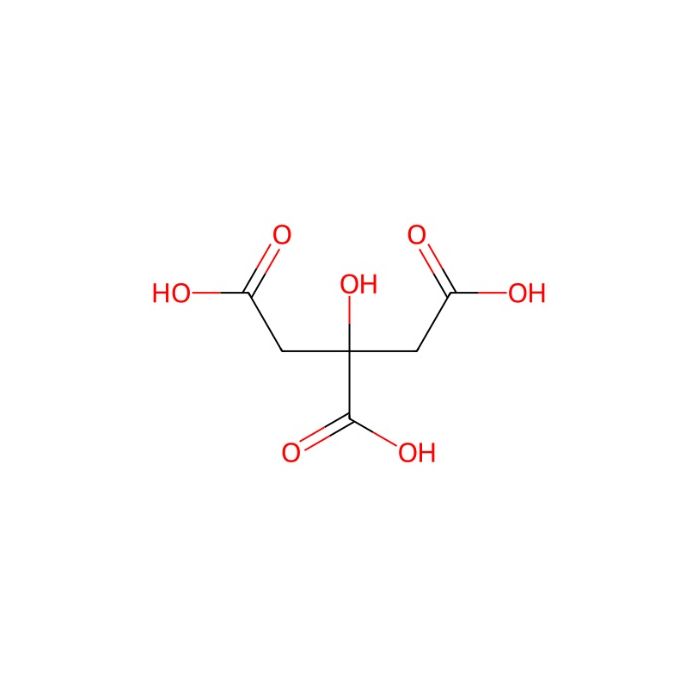
Finding the right excipient that matches your needs as well as regulatory demands can be a complicated challenge in formulation. With our know-how and regulatory expertise, we support you in every step of development, scale-up, and production. As part of our EMPROVE ® Program, our raw materials are offered with extensive documentation facilitating compliance of your pharma and biopharma product, full supply chain transparency and risk mitigation. Our SAFC ® portfolio of high-quality products for biopharmaceutical and pharmaceutical formulation and production withstands strict quality control procedures and is produced according to applicable cGMP guidelines.Citric acid is typically used as pH adjuster, buffer agent or as antioxidant in pharmaceutical formulations. Its range spans across different formulation types, including semi-solid dosage forms, liquid dosage forms such as solutions and solid dosage forms such as effervescent tablets or granules. Citric acid anhydrous powder EMPROVE ® Essential is citric acid present in its water-free, powder form.
Taxonomy Tree
| Kingdom | Organic compounds |
|---|---|
| Superclass | Organic acids and derivatives |
| Klasse | Carboxylic acids and derivatives |
| Subclass | Tricarboxylic acids and derivatives |
| Intermediate Tree Nodes | Not available |
| Direct Parent | Tricarboxylic acids and derivatives |
| Alternative Parents | Alpha hydroxy acids and derivatives Tertiary alcohols Carboxylic acids Organic oxides Hydrocarbon derivatives Carbonyl compounds |
| Molecular Framework | Aliphatic acyclic compounds |
| Substituents | Tricarboxylic acid or derivatives - Hydroxy acid - Alpha-hydroxy acid - Tertiary alcohol - Carboxylic acid - Organic oxygen compound - Organic oxide - Hydrocarbon derivative - Organooxygen compound - Carbonyl group - Alcohol - Aliphatic acyclic compound |
| Beschreibung | This compound belongs to the class of organic compounds known as tricarboxylic acids and derivatives. These are carboxylic acids containing exactly three carboxyl groups. |
| External Descriptors | tricarboxylic acid |
Find and download the COA for your product by matching the lot number on the packaging.
| Lot Number | Certificate Type | Datum | Artikel |
|---|---|---|---|
| Certificate of Analysis | Jul 30, 2026 | C774600 | |
| Certificate of Analysis | Feb 27, 2026 | C774600 |
| Löslichkeit | 1330g/L |
|---|---|
| Empfindlichkeit | Moisture sensitive |
| Schmelzpunkt (°C) | 153-159°C |
| Molekulargewicht | 192.120 g/mol |
| XLogP3 | -1.700 |
| Hydrogen Bond Donor Count | 4 |
| Hydrogen Bond Acceptor Count | 7 |
| Rotatable Bond Count | 5 |
| Exact Mass | 192.027 Da |
| Monoisotopic Mass | 192.027 Da |
| Topological Polar Surface Area | 132.000 Ų |
| Heavy Atom Count | 13 |
| Formal Charge | 0 |
| Complexity | 227.000 |
| Isotope Atom Count | 0 |
| Defined Atom Stereocenter Count | 0 |
| Undefined Atom Stereocenter Count | 0 |
| Defined Bond Stereocenter Count | 0 |
| Undefined Bond Stereocenter Count | 0 |
| The total count of all stereochemical bonds | 0 |
| Covalently-Bonded Unit Count | 1 |
Unser Leitfaden zur Qualitätsauswahl behandelt Reinheit, Stabilisatorstatus und Anwendungseignung für alle Varianten in unserem Katalog.
Anhydrous Grade Qualitätsleitfaden ansehen → PharmPure™ Qualitätsleitfaden ansehen → USP Qualitätsleitfaden ansehen → JP Qualitätsleitfaden ansehen → BP Qualitätsleitfaden ansehen → Ph.Eur. Qualitätsleitfaden ansehen →