Determine the necessary mass, volume, or concentration for preparing a solution.
| Activity Type | Relation | Activity value | Units | Action Type | Journal | PubMed Id | doi | Assay Aladdin ID |
|---|

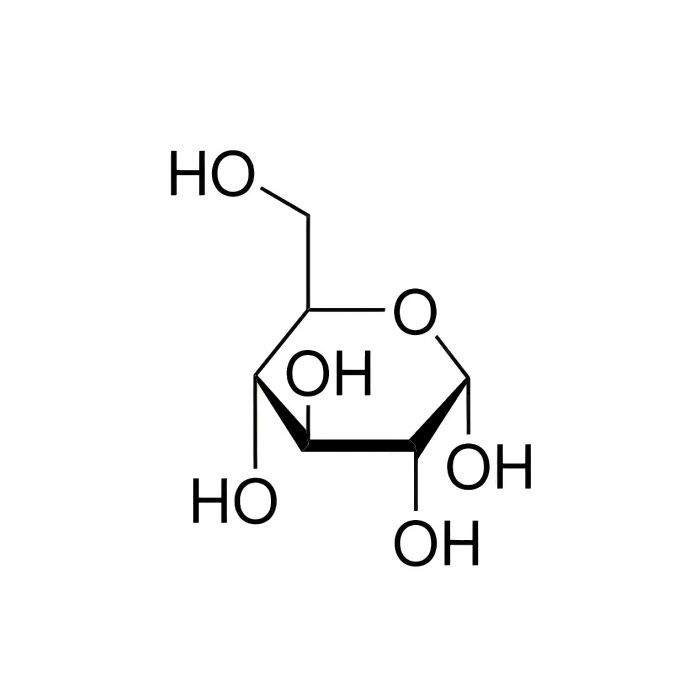
D(+)Glucose, Anhydrous is a granular monosaccharide.
A primary source of energy for living organisms
Taxonomy Tree
| Kingdom | Organic compounds |
|---|---|
| Superclass | Organic oxygen compounds |
| Klasse | Organooxygen compounds |
| Subclass | Carbohydrates and carbohydrate conjugates |
| Intermediate Tree Nodes | Monosaccharides |
| Direct Parent | Hexoses |
| Alternative Parents | Medium-chain aldehydes Beta-hydroxy aldehydes Alpha-hydroxyaldehydes Secondary alcohols Polyols Primary alcohols Organic oxides Hydrocarbon derivatives |
| Molecular Framework | Aliphatic acyclic compounds |
| Substituents | Hexose monosaccharide - Medium-chain aldehyde - Beta-hydroxy aldehyde - Alpha-hydroxyaldehyde - Secondary alcohol - Polyol - Organic oxide - Hydrocarbon derivative - Primary alcohol - Carbonyl group - Aldehyde - Alcohol - Aliphatic acyclic compound |
| Beschreibung | This compound belongs to the class of organic compounds known as hexoses. These are monosaccharides in which the sugar unit is a is a six-carbon containing moeity. |
| External Descriptors | aldehydo-glucose - D-glucose |
| Activity Type | Relation | Activity value | Units | Action Type | Journal | PubMed Id | doi | Assay Aladdin ID |
|---|
| Activity Type | Relation | Activity value | Units | Action Type | Journal | PubMed Id | doi | Assay Aladdin ID |
|---|
Find and download the COA for your product by matching the lot number on the packaging.
| Lot Number | Certificate Type | Datum | Artikel |
|---|---|---|---|
 J2613203 | Certificate of Analysis | Sep 28, 2026 | G116300 |
| J2613309 | Certificate of Analysis | Sep 28, 2026 | G116300 |
| J2613310 | Certificate of Analysis | Sep 28, 2026 | G116300 |
| J2613311 | Certificate of Analysis | Sep 28, 2026 | G116300 |
| J2613312 | Certificate of Analysis | Sep 28, 2026 | G116300 |
| D2629063 | Certificate of Analysis | Apr 21, 2026 | G116300 |
| D2629064 | Certificate of Analysis | Apr 21, 2026 | G116300 |
| D2629065 | Certificate of Analysis | Apr 21, 2026 | G116300 |
| D2629066 | Certificate of Analysis | Apr 21, 2026 | G116300 |
| D2629067 | Certificate of Analysis | Apr 21, 2026 | G116300 |
| E2627219 | Certificate of Analysis | Apr 21, 2026 | G116300 |
| E2627489 | Certificate of Analysis | Apr 21, 2026 | G116300 |
| E2627491 | Certificate of Analysis | Apr 21, 2026 | G116300 |
| E2627492 | Certificate of Analysis | Apr 21, 2026 | G116300 |
| A2606353 | Certificate of Analysis | Dec 22, 2025 | G116300 |
| A2606354 | Certificate of Analysis | Dec 22, 2025 | G116300 |
| A2606355 | Certificate of Analysis | Dec 22, 2025 | G116300 |
| A2606356 | Certificate of Analysis | Dec 22, 2025 | G116300 |
| A2606357 | Certificate of Analysis | Dec 22, 2025 | G116300 |
| A2627462 | Certificate of Analysis | Dec 22, 2025 | G116300 |
| A2627463 | Certificate of Analysis | Dec 22, 2025 | G116300 |
| A2627468 | Certificate of Analysis | Dec 22, 2025 | G116300 |
| A2627469 | Certificate of Analysis | Dec 22, 2025 | G116300 |
| K2506721 | Certificate of Analysis | Nov 01, 2025 | G116300 |
| K2506722 | Certificate of Analysis | Nov 01, 2025 | G116300 |
| K2506723 | Certificate of Analysis | Nov 01, 2025 | G116300 |
| K2506736 | Certificate of Analysis | Nov 01, 2025 | G116300 |
| G2525306 | Certificate of Analysis | Jul 11, 2025 | G116300 |
| G2525307 | Certificate of Analysis | Jul 11, 2025 | G116300 |
| G2525389 | Certificate of Analysis | Jul 11, 2025 | G116300 |
| G2525390 | Certificate of Analysis | Jul 11, 2025 | G116300 |
| F2509389 | Certificate of Analysis | May 30, 2025 | G116300 |
| F2509504 | Certificate of Analysis | May 30, 2025 | G116300 |
| F2509570 | Certificate of Analysis | May 30, 2025 | G116300 |
| F2509575 | Certificate of Analysis | May 30, 2025 | G116300 |
| F2509576 | Certificate of Analysis | May 30, 2025 | G116300 |
| D2502258 | Certificate of Analysis | Mar 05, 2025 | G116300 |
| D2502294 | Certificate of Analysis | Mar 05, 2025 | G116300 |
| D2502295 | Certificate of Analysis | Mar 05, 2025 | G116300 |
| D2502309 | Certificate of Analysis | Mar 05, 2025 | G116300 |
| D2502384 | Certificate of Analysis | Mar 05, 2025 | G116300 |
| A2507359 | Certificate of Analysis | Dec 23, 2024 | G116300 |
| A2507360 | Certificate of Analysis | Dec 23, 2024 | G116300 |
| A2507361 | Certificate of Analysis | Dec 23, 2024 | G116300 |
| A2507362 | Certificate of Analysis | Dec 23, 2024 | G116300 |
| A2507721 | Certificate of Analysis | Dec 23, 2024 | G116300 |
| A2507722 | Certificate of Analysis | Dec 23, 2024 | G116300 |
| C2501071 | Certificate of Analysis | Dec 23, 2024 | G116300 |
| E2526025 | Certificate of Analysis | Dec 23, 2024 | G116300 |
| I2423295 | Certificate of Analysis | Sep 03, 2024 | G116300 |
| I2423296 | Certificate of Analysis | Sep 03, 2024 | G116300 |
| I2423297 | Certificate of Analysis | Sep 03, 2024 | G116300 |
| I2423298 | Certificate of Analysis | Sep 03, 2024 | G116300 |
| I2423299 | Certificate of Analysis | Sep 03, 2024 | G116300 |
| D2409108 | Certificate of Analysis | Mar 27, 2024 | G116300 |
| D2409109 | Certificate of Analysis | Mar 27, 2024 | G116300 |
| D2409110 | Certificate of Analysis | Mar 27, 2024 | G116300 |
| D2409111 | Certificate of Analysis | Mar 27, 2024 | G116300 |
| D2409112 | Certificate of Analysis | Mar 27, 2024 | G116300 |
| D2409323 | Certificate of Analysis | Mar 27, 2024 | G116300 |
| D2409324 | Certificate of Analysis | Mar 27, 2024 | G116300 |
| D2409325 | Certificate of Analysis | Mar 27, 2024 | G116300 |
| H2407079 | Certificate of Analysis | Mar 27, 2024 | G116300 |
| C2421342 | Certificate of Analysis | Mar 12, 2024 | G116300 |
| C2421343 | Certificate of Analysis | Mar 12, 2024 | G116300 |
| B2423825 | Certificate of Analysis | Mar 01, 2024 | G116300 |
| B2423963 | Certificate of Analysis | Mar 01, 2024 | G116300 |
| B2423909 | Certificate of Analysis | Feb 28, 2024 | G116300 |
| B2423958 | Certificate of Analysis | Feb 28, 2024 | G116300 |
| B2423960 | Certificate of Analysis | Feb 28, 2024 | G116300 |
| B2423961 | Certificate of Analysis | Feb 28, 2024 | G116300 |
| B2419351 | Certificate of Analysis | Jan 30, 2024 | G116300 |
| B2419356 | Certificate of Analysis | Jan 30, 2024 | G116300 |
| B2419358 | Certificate of Analysis | Jan 30, 2024 | G116300 |
| L2326133 | Certificate of Analysis | Dec 27, 2023 | G116300 |
| L2326134 | Certificate of Analysis | Dec 27, 2023 | G116300 |
| L2326135 | Certificate of Analysis | Dec 27, 2023 | G116300 |
| L2326130 | Certificate of Analysis | Dec 27, 2023 | G116300 |
| L2326131 | Certificate of Analysis | Dec 27, 2023 | G116300 |
| K2327353 | Certificate of Analysis | Dec 05, 2023 | G116300 |
| K2327354 | Certificate of Analysis | Dec 05, 2023 | G116300 |
| K2327352 | Certificate of Analysis | Dec 01, 2023 | G116300 |
| K2327356 | Certificate of Analysis | Dec 01, 2023 | G116300 |
| K2327357 | Certificate of Analysis | Dec 01, 2023 | G116300 |
| J2311046 | Certificate of Analysis | Oct 19, 2023 | G116300 |
| I2315201 | Certificate of Analysis | Sep 18, 2023 | G116300 |
| I2315202 | Certificate of Analysis | Sep 18, 2023 | G116300 |
| I2315203 | Certificate of Analysis | Sep 18, 2023 | G116300 |
| I2315204 | Certificate of Analysis | Sep 18, 2023 | G116300 |
| I2315205 | Certificate of Analysis | Sep 18, 2023 | G116300 |
| I2315206 | Certificate of Analysis | Sep 18, 2023 | G116300 |
| G2327074 | Certificate of Analysis | Aug 08, 2023 | G116300 |
| F2316297 | Certificate of Analysis | Jun 29, 2023 | G116300 |
| F2316890 | Certificate of Analysis | Jun 29, 2023 | G116300 |
| F2316302 | Certificate of Analysis | Jun 28, 2023 | G116300 |
| F2316305 | Certificate of Analysis | Jun 28, 2023 | G116300 |
| F2316307 | Certificate of Analysis | Jun 28, 2023 | G116300 |
| E2324596 | Certificate of Analysis | May 31, 2023 | G116300 |
| E2324598 | Certificate of Analysis | May 31, 2023 | G116300 |
| E2324589 | Certificate of Analysis | May 27, 2023 | G116300 |
| D23031023 | Certificate of Analysis | Apr 09, 2023 | G116300 |
| D23031037 | Certificate of Analysis | Apr 09, 2023 | G116300 |
| C2316749 | Certificate of Analysis | Mar 22, 2023 | G116300 |
| B2309568 | Certificate of Analysis | Feb 13, 2023 | G116300 |
| B2309622 | Certificate of Analysis | Feb 13, 2023 | G116300 |
| B2309631 | Certificate of Analysis | Feb 13, 2023 | G116300 |
| B2209631 | Certificate of Analysis | Feb 13, 2023 | G116300 |
| B2309558 | Certificate of Analysis | Feb 13, 2023 | G116300 |
| L2223003 | Certificate of Analysis | Dec 27, 2022 | G116300 |
| L2223043 | Certificate of Analysis | Dec 27, 2022 | G116300 |
| L2223002 | Certificate of Analysis | Dec 27, 2022 | G116300 |
| L2223042 | Certificate of Analysis | Dec 27, 2022 | G116300 |
| K2228242 | Certificate of Analysis | Nov 30, 2022 | G116300 |
| J2228542 | Certificate of Analysis | Oct 31, 2022 | G116300 |
| J2228544 | Certificate of Analysis | Oct 31, 2022 | G116300 |
| J2228559 | Certificate of Analysis | Oct 31, 2022 | G116300 |
| J2228569 | Certificate of Analysis | Oct 31, 2022 | G116300 |
| I2220124 | Certificate of Analysis | Sep 26, 2022 | G116300 |
| H2202154 | Certificate of Analysis | Aug 04, 2022 | G116300 |
| H2202158 | Certificate of Analysis | Aug 03, 2022 | G116300 |
| H2202238 | Certificate of Analysis | Aug 03, 2022 | G116300 |
| C2219361 | Certificate of Analysis | Jun 29, 2022 | G116300 |
| F2218303 | Certificate of Analysis | Jun 20, 2022 | G116300 |
| F2218304 | Certificate of Analysis | Jun 20, 2022 | G116300 |
| E2207102 | Certificate of Analysis | May 13, 2022 | G116300 |
| E2207108 | Certificate of Analysis | May 13, 2022 | G116300 |
| F2218275 | Certificate of Analysis | May 13, 2022 | G116300 |
| B2223009 | Certificate of Analysis | Dec 14, 2021 | G116300 |
| B2223052 | Certificate of Analysis | Dec 14, 2021 | G116300 |
| B2223078 | Certificate of Analysis | Dec 14, 2021 | G116300 |
| F2218307 | Certificate of Analysis | Dec 14, 2021 | G116300 |
| L2108237 | Certificate of Analysis | Dec 14, 2021 | G116300 |
| C2219354 | Certificate of Analysis | Dec 13, 2021 | G116300 |
| C2219356 | Certificate of Analysis | Dec 13, 2021 | G116300 |
| C2219358 | Certificate of Analysis | Dec 13, 2021 | G116300 |
| C2219360 | Certificate of Analysis | Dec 13, 2021 | G116300 |
| L2108080 | Certificate of Analysis | Dec 13, 2021 | G116300 |
| Löslichkeit | Soluble in water, insoluble in alcohol, ether |
|---|---|
| Empfindlichkeit | Moisture sensitive. |
| Spezifische Drehung [α] | 53 ° (C=10, H2O) |
| Schmelzpunkt (°C) | 146°C |
| Molekulargewicht | 180.16 |
| XLogP3 | -2.900 |
| Hydrogen Bond Donor Count | 5 |
| Hydrogen Bond Acceptor Count | 6 |
| Rotatable Bond Count | 5 |
| Exact Mass | 180.063 Da |
| Monoisotopic Mass | 180.063 Da |
| Topological Polar Surface Area | 118.000 Ų |
| Heavy Atom Count | 12 |
| Formal Charge | 0 |
| Complexity | 138.000 |
| Isotope Atom Count | 0 |
| Defined Atom Stereocenter Count | 4 |
| Undefined Atom Stereocenter Count | 0 |
| Defined Bond Stereocenter Count | 0 |
| Undefined Bond Stereocenter Count | 0 |
| The total count of all stereochemical bonds | 0 |
| Covalently-Bonded Unit Count | 1 |
Unser Leitfaden zur Qualitätsauswahl behandelt Reinheit, Stabilisatorstatus und Anwendungseignung für alle Varianten in unserem Katalog.
AR Qualitätsleitfaden ansehen →