
Determination of the degree of adversity injury to plant tissues
Determination of the degree of adversity injury to plant tissues
To master the principle of cell injury and the measurement of cell injury in plants in the presence of adversity or other injuries; to master the determination of conductivity; to learn to use statistical methods to compare and analyze the degree of cell injury in different plants after cold damage.
Principle
Aqueous solutions of electrolytes of small molecules or biomolecules can conduct electricity, and the conductivity of electrolyte solutions obeys Ohm's law. If an external voltage V is added to the two electrodes in the solution, and the current through is A, the resistance between the poles is R ,i.e.:
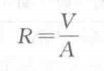
The resistance of the solution is large, the conductivity is small, the reciprocal of the resistance of the solution is defined as the conductance of the solution, coded as (unit S), that is.
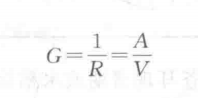
Determination of conductivity of electrolyte solution, take the area of 1 cm2 of the two electrodes, 1 cm apart, the middle 1 cm3 of the solution is called the conductivity of the solution, also known as the conductivity, also known as the specific conductance, the conductivity of the solution.
k = GQ
The unit of K is S・cm-1 usually used as μS - cm-1, where Q represents the electrode constant which can be determined experimentally.
Plant cell membranes play an important role in maintaining the cellular microenvironment and normal metabolism. Under normal conditions, cell membranes are selectively permeable to substances. When the plant is affected by adversity (such as high temperature, low temperature, drought, salinity or pathogenic bacterial infestation), the cell membrane is damaged, so that the function of the membrane is impaired or the structure is destroyed, the permeability increases, so that the substances in the cell (especially electrolytes) are extravasated in large quantities, which causes a change in the conductivity of the tissue immersion solution. The more severe the injury, the more extravasation, the greater the increase in conductivity. Therefore, we can use the conductivity meter to determine the increase in conductivity of the external fluid and know the degree of injury.
Operation method
Determination of the degree of adversity injury to plant tissues
Principle
Small molecules or biological macromolecules of electrolyte aqueous solution can conduct electricity, electrolyte solution conducts electricity obeys Ohm's law. If the two electrodes in solution plus the external voltage V, the current through the A, then the resistance between the two poles for R, that is: the resistance of the solution is large, the conductivity is small, the inverse of the resistance of the solution is defined as the conductivity of the solution, code for (unit S), that is: determination of the conductivity of the electrolyte solution, take the area of 1 cm2 of the two pieces of electrodes, 1 cm apart, the middle of the 1 cm3 of the solution shown in the conductivity called the conductivity of the solution The conductance of a solution with two electrodes 1 cm2 apart is called the conductivity of the solution, and is also called the specific conductance, k = GQK in units of S・cm-1 and usually μS - cm-1, where Q is the electrode constant that can be determined experimentally. The plant cell membrane plays an important role in maintaining the cell microenvironment and normal metabolism. Under normal conditions, the cell membrane has selective permeability to substances. When the plant is affected by adversity (such as high temperature, low temperature, drought, salinity or pathogenic bacterial infestation), the cell membrane is damaged, so that the function of the membrane is impaired or the structure is destroyed, the permeability increases, so that the substances in the cell (especially electrolytes) are extravasated in large quantities, which causes a change in the conductivity of the tissue immersion solution. The more severe the injury, the more extravasation, the greater the increase in conductivity. Therefore, we can use the conductivity meter to determine the increase in conductivity of the external fluid and know the degree of injury.
Materials and Instruments
Material: Plant leaves. ・ Move The basic process of determining the degree of plant tissue adversity injury can be divided into the following steps: 1. Washing of containers: The conductivity method requires strict cleanliness of water and containers, and the conductivity value of water is 1-20 μS; the containers used must be washed thoroughly, then rinsed with deionized water, and placed in an enameled dish washed and lined with clean filter paper. In order to check whether the test tubes are clean or not, freshly made deionized water with a conductivity value of 1-20 μS can be added to the test tubes, and a conductivity meter can be used to determine whether the original conductivity data are maintained. 2. 2. Treatment of test materials: Take several functional leaves at the same leaf position from normal-growing and adversity-stressed plants, respectively. In the absence of adversity-stressed plants, several leaves of normal-growing plants were taken, divided into two parts, and wiped with gauze to remove the surface dust. One of them was frozen at about -20 °C for 20 min (or placed in a thermostat at about 40 °C for 30 min) for stress treatment. The other one was wrapped in moist gauze and left at room temperature as control. 3. Determination: (1) The leaves of the treatment group and the control group were rinsed twice with deionized water, and then clean filter paper was used to absorb the surface water. Use a 6~8 mm hole punch to avoid the main veins to take leaf pellets (or cut them into uniformly sized leaf pieces). 30 leaf pellets were taken from each group of leaves and divided into 3 clean graduated test tubes, with 10 pellets placed in each tube. (2) in each tube containing the leaves add 10 mL of deionized water, and will be larger than the caliber of the test tube of plastic gauze into the test tube from the liquid surface of 1 cm, in order to prevent the leaf discs in the pumping turned out of the test tube. Then put the test tube into a vacuum drying oven and pump it with vacuum pump for 10 min (or you can directly put the leaf discs into a syringe, suck 10 mL of deionized water and block the mouth of the syringe for pumping) in order to draw out the air in the cell space, when the air is put into the test tube slowly, the water will penetrate into the cell space and the leaf blade will turn into semi-transparent shape and sink under water. (3) Keep the above test tubes at room temperature for 1 h, during which the test tubes should be shaken several times, or put the test tubes on the oscillator and shake for 1 h. After 1 h, shake the test tubes well, and then measure the initial conductivity value (Gi) with a conductivity meter. (4) After the measurement, the test tubes were capped and sealed, and placed in a boiling water bath for 10 min to kill the plant tissues. After removing the test tubes, cool them down to room temperature with tap water and equilibrate them at room temperature for 10 min, shake them well and measure the final conductivity value ( G2). (5) Use another test tube of 10 mL of deionized water (or evaporated water) as a blank, and determine the blank conductivity value (i.e. background value). 4. 4. Calculation Calculate the relative conductivity according to equation (35-1): The magnitude of the relative conductance indicates the degree of cell membrane injury. Since the control (at room temperature) also has a small amount of electrolyte extravasation, the extravasation due to low or high temperature stress can be calculated according to equation (35-2), and is called the degree of injury (or injurious extravasation). Where: Lt a relative conductivity of treated leaves; Lck - relative conductivity of control leaves. Calculate the relative conductivity according to equation (32-3): Caveat 1. CO2solubility in water is high, and the conductance should be determined to prevent high CO2gas source and exhaled CO2and exhaled CO2 from the mouth should be prevented from entering the test tube so as not to affect the accuracy of the results. 2. The temperature has a great influence on the conductivity of the solution, so G1and G2G 1 and G 2 must be measured at the same temperature. 3. 3, in the determination of conductivity in general application of deionized water, if the preparation of the difficulty can be replaced by ordinary distilled water, but need to set up a blank test tube, distilled water as a blank, the determination of the sample at the same time to determine the blank conductivity value (i.e., background value). For more product details, please visit Aladdin Scientific website.
Reagent: Deionized water.
Equipment: DDS-11A or DDS-11 conductivity meter, vacuum pump (with vacuum drier), constant temperature water bath, water bath tube rack, 20 mL corked test tube, hole punch, or double-sided knife.
Constant temperature water bath, water bath rack, 20 mL graduated test tubes with stoppers, hole punch, or double-sided knife.
10 mL pipette or dosing station, test tube rack, aluminum pot, electric stove, spatula, scissors
Enameled tray, marker, filter paper, approximately 3 cm
2
Plastic mesh.

