Iscalimab (anti-CD40) - Anticorpo primario, specific to CD40, Human IgG1, Antibody of CD40, Antibody of CD40

CAS: 2031153-61-2 Cat. No.: Ab175491
Disponibile su ordine
QUALITÀ & PUREZZA Animal Free ? Animal-free — produced without animal-derived components to reduce contamination risk. Use in biomanufacturing and culture avoiding animal-origin material. Carrier Free ? Carrier-free — supplied without added carrier protein/stabilizer. Use when carriers (e.g. BSA) would interfere with conjugation or sensitive assays. Recombinant ? Recombinant — produced via recombinant expression for defined sequence and consistency. Use for reproducible, animal-free proteins of known origin. ExactAb™ ? ExactAb™ — Aladdin's antibody line emphasizing precision and validated quality. Use for reliable, specificity-validated antibody applications. Low Endotoxin ? Low-endotoxin grade — endotoxin reduced to low controlled levels. Use in sensitive biological work where high endotoxin would interfere. Azide Free ? Azide-free — without sodium azide preservative. Use in conjugations, cell work, or assays where azide is toxic or inhibitory. Validated ? Validated grade — performance confirmed in defined applications before release. Use when you want documented assurance the reagent works as stated. ≥95%(SDS-PAGE&SEC-HPLC)
Application
Animal Model, ELISA, Flow Cytometry, Functional Assay
Host species
Umano
Reactive species
Cynomolgus monkey, Scimmia Rhesus, Umano
Isotype
Human IgG1
Conjugation
Unconjugated
★
Dimensione
Germania (EU)
USA*
Prezzo
Qtà
100μg
Ab175491-100μg
—
Disponibile ≥10
105,78€
1mg
Ab175491-1mg
—
4 Disponibile
527,50€
5mg
Ab175491-5mg
—
1 Disponibile
1.735,39€
10mg
Ab175491-10mg
Su ordinazione · 8–12 settimane
2.776,68€
Enter a quantity for the sizes you want to add.
🧪
Perché questa qualità

Carrier Free, Recombinant, ExactAb™, Low Endotoxin, Azide Free, Validated, Animal Free, ≥95%(SDS-PAGE&SEC-HPLC) Animal Free,Azide Free,Carrier Free,ExactAb™,Low Endotoxin,Recombinant,Validated per flussi di lavoro cromatografici e analitici sensibili che richiedono un'interferenza minima della linea di base.

🌡

Stoccaggio e spedizione

Store at -80°C,Avoid repeated freezing and thawing Spedizione Dry ice packs + Cold packs. Consultare il COA specifico del lotto per le specifiche esatte.

📋

Documenti di qualità

SDS, COA, scheda tecnica e scheda delle specifiche disponibili per il download. COA specifico del lotto accessibile tramite ricerca per numero di lotto.

📚

Prova documentale

Citato in 0 pubblicazioni peer-reviewed su cromatografia, sintesi organica e reazioni di accoppiamento incrociato.

Panoramica

Iscalimab (anti-CD40) is a non-depleting IGg1 monoclonal antibody targeting CD40 (KD: 0.3 nM). Iscalimab (anti-CD40) can be used for research of Graves' hyperthyroidism and autoimmune diseases.
Purity
≥95% (SDS-PAGE&SEC)
Endotoxin Level
< 1.0EU/mg

Specifiche

Product Name
Iscalimab (anti-CD40) - Anticorpo primario, specific to CD40, Human IgG1, Antibody of CD40
Sinonimi
AI326936 antibody | B cell associated molecule CD40 antibody | B cell surface antigen CD40 antibody | B cell-associated molecule antibody | B-cell surface antigen CD40 antibody | Bp50 antibody | CD 40 antibody | CD40 antibody | CD40 antigen (TNF receptor
Specifiche e purezza
Carrier Free, Recombinant, ExactAb™, Low Endotoxin, Azide Free, Validated, Animal Free, ≥95%(SDS-PAGE&SEC-HPLC)
Specie ospite
Umano
Specificità
CD40
Coniugazione
Unconjugated
Grado
Animal Free, Azide Free, Carrier Free, ExactAb™, Low Endotoxin, Recombinant, Validated
Tipo di azione
INHIBITOR
Meccanismo d'azione
Antibody of CD40
Isotipo
Human IgG1
Tipo di catena leggera
kappa
SDS-PAGE
27.2 kDa (Light Chain) & 52.2 kDa (Heavy Chain), under reducing conditions; 201.2 kDa, under non-reducing conditions.
Metodo di purificazione
Protein A purified
CAS
2031153-61-2
Product Line
Prodotti biologici
Stoccaggio e spedizione
Forma
Liquid
Condizioni di conservazione di stoccaggio
Store at -80°C,Avoid repeated freezing and thawing
Spedito in
Dry ice packs + Cold packs
Stabilità e conservazione
Store at -80℃ for 24 months. Upon receipt, it is recommended to aliquot. Avoid freeze/thaw cycle.
Immagini

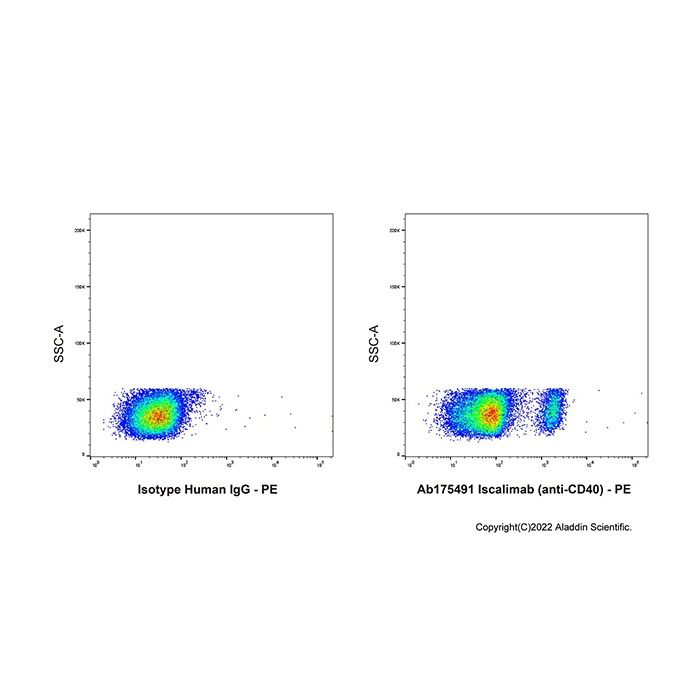
Iscalimab (anti-CD40) (Ab175491) - Flow Cytometry
Flow Cytometry analysis of human peripheral blood lymphocytes labelling CD40 with Iscalimab (anti-CD40) (Ab175491) conjugated with biotin (right panel) compared with Human IgG (Biotin) (Ab180314) - Isotype Control (left panel) and detected with SA-PE (rp156150). 

Iscalimab (anti-CD40) (Ab175491) - ELISA
Immobilized Recombinant Human CD40 protein (rp183577) at 1.0 μg/mL can bind Iscalimab (anti-CD40) (Ab175491) with the EC₅₀ of 35.88 ng/mL.

Iscalimab (anti-CD40) (Ab175491) - SEC
The purity of Iscalimab (anti-CD40) (Ab175491) is more than 95% verified by HPLC.

Iscalimab (anti-CD40) (Ab175491) - Flow Cytometry
Flow Cytometry analysis of Raji cells labelling CD40 (red) with Iscalimab (anti-CD40) (Ab175491). Goat Anti-Human IgG (PE) (Ab175838) at a dilution of 1/1000 was used as the secondary antibody. Blue - Isotype control, human IgG (Ab170213). Black - Unlabelled control, cells without incubation with primary antibody.

Iscalimab (anti-CD40) (Ab175491) - Flow Cytometry
Flow Cytometry analysis of human peripheral blood lymphocytes labelling CD40 (red) with Iscalimab (anti-CD40) (Ab175491) conjugated with biotin and detected with SA-PE (rp156150). Blue - Isotype control, Human IgG (Biotin) (Ab180314). Black - Unlabelled control, cells without incubation with primary antibody.

Documentazione

📋 Scheda di dati di sicurezza (SDS)

Documento completo su pericoli, manipolazione, stoccaggio e conformità normativa.

<<<<<<< HEAD Scarica SDS → ======= Scarica SDS → >>>>>>> release248-p3

✅ Certificato di analisi (COA)

Dati di qualità specifici del lotto. Inserisci il numero di lotto per recuperare il COA esatto.

Cerca COA →

📊 Scheda tecnica

Riepilogo di riferimento rapido delle specifiche e applicazioni del prodotto.

Visualizza scheda tecnica →

🔬 Scheda delle specifiche

Attributi di qualità completi e criteri di accettazione per questa qualità.

Visualizza scheda delle specifiche →

Dati avanzati

Obiettivi associati (umani)
CD40 Tchem Tumor necrosis factor receptor superfamily member 5 (0 Activities)
Activity TypeActivity Value -log(M)Mechanism of ActionActivity ReferencePublications (PubMed IDs)
CD40 Tchem Tumor necrosis factor receptor superfamily member 5 (9 Activities)
Activity TypeRelationActivity valueUnitsAction TypeJournalPubMed IddoiAssay Aladdin ID
Meccanismi d'azione
Certificati (CoA, COO, BSE/TSE e tabella di analisi)
C of A & Other Certificates(BSE/TSE, COO):
Analytical Chart:

Find and download the COA for your product by matching the lot number on the packaging.

3 results found

Lot NumberCertificate TypeDataOggetto
ZJ24F0708643ZJ24F0708643Certificate of AnalysisMay 21, 2026 Ab175491
ZJ24F0708644ZJ24F0708644Certificate of AnalysisMay 21, 2026 Ab175491
ZJ24F0708725ZJ24F0708725Certificate of AnalysisMay 21, 2026 Ab175491
Calcolatori di soluzioni
Recensioni

Recensioni dei clienti

Application Protocols

Item-specific tested applications, positive controls, and recommended dilutions: Not specified for this item; refer to CoA/Spec Sheet.

General guidance (literature/general knowledge; validate empirically):

  • Flow cytometry (FC): Start with 0.1–1 µg/test (10⁵–10⁶ cells); include Fc receptor block for myeloid cells. Optimize staining time (20–30 min on ice) and washing.
  • ELISA/ELISpot: For capture/detection, titrate from 0.25–4 µg/mL; ensure coating buffers (carbonate pH ~9.6) and blocking conditions minimize background.
  • Immunoprecipitation: 1–5 µg antibody per mg total protein lysate; use gentle, non-denaturing lysis buffers to preserve receptor complexes.
  • Immunofluorescence: Begin at 1–5 µg/mL; confirm fixation/permeabilization does not disrupt extracellular epitopes if staining surface CD40.

These are generic starting points. Definitive conditions for this specific product must be established experimentally.

Biological Roles

General background (literature/general knowledge):

  • CD40 (TNFRSF5) is a member of the tumor necrosis factor receptor superfamily expressed on B cells, dendritic cells, macrophages, and various non-hematopoietic cells. Its ligand CD154 (CD40L) is primarily expressed on activated CD4+ T cells and platelets.
  • Signaling: CD40 engagement recruits TRAF adaptor proteins, activating NF-κB, MAPK, and PI3K pathways. Outcomes include B-cell proliferation, immunoglobulin class switching, germinal center formation, dendritic cell maturation, and cytokine production.
  • Research utility of anti-CD40 antibodies: They enable modulation or detection of CD40 signaling. Depending on epitope and Fc, antibodies may block CD40–CD154 interactions, act as antagonists with Fc-silenced backbones, or function as agonists when Fc cross-linking occurs (the functional profile of this specific item is not specified).
  • Systems studied: Adaptive immunity, antigen presentation, autoimmunity models, transplant immunology models, and tumor immunology often leverage CD40 pathway tools.

Item-specific note:

  • This product is an anti-CD40 recombinant antibody (Iscalimab). No additional biological activity claims (agonist/antagonist, species cross-reactivity, or isotype) are provided here; consult the CoA/Spec Sheet or perform empirical validation for your system.
Buffer Applications

Item-specific buffer composition and recommended working buffers: Not specified for this item; refer to CoA/Spec Sheet.

General buffer guidance for monoclonal antibodies (literature/general knowledge):

  • Storage buffers: Near-neutral pH buffers (e.g., PBS pH 7.2–7.4, 10–20 mM histidine pH 6.0–6.5) with optional stabilizers (2–5% trehalose/sucrose) can enhance stability. This product is carrier-free; add stabilizers only if compatible with downstream assays.
  • Assay buffers: Include protein blockers (e.g., 0.1–1% BSA) for ELISA or flow cytometry to reduce non-specific binding, unless carrier-free conditions are essential.
  • Low endotoxin workflows: Use endotoxin-free water and certified consumables for sensitive cell-based assays.
  • Filtration: If sterility is required post-reconstitution, use 0.22 µm low-protein-binding filters; pre-rinse to minimize antibody loss.

Note: Exact pH, ionic strength, and compatibility with specific buffer systems for this item are not specified and should be determined empirically based on the application.

Green Alternatives

For biologic reagents like monoclonal antibodies, "green alternatives" relate more to formulation and workflow rather than replacing the molecule with a different solvent or reagent.

Sustainability considerations (general):

  • Concentrated stocks: Use higher-concentration stocks (when available) to reduce packaging and cold-chain shipments.
  • Buffer selection: Favor phosphate or HEPES buffers prepared from high-purity salts and ultrapure water; avoid azide where not necessary to reduce hazardous waste (this product is azide-free as supplied).
  • Cold-chain efficiency: Combine orders to minimize shipment frequency; utilize validated, reusable cold shippers when possible.
  • Single-use plastics: Minimize by employing sterile, washable glassware where compatible, and by planning experiments to reduce pipette tip and tube consumption.

Comparison of handling choices (general):

  • Carrier-containing formulations can reduce waste from failed experiments due to improved stability, but introduce proteinaceous waste streams.
  • Carrier-free formulations (like this item) minimize non-essential additives and are better for conjugation and cell assays, potentially reducing repeat runs and overall footprint when properly handled.

There is no direct "green solvent" swap applicable to this antibody. Focus on right-first-time experimental design and efficient logistics.

Pharmaceutical Uses

No clinical or therapeutic claims are made for this product; it is supplied strictly for research use only.

General formulation/manufacturing research context (literature/general knowledge):

  • Biopharm R&D utility: Anti-CD40 monoclonal antibodies are commonly investigated in discovery and development settings for their effects on CD40 pathway biology. In preformulation studies, researchers evaluate pH stability, excipient compatibility, and stress responses (thermal, agitation, freeze–thaw) to design developable formulations.
  • Analytical characterization: Typical workflows include SEC-HPLC for aggregation, cIEF for charge variants, LC–MS peptide mapping for identity and PTMs, and endotoxin testing (LAL or recombinant factor C), particularly important here given the item’s low endotoxin designation.
  • Process development: Carrier-free, azide-free format is compatible with conjugation studies (e.g., ADC/linker screening) and with cell-based bioassays that model mechanism of action.

Item-specific notes:

  • Pharmacopeia status, excipient profile, sterile status, and release specifications for this particular lot are not specified; refer to the CoA/Spec Sheet if required for regulated workflows.
Physical Properties

Item-specific properties:

  • Appearance: Not specified for this item; refer to CoA/Spec Sheet.
  • Concentration, buffer, pH, excipients: Not specified for this item; refer to CoA/Spec Sheet.
  • Molecular weight (Da): Not specified for this item; refer to CoA/Spec Sheet.
  • pI (isoelectric point): Not specified for this item; refer to CoA/Spec Sheet.

Literature/general values for monoclonal antibodies (for context only; not product specifications):

  • Typical molecular mass: ~145–155 kDa for full-length IgG.
  • Hydrodynamic diameter: ~10–12 nm (depends on glycosylation/solution conditions).
  • Extinction coefficient (A280): Often ~1.3–1.5 (mg/mL)⁻¹ for IgG; sequence-dependent.
  • Solubility: High in aqueous buffers (e.g., PBS) at neutral pH; sensitive to aggregation at extremes of pH, high ionic strength, or elevated temperature.
  • Thermal transitions: mAbs commonly show multi-domain unfolding with Tm values in the 60–75 °C range, highly formulation dependent.

Handling implications (general):

  • Avoid vigorous shaking and foaming to minimize aggregation.
  • Maintain cold chain; many mAbs lose activity on repeated freeze–thaw.
  • Use low-binding plastics and pre-wet filters (0.22 µm) when sterile-filtration is necessary to reduce non-specific adsorption.
Quality and Grades

Item-specific quality attributes (from Product Data):

  • Recombinant: Produced in a defined expression system; batch-to-batch consistency higher than for hybridoma-derived antibodies.
  • Animal Free: No animal-derived components used during production, reducing risk of adventitious agents and animal-origin contaminants.
  • Carrier Free: No protein carriers (e.g., BSA) added—ideal for conjugation and functional assays where carriers interfere.
  • Azide Free: Suitable for live-cell applications and enzyme-coupled assays where azide is inhibitory or cytotoxic.
  • Low Endotoxin: Indicates minimized LPS contamination; important for cell-based assays sensitive to TLR4 activation. Exact specification/limit: Not specified for this item; refer to CoA/Spec Sheet.
  • ExactAb™: Denotes sequence-defined recombinant antibody format supporting high lot-to-lot reproducibility (program/branding-specific; see manufacturer notes).
  • Validated: Indicates performance has been verified in-house; specific validated applications and species: Not specified for this item; refer to CoA/Spec Sheet.

How to leverage these grades (general guidance):

  • Conjugation-ready: Carrier-free, azide-free format minimizes pre-cleanup prior to labeling (e.g., NHS-ester dyes, maleimide linkers) provided buffer composition is compatible.
  • Cell work: Low endotoxin and azide-free attributes are preferred for primary immune cell assays.
  • Regulatory documentation: For quantitative work, request CoA/Spec Sheet for exact endotoxin levels, purity method (e.g., SEC-HPLC), and residual host-cell protein/DNA testing, if applicable.
Reaction and Applications

This product is a monoclonal antibody and is not typically used as a reagent in small-molecule synthetic reactions.

Research applications (general knowledge; not product-specific performance claims):

  • Target engagement studies: Probe CD40 occupancy on cell surfaces via flow cytometry or immunofluorescence when appropriately validated.
  • Functional assays: Interrogate CD40/CD154 (CD40L) costimulatory signaling in B cells, dendritic cells, and other antigen-presenting cells. Blocking or agonism depends on epitope and Fc/isotype (not specified for this item).
  • Affinity capture: Potential use in immunoprecipitation of CD40 from lysates if the antibody format/epitope is compatible.
  • Bioanalytical: Develop ligand-binding assays (ELISA/bridging formats) for CD40 quantification or pharmacokinetic method development, contingent on validation.

Practical tips (general):

  • Maintain protein integrity: Keep on ice during assay setup; avoid repeated freeze–thaw.
  • Titration: Determine optimal working concentration empirically (e.g., serial dilutions over 10–1,000 ng/mL for surface targets, assay-dependent).
  • Controls: Include isotype controls and Fc-blocking where appropriate to assess non-specific binding.

Note: Specific validated applications, optimal dilutions, and observed functionality for this product are not specified; consult the CoA/Spec Sheet or perform in-house validation.

Reaction Conditions

Not applicable in the context of small-molecule synthesis.

General handling conditions for immunoassays and conjugation (literature/general knowledge; not product specifications):

  • Temperature: Keep on ice during setup; perform incubations typically at 4 °C (overnight) or room temperature (30–120 min), assay-dependent.
  • pH: Near-neutral (6.5–7.5) for binding assays; mildly basic (pH 7.5–8.5) for NHS-ester conjugations with careful control of reaction time to limit over-labeling.
  • Concentrations: Working ranges vary widely (e.g., 0.05–10 µg/mL for IF/FC capture/detection), requiring empirical titration.
  • Additives: Include surfactants (e.g., 0.01% Tween-20) in wash buffers to reduce non-specific binding for ELISA/Western, if compatible.

Item-specific tested conditions, titers, and yields are not provided; consult the CoA/Spec Sheet or perform pilot optimizations.

Safety and Handling

Item-specific safety data:

  • GHS classification, pictograms, H-statements, signal word: Not specified for this item; consult the SDS.
  • Research use note: For research use only.

General safety guidance for recombinant antibodies (literature/general knowledge; defer to SDS for authoritative details):

  • Hazard profile: Protein biologics are typically not classified as hazardous chemicals, but may cause allergic reactions in sensitized individuals.
  • PPE: Laboratory coat, nitrile gloves, and safety glasses as baseline. Use biological safety cabinet (Class II) when handling open vials if sterility is required.
  • Hygiene: Avoid inhalation of aerosols and contact with skin/eyes. Wash hands after handling.
  • Incompatibilities: Avoid strong oxidizers and extremes of pH that can denature proteins. Do not mix with sodium azide–containing solutions if downstream enzymatic assays are planned (this product is azide-free as supplied).
  • Perishability: Antibodies are temperature-sensitive; maintain cold chain to preserve binding activity.
  • Spill/cleanup: Absorb with inert material, then decontaminate surfaces with appropriate laboratory disinfectant.
  • First aid (general): If contact occurs, rinse skin/eyes with water. If inhaled, move to fresh air. Seek medical attention if irritation persists. Always follow institutional biosafety procedures.
Solvent Selection

Item-specific solvent/buffer data: Not specified for this item; refer to CoA/Spec Sheet.

General considerations for monoclonal antibodies (literature/general knowledge):

  • Primary medium: Aqueous buffers (e.g., PBS, HEPES, or acetate) at near-neutral pH (6.5–7.5) support structural integrity.
  • Ionic strength: Moderate salt (50–150 mM NaCl) can reduce non-specific interactions; very high ionic strength may promote salting-out or viscosity increases.
  • Stabilizers: Sugars (trehalose, sucrose) and amino acids (arginine) can enhance colloidal and conformational stability; this product is carrier-free as supplied, so add-ons are user-defined if compatible with your assay.
  • Organic solvents: Avoid or minimize; >10% v/v organic cosolvents can denature or aggregate antibodies.

When to choose this item vs alternatives:

  • Choose carrier/azide-free formats for conjugation, functional cell assays, and enzymatic readouts.
  • Consider buffered, carrier-containing formats when long-term stability in working stock is a priority and conjugation is not required.

Compatibility check:

  • Verify that any planned buffer exchange (spin columns/dialysis) maintains pH and osmolarity compatible with CD40-binding assays.
Storage and Reconstitution

Item-specific instructions (from Product Data):

  • Storage: Store at −80 °C. Avoid repeated freezing and thawing.
  • Shipping: Shipped on dry ice packs + cold packs to maintain cold chain.

Additional handling guidance (general; not product specifications):

  • Aliquoting: Upon first thaw, immediately aliquot into single-use volumes in low-binding tubes to prevent activity loss from freeze–thaw cycles.
  • Short-term storage: For working stocks, 4 °C for up to a few days is typical if formulation supports it; confirm stability empirically.
  • Reconstitution (if lyophilized or concentrated): Use sterile, endotoxin-free PBS or suitable assay buffer. Avoid primary amines (e.g., Tris) if planning NHS-ester conjugation. Mix gently by inversion—do not vortex.
  • Sterility: If needed, sterile-filter through a 0.22 µm low-protein-binding membrane after reconstitution or buffer exchange.
  • Documentation: Record aliquot IDs, concentrations (A280 or BCA), and freeze–thaw counts for reproducibility.

Any specific buffer composition, concentration, and excipients for this item are not specified; refer to the CoA/Spec Sheet for authoritative details.

Structure and Identity

Brief: Iscalimab is a recombinant monoclonal antibody directed against CD40.

Item-specific facts (from Product Data):

  • Product name: Iscalimab (anti-CD40)
  • SKU: Ab175491
  • CAS: 2031153-61-2
  • Grade/Purity: Animal Free; Carrier Free; Recombinant; ExactAb™; Low Endotoxin; Azide Free; Validated
  • Molecular formula: Not specified for this item; refer to CoA/Spec Sheet.
  • Molecular weight: Not specified for this item; refer to CoA/Spec Sheet.
  • SMILES/InChI/InChIKey: Not applicable to proteins; not specified for this item.

General structural description (literature/general knowledge):

  • Macromolecule class: Immunoglobulin (IgG-class monoclonal antibody; exact isotype not specified for this item).
  • Architecture: Two identical heavy chains and two identical light chains arranged in a Y-shaped quaternary structure stabilized by inter- and intra-chain disulfide bonds.
  • Domains: Each heavy chain contains variable (V_H) and constant (C_H1–C_H3) domains; each light chain contains variable (V_L) and constant (C_L) domains. The Fab regions mediate antigen binding, and the Fc region mediates effector interactions (Fc receptors/complement), subject to isotype.
  • Antigen-binding site: Complementarity-determining regions (CDRs) within V_H/V_L form a paratope recognizing the CD40 epitope.

2D/sequence-level features (literature/general knowledge):

  • Backbone: Polypeptide chains (L-amino acids) with post-translational disulfide linkages; potential glycosylation on Fc (N-linked) depending on expression system (not specified for this item).
Synthetic Utility

Not typically applicable. This product is a protein biologic, not a small-molecule building block or catalyst.

General experimental utility (literature/general knowledge):

  • Affinity reagent: Can serve as a capture or detection reagent for CD40 in immunochemical assays when validated for the format.
  • Conjugation platform: Carrier-free formulation facilitates chemical modification (e.g., NHS–ester dye/protein labels, site-selective conjugation after engineered cysteines or enzymatic tags), provided buffer conditions are appropriate (amine-free, minimal competing nucleophiles).

For organic synthesis or catalysis use-cases, select appropriate small-molecule reagents instead; this antibody does not provide conventional synthetic functionality.

Target Specificity

Item-specific details (from Product Data):

  • Primary target: CD40 (anti-CD40)

Not specified for this item (refer to CoA/Spec Sheet):

  • Epitope/paratope details
  • Species reactivity/cross-reactivity
  • Clone designation
  • Isotype/subclass and Fc engineering (if any)
  • Affinity/avidity (KD) and functional blocking/agonist profile

General note: CD40 is a TNFR superfamily member broadly expressed on antigen-presenting cells and other cell types; verify species and epitope compatibility with your experimental model.

Domande frequenti

What does Animal Free mean?
Animal Free indicates that the material has been processed and tested for specialty industrial processing. Specifications focus on the impurities that affect performance in that application — for example, metal content for electronics, particle size for batteries, refractive index for optics, or moisture content for moisture-sensitive processes.
What does Carrier Free mean?
Carrier Free indicates that the material has been processed and tested for specialty industrial processing. Specifications focus on the impurities that affect performance in that application — for example, metal content for electronics, particle size for batteries, refractive index for optics, or moisture content for moisture-sensitive processes.
How should this product be stored?
Store at ?80 °C. Avoid repeated freeze–thaw cycles. Aliquot into single-use volumes before freezing.
How is this product shipped?
This product ships frozen with dry ice and cold packs. Unpack on arrival and transfer it to the storage condition stated above; handle dry ice with insulated gloves in a ventilated area.
What are the CAS number, molecular formula and molecular weight?
The CAS Number is 2031153-61-2.
What documentation is provided?
Available product documentation, including Certificates of Analysis (COA), Safety Data Sheets (SDS), and specification sheets, is shown in the product document area. Document availability and access follow the current site policy.
Which species reactivity has this antibody been validated against?
Validated reactivity is listed on the PDP and on each lot's datasheet. We validate against the most commonly tested species for the target (Iscalimab (anti-CD40)); cross-reactivity in untested species may exist but is not guaranteed. Contact technical support for specific species inquiries.

Prodotti correlati

Mouse Anti-Human IgM Antibody - Anticorpo secondario, for ELISA various applications, from Human, generated in Mouse, IgG1
Mouse Anti-Human IgG H&L (HRP) - Anticorpo secondario, for ELISA various applications, from Human, generated in Mouse, IgG1
Goat Anti-Human IgG H&L (HRP) - Anticorpo secondario, for WB,ELISA,IHC various applications, from Human, generated in Goat, IgG
Mouse Anti-Human IgG Antibody - Anticorpo secondario, for ELISA,CLIA various applications, from Human, generated in Rat, IgG1
Human IgG - Anticorpo di controllo isotipo, for WB,CLIA,LF,EIA,PRTIA various applications, generated in Human, >95%, IgG
Selicrelumab (anti-CD40) - Anticorpo primario, for ELISA,Functional Assay,Kinetics (BLI),Kinetics (SPR),Flow Cyt various applications, specific to CD40, >95%, Human IgG2, AGONIST of Tumor necrosis factor receptor superfamily member 5 agonist
Sotigalimab (anti-CD40) - Anticorpo primario, for ELISA,Functional Assay,Kinetics (BLI),Kinetics (SPR),Flow Cyt various applications, specific to CD40, >95%, Human IgG1, AGONIST of Tumor necrosis factor receptor superfamily member 5 agonist
Goat Anti-Human IgG Antibody - Anticorpo secondario, ≥ 95%
Mouse Anti-Human IgA H&L Antibody - Anticorpo secondario, Mouse IgG1
Goat Anti-Human IgG (HRP) - Anticorpo secondario
Goat Anti-Human IgG (Biotin) - Anticorpo secondario
Goat Anti-Human IgG (Cy5) - Anticorpo secondario
Goat Anti-Human IgG (APC) - Anticorpo secondario
Goat Anti-Human IgG (PE) - Anticorpo secondario
Goat Anti-Human IgG (TRITC) - Anticorpo secondario
Goat Anti-Human IgG (FITC) - Anticorpo secondario
Mouse Anti-Human IgE epsilon chain Antibody - Anticorpo secondario
CD40 Mouse mAb - Anticorpo primario, specific to CD40, Mouse IgG2b
Goat Anti-Human IgG Fc Antibody - Anticorpo secondario, Goat IgG
Teneliximab (anti-CD40) - Anticorpo primario, specific to CD40, Human IgG1, PARTIAL AGONIST of Tumor necrosis factor receptor superfamily member 5 partial agonist
Mitazalimab (anti-CD40) - Anticorpo primario, specific to CD40, Human IgG1
Ravagalimab (anti-CD40) - Anticorpo primario, specific to CD40, Human IgG1, ANTAGONIST of CD40 ligand antagonist
Giloralimab (anti-CD40) - Anticorpo primario, specific to CD40, Human IgG1, AGONIST of Tumor necrosis factor receptor superfamily member 5 agonist
Bleselumab (anti-CD40) - Anticorpo primario, specific to CD40, Human IgG4SP, INHIBITOR of Tumor necrosis factor receptor superfamily member 5 inhibitor
CD40 Mouse mAb (APC) - Anticorpo primario, specific to CD40, Mouse IgG2b
CD40 Mouse mAb (PE) - Anticorpo primario, specific to CD40, Mouse IgG2b
CD40 Mouse mAb (FITC) - Anticorpo primario, specific to CD40, Mouse IgG2b
Cifurtilimab (anti-CD40) - Anticorpo primario, specific to CD40, >95% (SDS-PAGE&SEC); Endotoxin Level
Human IgG2-Kappa - Anticorpo di controllo isotipo, Human IgG2
Human IgG3-kappa - Anticorpo di controllo isotipo, Human IgG3
Dacetuzumab (anti-CD40) - Anticorpo primario, specific to CD40, Human IgG1, INHIBITOR of Tumor necrosis factor receptor superfamily member 5 inhibitor
Lucatumumab (anti-CD40) - Anticorpo primario, specific to CD40, Human IgG1, ANTAGONIST of Tumor necrosis factor receptor superfamily member 5 antagonist
CD40 mAb di topo - Anticorpo primario, specific to CD40, Mouse IgG1
CD40 Mouse mAb (Biotin) - Anticorpo primario, specific to CD40, Mouse IgG2b
Human IgG1-kappa, anti-Spike RBD - Anticorpo di controllo isotipo, specific to Spike RBD, Human IgG1
Human IgG4-kappa - Anticorpo di controllo isotipo, IgG4
Goat Anti-Human IgG (AF647) - Anticorpo secondario, IgG
Goat Anti-Human IgG (AF405) - Anticorpo secondario, IgG
Human IgG (FITC) - Anticorpo di controllo isotipo, IgG
Human IgG (APC) - Anticorpo di controllo isotipo, IgG
Human IgG (PE) - Anticorpo di controllo isotipo, IgG
Human IgG1(P331S/E430G)-kappa, anti-HEL - Anticorpo di controllo isotipo, specific to HEL, Human IgG1(P331S/E430G)
Human IgG1(D265A/N297A)-kappa, anti-HEL - Anticorpo di controllo isotipo, specific to HEL, Human IgG1(D265A/N297A)
Human IgG1(K409R/E356D/M358L)-kappa, anti-HEL - Anticorpo di controllo isotipo, specific to HEL, Human IgG1(K409R/E356D/M358L)
Human IgG1(P329G/E356D/M358L)-kappa, anti-HEL - Anticorpo di controllo isotipo, specific to HEL, Human IgG1(P329G/E356D/M358L)
Human IgG1(F405L)-kappa, anti-HEL - Anticorpo di controllo isotipo, specific to HEL, Human IgG1(F405L)
Human IgG1(N297Q)-kappa, anti-HEL - Anticorpo di controllo isotipo, specific to HEL, Human IgG1(N297Q)
Human IgG (Biotin) - Anticorpo di controllo isotipo, IgG
Human IgG1(N297S)-kappa, anti-HEL - Anticorpo di controllo isotipo, specific to HEL, Human IgG1(N297S)
Human IgG1(E233A/L235A)-kappa, anti-HEL - Anticorpo di controllo isotipo, specific to HEL, Human IgG1(E233A/L235A)
Human IgG1(K214R/N297A)-kappa, anti-HEL - Anticorpo di controllo isotipo, specific to HEL, Human IgG1(K214R/N297A)
Human IgG1(K214R/L234A/L235A)-kappa, anti-HEL - Anticorpo di controllo isotipo, specific to HEL, Human IgG1(K214R/L234A/L235A)
Human IgG1(N297A/E356D/M358L)-kappa, anti-HEL - Anticorpo di controllo isotipo, specific to HEL, Human IgG1(N297A/E356D/M358L)
Human IgG1(L234F/L235E)-kappa, anti-HEL - Anticorpo di controllo isotipo, specific to HEL, Human IgG1(L234F/L235E)
Human IgG1(D265A)-kappa, anti-HEL - Anticorpo di controllo isotipo, specific to HEL, Human IgG1(D265A)
Human IgG1(K214R/L234F/L235E/P331S)-kappa, anti-HEL - Anticorpo di controllo isotipo, specific to HEL, Human IgG1(K214R/L234F/L235E/P331S)
Human IgG1(K214R/E356D/M358L)-kappa, anti-HEL - Anticorpo di controllo isotipo, specific to HEL, Human IgG1(K214R/E356D/M358L)
Human IgG1(L234A/L235A/G237A)-kappa, anti-HEL - Anticorpo di controllo isotipo, specific to HEL, Human IgG1(L234A/L235A/G237A)
Human IgG1(L234A/L235A/F405L)-kappa, anti-HEL - Anticorpo di controllo isotipo, specific to HEL, Human IgG1(L234A/L235A/F405L)
Human IgG1(D270N)-kappa, anti-HEL - Anticorpo di controllo isotipo, specific to HEL, Human IgG1(D270N)
Human IgG4(S228P)-kappa, anti-HEL - Anticorpo di controllo isotipo, specific to HEL, Human IgG4(S228P)
Human IgG1(N297A)-kappa, anti-HEL - Anticorpo di controllo isotipo, specific to HEL, Human IgG1(N297A)
Human IgG4(S228P/L235E/P329G)-kappa, anti-HEL - Anticorpo di controllo isotipo, specific to HEL, Human IgG4(S228P/L235E/P329G)
Human IgG1-lambda1, anti-Spike RBD - Anticorpo di controllo isotipo, specific to Spike RBD, Human IgG1
Human IgG1-lambda2, anti-Spike RBD - Anticorpo di controllo isotipo, specific to Spike RBD, Human IgG1
Goat Anti-Human IgG (AF555) - Anticorpo secondario, IgG
Emory U. anti-CD40 (anti-CD40) - Anticorpo primario, specific to CD40, Human IgG1
CD40 Mouse mAb - Anticorpo primario, specific to CD40
Human IgG1-kappa (AF405), anti-Spike RBD - Anticorpo di controllo isotipo, specific to Spike RBD
Human IgG1-kappa (AF647), anti-Spike RBD - Anticorpo di controllo isotipo, specific to Spike RBD
Human IgG1-kappa (APC), anti-Spike RBD - Anticorpo di controllo isotipo, specific to Spike RBD
Human IgG1-kappa (Biotin), anti-Spike RBD - Anticorpo di controllo isotipo, specific to Spike RBD
Human IgG1-kappa (AF700), anti-Spike RBD - Anticorpo di controllo isotipo, specific to Spike RBD
Human IgG1-kappa (FITC), anti-Spike RBD - Anticorpo di controllo isotipo, specific to Spike RBD
Human IgG1-kappa (AF555), anti-Spike RBD - Anticorpo di controllo isotipo, specific to Spike RBD
CD40 Mouse mAb (Biotin) - Anticorpo primario, specific to CD40
CD40 Mouse mAb (AF647) - Anticorpo primario, specific to CD40
CD40 Mouse mAb (PE-Cy5) - Anticorpo primario, specific to CD40
CD40 Mouse mAb (FITC) - Anticorpo primario, specific to CD40
CD40 Mouse mAb (AF405) - Anticorpo primario, specific to CD40
CD40 Mouse mAb (PE) - Anticorpo primario, specific to CD40
CD40 Mouse mAb (APC) - Anticorpo primario, specific to CD40
Centrose patent anti-dysadherin (anti-Dysadherin) - Anticorpo primario, specific to FXYD5
CD40 Mouse mAb (AF555) - Anticorpo primario, specific to CD40
Human IgG (AF647) - Anticorpo di controllo isotipo
Human IgG (AF488) - Anticorpo di controllo isotipo
Human IgG (AF700) - Anticorpo di controllo isotipo
Human IgG (AF405) - Anticorpo di controllo isotipo
Goat Anti-Human IgG (AF488) - Anticorpo secondario
Goat Anti-Human IgG Fc (Cy5) - Anticorpo secondario
Goat Anti-Human IgG Fc (AF555) - Anticorpo secondario, specific to Human IgG Fc
Goat Anti-Human IgG Fc (TRITC) - Anticorpo secondario
Goat Anti-Human IgG Fc (AF700) - Anticorpo secondario, specific to Human IgG Fc
Goat Anti-Human IgG Fc (AF405) - Anticorpo secondario
Goat Anti-Human IgG Fc (Biotin) - Anticorpo secondario, specific to Human IgG Fc
Goat Anti-Human IgG Fc (AF647) - Anticorpo secondario
Goat Anti-Human IgG Fc (FITC) - Anticorpo secondario, specific to Human IgG Fc
Human IgG (AF555) - Anticorpo di controllo isotipo

Desidera che le inviamo un messaggio quando avremo sconti disponibili?

Ricordamelo più tardi

Grazie! Controlli la sua casella di posta per confermare.

Ops! Le notifiche sono disabilitate.