
Phenylethyl Resorcinol (377): Structural Characteristics, Melanogenesis-Regulating Mechanisms, and Related Applications in Formulation Research
Phenylethyl Resorcinol (377): Structural Characteristics, Melanogenesis-Regulating Mechanisms, and Related Applications in Formulation Research
1 Chemical Identity and Core Structure of 377
1.1 Basic Information
In skincare products, “377” usually refers to Phenylethyl Resorcinol, commonly known by the trade name SymWhite® 377. It is a resorcinol-based skin-brightening active ingredient mainly used to improve uneven skin tone, dullness, post-sun hyperpigmentation, and post-inflammatory hyperpigmentation. “377” is an industry shorthand derived from the trade name of this raw material.
According to Announcement No. 71 of 2012 issued by China’s State Food and Drug Administration, 4-(1-phenylethyl)-1,3-benzenediol has been approved for use as a cosmetic ingredient. Its stated purpose of use is “skin whitening, by inhibiting the activity of tyrosinase to suppress the formation of melanin.” Its scope of use covers various skin care products, with a usage limit of 0.5%.
1.2 Schematic Representation of the Molecular Structure
The molecular structure of 377 consists of two parts: a resorcinol core and a 1-phenylethyl side chain.
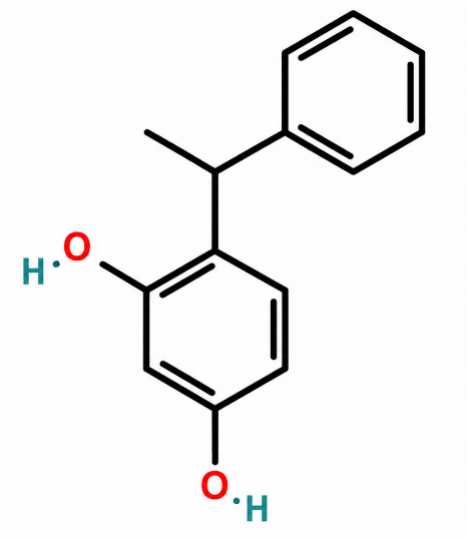
Core structure: 1,3-dihydroxybenzene, namely the resorcinol skeleton
Side-chain structure: —CH(CH3)—C6H5, namely a 1-phenylethyl/α-methylbenzyl group
The two phenolic hydroxyl groups in the structure are closely associated with the active region of tyrosinase, while the 1-phenylethyl side chain provides hydrophobicity and spatial matching ability.
1.3 Significance of the 1-Phenylethyl Side Chain
This side chain contains both a benzene ring and a methyl-branched structure, giving the molecule stronger hydrophobic characteristics. The stratum corneum of the skin is rich in lipids, and moderate lipophilicity is beneficial for the distribution of active ingredients in the superficial layers of the skin. In addition, hydrophobic binding spaces also exist near the active region of tyrosinase. The aromatic hydrophobic side chain helps enhance the binding ability of 377 to enzyme-associated regions.
2 Melanogenesis Process and the Site of Action of 377
2.1 Key Reactions in Melanin Formation
Skin melanin is mainly synthesized by melanocytes. The early reactions can be simplified as follows:
Tyrosine
│ TYR (Tyrosinase)
↓
L-DOPA (L-3,4-dihydroxyphenylalanine)
│ TYR (Tyrosinase)
↓
Dopaquinone
↓
Melanin
TYR, or tyrosinase, is the key rate-limiting enzyme in melanogenesis. It participates in the hydroxylation of tyrosine to L-DOPA and also in the oxidation of L-DOPA to dopaquinone. Dopaquinone then undergoes further oxidation, polymerization, and transformation, ultimately forming melanin. The core site of action of 377 is located in the early stage of melanogenesis. By reducing tyrosinase activity, it decreases the formation of new melanin.
2.2 Main Anti-Melanogenic Pathways of 377
The intervention of 377 in melanogenesis can be divided into three levels:
377
├─ Inhibits TYR activity → Reduces the conversion of tyrosine and L-DOPA into dopaquinone
├─ Activates the p44/42 MAPK pathway → Promotes a decrease in MITF protein levels and affects the expression of melanogenesis-related factors such as TYR and TRP-2
└─ Mitigates ROS-driven stimulation → Reduces the aggravation of hyperpigmentation induced by oxidative stress
Among these, MITF, or Microphthalmia-associated Transcription Factor, is an important upstream regulator of melanogenesis. It can influence the expression of TYR, TRP-1 (Tyrosinase-related Protein 1), and TRP-2 (Tyrosinase-related Protein 2).
2.3 Diagram of the Core Anti-Melanogenic Mechanism of 377

Core anti-melanogenic mechanism of 377, or Phenylethyl Resorcinol: 377 mainly acts by directly inhibiting TYR, or tyrosinase, activity; regulating p44/42 MAPK-MITF-related signaling; and providing antioxidant activity/reducing ROS-related pro-melanogenic stimulation. These actions may help reduce the risk of aggravated hyperpigmentation after inflammation or ultraviolet exposure.
3 Structure Determines the Highly Effective Enzyme-Inhibiting Ability of 377
3.1 The Resorcinol Skeleton Is the Functional Core
Resorcinol is 1,3-dihydroxybenzene. The two phenolic hydroxyl groups are located at the meta positions of the benzene ring and can participate in interactions near the active center of tyrosinase. Tyrosinase is a copper-containing metalloenzyme, and copper ions participate in the substrate oxidation process. Resorcinol-based structures can influence the catalytic reaction of tyrosinase through their phenolic hydroxyl groups, thereby reducing the rate of melanin formation.
Many highly effective anti-melanogenic ingredients are structurally optimized around the resorcinol skeleton, such as 4-butylresorcinol, 4-hexylresorcinol, and Phenylethyl Resorcinol. Their common feature is that they retain the resorcinol core, while their differences lie in side-chain size, lipophilicity, and spatial configuration. These differences can affect tyrosinase-inhibiting ability, skin distribution, and formulation performance.
3.2 The Phenylethyl Side Chain Enhances Binding Stability
The 1-phenylethyl side chain of 377 increases the hydrophobic surface area and spatial volume of the molecule, making it easier to match the hydrophobic space near the active region of tyrosinase.
Structural Unit | Main Role | Contribution to Anti-Melanogenic Activity |
Resorcinol core | Provides two phenolic hydroxyl groups | Interferes with the catalytic reaction of tyrosinase |
1-Phenylethyl side chain | Provides an aromatic hydrophobic structure | Enhances binding stability with enzyme-associated regions |
Small-molecule structure | Molecular weight of approximately 214.26 | Helps the ingredient act in the superficial layers of the skin |
4 Tyrosinase Inhibition Data and IC50 of 377
4.1 Meaning of IC50
IC50, or Half Maximal Inhibitory Concentration, refers to the concentration of an ingredient required to reduce a certain enzyme activity or biological response by 50%. Under the same experimental object, same detection method, same substrate, and same conditions, a lower IC50 value generally indicates stronger inhibitory ability.
Under the same experimental conditions:
Low IC50 → Lower concentration required to achieve 50% inhibition → Higher inhibitory efficiency
High IC50 → Higher concentration required to achieve 50% inhibition → Lower inhibitory efficiency
IC50 values should not be directly compared outside their experimental conditions. Mushroom tyrosinase, human tyrosinase, melanocyte models, 3D skin models, and human clinical trials represent different research levels, and the significance of the data differs accordingly.
4.2 Inhibitory Efficiency of 377 Compared with Kojic Acid
A commonly cited core data point for 377 is that, in an in vitro mushroom tyrosinase assay, Phenylethyl Resorcinol 377 shows approximately 22 times higher tyrosinase-inhibiting efficiency than kojic acid. This result indicates that 377 has strong direct tyrosinase-inhibiting ability and is particularly useful for explaining its functional basis in reducing the formation of new melanin.
Related studies also show that 4-(1-phenylethyl)-1,3-benzenediol can inhibit melanin synthesis in the B16V melanoma cell model, with an IC50 of approximately 2 μM. MTT assay results indicate that this brightening/anti-melanogenic effect is not caused by cytotoxicity. This data suggests that, in a cellular model, 377 can not only inhibit enzyme activity but also reduce the level of melanin synthesis.
Experimental Object | Indicator | 377-Related Data | Significance of the Data |
Mushroom tyrosinase | Tyrosinase-inhibiting efficiency | Approximately 22 times that of kojic acid | Reflects the direct enzyme-inhibiting ability of 377 in an in vitro enzyme assay |
B16V melanoma cell model | IC50 for inhibition of melanin synthesis | Approximately 2 μM | Reflects the anti-melanogenic activity of 377 in a cellular model |
Recombinant human tyrosinase | IC50 | 18.97 μg/mL, approximately 88.5 μM | Indicates that 377 also has an inhibitory effect on human tyrosinase |
Kojic acid in human tyrosinase | IC50 | >500 μM | Indicates that kojic acid shows relatively weak inhibitory activity in a human tyrosinase assay |
A 2025 study on human tyrosinase showed that Phenylethyl Resorcinol had an inhibitory effect on recombinant human tyrosinase, with a half maximal inhibitory concentration of 18.97 μg/mL. Based on its molecular weight of 214.26, this is approximately equivalent to 88.5 μM. Another study on human tyrosinase showed that the IC50 of kojic acid against human tyrosinase was greater than 500 μM. The study also pointed out that many tyrosinase inhibitors were initially screened using mushroom tyrosinase, but results from mushroom tyrosinase assays cannot fully represent inhibitory effects on human tyrosinase.
It should be noted that the in vitro enzyme inhibition data, cellular model data, and human tyrosinase data for 377 all support its anti-melanogenic potential. However, effect multiples should not be directly converted or compared across different experimental systems. The actual spot-fading/brightening performance of a product also depends on use concentration, formulation stability, skin delivery, sunscreen pairing, inflammation control, and continuous use period.
5 Antioxidant Activity and the Mechanism of Hyperpigmentation Aggravation
5.1 How Oxidative Stress Promotes Hyperpigmentation
ROS, or Reactive Oxygen Species, can increase after ultraviolet exposure, acne-related inflammation, pollution-induced irritation, and skin barrier damage. ROS can stimulate keratinocytes and melanocytes to release pro-melanogenic signals, making melanogenesis-related pathways such as MITF and TYR more active.
This also explains why many people notice that “dark marks remain after acne subsides,” “spots become darker after sun exposure,” or “skin becomes dull after repeated inflammation.” Hyperpigmentation does not come only from melanocytes themselves; it also results from the continuous stimulation of melanogenesis pathways by inflammation and oxidative stress.
5.2 Antioxidant Value of 377
377 is a phenolic compound, and the phenolic hydroxyl groups in its structure have a certain free-radical-scavenging ability. Its antioxidant value is reflected in two aspects:
① It reduces ROS stimulation of melanocytes, helping lower the possibility of continued deepening of post-inflammatory hyperpigmentation.
② It works synergistically with tyrosinase inhibition, reducing both the melanin-forming reaction itself and the upstream pro-melanogenic stimulation.
6 Effect of 377 on Post-Acne Marks: PIH and PIE Need to Be Distinguished
6.1 PIH: Dark Post-Acne Marks
PIH, or Post-Inflammatory Hyperpigmentation, usually appears as brown, dark brown, gray-brown, or black marks. After acne inflammation subsides, local inflammatory factors and ROS stimulate melanocytes, increasing melanin production and deposition, thereby forming dark post-acne marks.
Acne inflammation → Increase in inflammatory factors and ROS → Activation of melanocytes → Enhanced TYR tyrosinase activity → Increased melanin production → Dark PIH post-acne marks
Action pathways of 377 on PIH:
① Inhibits TYR activity and reduces new melanin formation;
② Activates the p44/42 MAPK pathway to lower MITF protein levels and reduce the expression of melanogenesis-related factors such as TYR/TRP-2;
③ Mitigates ROS-driven stimulation and lowers the risk of continued deepening of post-inflammatory hyperpigmentation.
6.2 PIE: Red Post-Acne Marks
PIE, or Post-Inflammatory Erythema, usually appears as red, pink, or purplish-red marks. It is mainly associated with post-inflammatory capillary dilation, local microvascular responses, and the repair process, and is not simply caused by increased melanin.
Type of Post-Acne Mark | Common Color | Main Cause | Value of 377 |
PIH, Post-Inflammatory Hyperpigmentation | Brown, dark brown, black | Increased melanin production and deposition | Clear action pathway |
PIE, Post-Inflammatory Erythema | Red, pink, purplish-red | Post-inflammatory vascular dilation and erythematous response | Mainly indirect support |
Acne pits/scars | Depressed, raised, or textural changes | Collagen damage or abnormal repair | Not a primary target of improvement |
377 has limited direct effect on red post-acne marks themselves. However, by reducing post-inflammatory oxidative stress and pro-melanogenic stimulation, it may provide auxiliary value in lowering the risk of subsequent aggravation of hyperpigmentation. For obvious erythema that has already formed, anti-inflammatory repair, reduced irritation, and strict sun protection are more important. Persistent erythema may require professional treatment targeting vascular responses.
7 Key Conditions Affecting Efficacy
The actual efficacy of 377 depends on the following conditions:
Influencing Factor | Effect on the Result |
Sun protection | Ultraviolet radiation continuously stimulates TYR and melanocytes; insufficient sun protection weakens spot-fading efficacy |
Inflammation control | Recurrent acne, redness, stinging, and barrier damage continuously promote hyperpigmentation |
Formulation stability | 377 is relatively lipophilic; water solubility and photostability affect formulation performance |
Delivery system | Carriers such as liposomes and transfersomes can improve skin delivery and stability |
Use period | Melanin metabolism takes time; evaluation over 4–12 weeks is generally more reasonable |
8 Formulation Strategy When Using 377
8.1 Position in an Anti-Melanogenic System
377 is suitable for use as a “core anti-melanogenic active” in brightening and spot-fading formulations. Complete hyperpigmentation management usually requires a multi-directional approach. Common synergistic directions include niacinamide, tranexamic acid, vitamin C derivatives, soothing and repairing ingredients, and mild metabolism-supporting ingredients. 377 is mainly responsible for reducing tyrosinase-related melanin synthesis efficiency, while other ingredients complement its action by reducing melanin transfer, lowering inflammation, providing antioxidant support, promoting metabolism, and repairing the skin barrier.
8.2 Key Points for Use
When using 377-containing products, attention should be paid to three key points:
① Sun protection must be used during the day. 377 reduces melanin formation, but ultraviolet radiation continuously stimulates melanocytes. Without sun protection, spot-fading efficiency will be significantly reduced.
② Avoid layering strong actives when the skin is in a highly irritated state. During periods of obvious stinging, peeling, redness, or active acne flare-ups, repair and anti-inflammatory care should be prioritized to prevent further barrier damage.
③ Evaluate results over an appropriate use period. Initial changes in superficial hyperpigmentation may be observed after around 28 days. More stubborn post-acne marks, sun spots, and melasma-like hyperpigmentation are better evaluated over an overall trend of 8–12 weeks.
9 Classification Tables of Chemicals Related to the Anti-Melanogenic Mechanism of Phenylethyl Resorcinol 377 and Hyperpigmentation Management
Table 1 Products Related to the Structural Core of 377, Resorcinol Derivatives, and Tyrosinase Inhibition
Category | CAS No. | Aladdin Cat. No. | Name | Specification or Purity | Product Features and Applications |
Core resorcinol derivative of 377 | 85-27-8 | 4-(α-Methylbenzyl)resorcinol | ≥98% | Representative compound of 377, used for studies on the structure of Phenylethyl Resorcinol, tyrosinase inhibition, melanogenesis, and combination/formulation evaluation | |
Resorcinol structural core | 108-46-3 | Resorcinol | BioReagent | Reference compound for the structural core of 377, used for studies on the resorcinol skeleton, phenolic hydroxyl structure, and structure–activity relationships | |
Butylresorcinol enzyme-inhibition reference | 18979-61-8 | 4-Butylresorcinol | ≥98% (GC) | 4-position alkyl resorcinol, used for comparative studies on side-chain hydrophobicity, tyrosinase inhibition, and pigmentation | |
Hexylresorcinol enzyme-inhibition reference | 136-77-6 | 4-Hexylresorcinol | ≥98% (GC) | Hexyl side-chain resorcinol, used for studies on alkyl-chain length, antioxidant activity, tyrosinase inhibition, and melanogenesis | |
Thiazole-containing resorcinol anti-melanogenic agent | 1428450-95-6 | N-(4-(2,4-Dihydroxyphenyl)thiazol-2-yl)isobutyramide | ≥98% | Anti-melanogenic active containing a resorcinol structure, used for studies on human tyrosinase inhibition, expression of melanogenesis-related proteins, and structural comparison with 377 | |
Kojic acid-based tyrosinase inhibitor | 501-30-4 | Kojic Acid | ≥99% | Classical tyrosinase-inhibition reference, used in control experiments for the enzyme-inhibiting efficiency of 377, melanogenesis, and skin-brightening activity | |
Lipophilic kojic acid derivative | 79725-98-7 | Kojic Acid Dipalmitate | ≥98% | Lipophilic derivative of kojic acid, used for evaluation of kojic acid structural modification, lipid-phase formulations, and anti-melanogenic activity | |
Arbutin-type anti-melanogenic ingredient | 497-76-7 | Arbutin | Moligand™, ≥98% | Glycoside-type anti-melanogenic ingredient, used for studies on tyrosinase inhibition, melanogenesis, and anti-melanogenic combinations | |
Stilbene polyphenol anti-melanogenic ingredient | 29700-22-9 | Oxyresveratrol | Moligand™, ≥95% | Polyphenolic anti-melanogenic ingredient, used for studies on tyrosinase inhibition, melanogenesis, and mechanistic comparison with 377 | |
Ellagic acid-type polyphenol anti-melanogenic ingredient | 476-66-4 | Ellagic Acid | Moligand™, ≥96% | Polyphenolic ingredient, used for studies on phenolic hydroxyl structures, antioxidant activity, tyrosinase inhibition, and pigmentation | |
Hydroquinone depigmentation reference | 123-31-9 | Hydroquinone | ≥99% (HPLC) | Dihydroxybenzene isomer reference, used for studies on phenolic depigmentation, melanogenesis, safety evaluation, and ingredients subject to regulatory restrictions | |
Methoxyphenol depigmentation reference | 150-76-5 | 4-Methoxyphenol (MEHQ) | AR, ≥99% | Methoxy derivative of hydroquinone, used for studies on phenolic hydroxyl substitution, redox properties, and depigmentation-related controls |
Table 2 Products Related to Melanogenesis Signaling, Pigment Transfer, and Post-Inflammatory Hyperpigmentation Regulation
Category | CAS No. | Aladdin Cat. No. | Name | Specification or Purity | Product Features and Applications |
Plasmin-related hyperpigmentation-regulating ingredient | 1197-18-8 | Tranexamic Acid (TXA) | Moligand™, ≥98% | Used for studies on ultraviolet- and inflammation-induced pro-melanogenic signaling, melasma-like hyperpigmentation, and post-inflammatory hyperpigmentation | |
Melanin transfer-regulating ingredient | 98-92-0 | Niacinamide | PharmPure™, USP | Used for studies on melanin transfer, barrier function, even skin tone, and synergistic evaluation in 377-based anti-melanogenic systems | |
Dicarboxylic acid ingredient for post-acne hyperpigmentation | 123-99-9 | Azelaic Acid | Moligand™, ≥99% | Used for studies on acne, post-inflammatory hyperpigmentation, abnormal keratinization, and tyrosinase-related pigmentation | |
Amino sugar synergistic ingredient for skin tone | 7512-17-6 | N-Acetyl-D-glucosamine | ≥98% | Used for studies on melanogenesis-related glycosylation, stratum corneum hydration, even skin tone, and synergy with niacinamide | |
Melanocortin signaling-regulating ingredient | 175357-18-3 | (S)-3-Phenyl-2-(undec-10-enamido)propanoic acid | ≥97% | Used for studies on upstream melanogenesis signaling, even skin tone, and anti-melanogenic combination systems | |
Salicylic acid derivative anti-melanogenic ingredient | 152312-71-5 | Potassium 4-Methoxysalicylate | ≥97% | Used for studies on melanogenesis, keratin renewal, pigment metabolism, and spot-fading systems | |
Thiol-containing ingredient for hyperpigmentation research | 156-57-0 | Cysteamine Hydrochloride | BioReagent | Used for studies on melasma-like hyperpigmentation, redox status, melanin synthesis pathways, and depigmentation mechanisms |
Table 3 Products Related to Antioxidant Systems, Reducing Systems, and Oxidative Stress Intervention
Category | CAS No. | Aladdin Cat. No. | Name | Specification or Purity | Product Features and Applications |
Parent ascorbic acid | 50-81-7 | L-Ascorbic Acid | Anhydrous, Moligand™, ACS, ≥99% | Used for studies on reactive oxygen species scavenging, dopaquinone reduction, dullness improvement, and inhibition of melanogenesis | |
Stable ascorbic acid ether | 86404-04-8 | 3-O-Ethyl-L-ascorbic Acid | Moligand™, ≥98% (HPLC) (T) | Used for evaluation of stable antioxidant activity, skin tone brightening, melanogenesis inhibition, and combination systems | |
Magnesium ascorbyl phosphate salt | 113170-55-1 | L-Ascorbic Acid 2-Phosphate Sesquimagnesium Salt Hydrate | Moligand™, ≥98% (HPLC) | Stable ascorbic acid derivative, used for studies on oxidative stress, melanogenesis, and mild brightening systems | |
Sodium ascorbyl phosphate salt | 66170-10-3 | L-Ascorbic Acid 2-Phosphate Trisodium Salt | 10 mM in Water | Water-soluble ascorbic acid derivative, used for cell experiments, antioxidant evaluation, and melanogenesis research | |
Ascorbyl glucoside | 129499-78-1 | 2-O-α-D-Glucopyranosyl-L-ascorbic Acid | ≥98% (HPLC) | Ascorbyl glucoside derivative, used for studies on stable brightening, antioxidant activity, and hyperpigmentation management | |
Lipophilic vitamin antioxidant ingredient | 59-02-9 | (+)-α-Tocopherol | From Type V vegetable oil, approximately 1000 IU/g | Lipophilic antioxidant ingredient, used for studies on ultraviolet-induced oxidative stress, skin lipid protection, and synergistic formulation with 377 | |
Thiol reducing-system ingredient | 70-18-8 | L-Glutathione, Reduced | Moligand™, BioReagent Plus, ≥98% | Used for studies on cellular redox status, reactive oxygen species scavenging, redox regulation of melanin synthesis, and hyperpigmentation | |
Phenolic acid antioxidant ingredient | 1135-24-6 | Ferulic Acid | Moligand™, ≥99% | Used for studies on antioxidant activity, photodamage protection, phenolic stability, and synergy with vitamin ingredients | |
Stilbene polyphenol antioxidant ingredient | 501-36-0 | Resveratrol | Moligand™, ≥99% | Polyphenolic antioxidant ingredient, used for studies on reactive oxygen species, inflammatory responses, and melanogenesis signaling | |
Lipoic acid redox ingredient | 1077-28-7 | DL-Lipoic Acid | ≥99% | Used for studies on oxidative stress, cellular reducing environments, photoaging, and antioxidant systems | |
Mitochondria-related antioxidant ingredient | 303-98-0 | Coenzyme Q10 | ≥98% | Used for studies on mitochondrial oxidative stress, ultraviolet damage, and skin antioxidant systems |
Table 4 Products Related to Keratin Renewal, Post-Acne Mark Metabolism, and Vitamin A Pathways
Category | CAS No. | Aladdin Cat. No. | Name | Specification or Purity | Product Features and Applications |
Aromatic α-hydroxy acid | 90-64-2 | DL-Mandelic Acid | AR, ≥99% | Used for studies on keratin renewal, acne-prone skin care, superficial hyperpigmentation metabolism, and post-acne mark management | |
Small-molecule α-hydroxy acid | 79-14-1 | Glycolic Acid | Suitable for analysis, premium grade | Used for studies on keratin renewal, epidermal pigment metabolism, even skin tone, and acid-peeling systems | |
β-Hydroxy acid keratin-conditioning ingredient | 69-72-7 | Salicylic Acid | UltraBio™, ultrapure, ≥99% | Used for studies on acne, keratin conditioning, pore-related research, and management of post-inflammatory acne marks | |
Moisturizing α-hydroxy acid | 50-21-5 | DL-Lactic Acid | AR, 85–90% | Used for studies on keratin renewal, moisturization-related research, superficial dullness, and even skin tone evaluation | |
Vitamin A aldehyde renewal ingredient | 116-31-4 | All-trans-Retinal | Moligand™, ≥98% | Used for studies on epidermal renewal, post-acne mark metabolism, cell differentiation, and even skin tone | |
Vitamin A alcohol renewal ingredient | 68-26-8 | Retinol | Moligand™, ≥95% | Used for studies on epidermal renewal, post-acne mark metabolism, photoaging, and even skin tone | |
Retinoic acid research reference | 302-79-4 | All-trans-Retinoic Acid | Moligand™, ≥98% | Used for studies on epidermal renewal, hyperpigmentation treatment mechanisms, acne, and keratinization regulation | |
Retinoic acid receptor-modulating ingredient | 106685-40-9 | Adapalene | Moligand™, ≥98% | Used for experimental studies related to acne, keratinization regulation, post-inflammatory hyperpigmentation, and post-acne marks |
Table 5 Products Related to Barrier Repair, Soothing Anti-Inflammatory Support, and Tolerance Support
Category | CAS No. | Aladdin Cat. No. | Name | Specification or Purity | Product Features and Applications |
Centella triterpene glycoside repairing ingredient | 34540-22-2 | Madecassoside | Moligand™, ≥98% | Used for studies on barrier repair, inflammatory responses, post-acne mark repair, and late-stage recovery from hyperpigmentation | |
Osmoprotective repairing ingredient | 96702-03-3 | Ectoine | ≥99% | Used for studies on environmental irritation, barrier protection, oxidative stress, and anti-melanogenic systems for sensitive skin | |
Provitamin B5 repairing ingredient | 81-13-0 | D-Panthenol | ≥98% | Used for studies on barrier repair, moisturization, irritation relief, and tolerance to 377-type active ingredients | |
Purine derivative soothing ingredient | 97-59-6 | Allantoin | ≥98% | Used for evaluation of soothing repair, barrier support, and tolerance in spot-fading formulations | |
Sesquiterpene alcohol soothing ingredient | 515-69-5 | (±)-α-Bisabolol | ≥90% | Used for studies on inflammation soothing, post-acne mark repair, redness care, and auxiliary support for post-inflammatory hyperpigmentation | |
Glycyrrhizate soothing ingredient | 68797-35-3 | Dipotassium Glycyrrhizate Hydrate | ≥75% (HPLC) | Used for formulation studies related to anti-inflammatory soothing, barrier repair, and post-inflammatory hyperpigmentation |
Table 6 Products Related to Photoprotection and Prevention of Post-Sun Hyperpigmentation
Category | CAS No. | Aladdin Cat. No. | Name | Specification or Purity | Product Features and Applications |
Cinnamate UV absorber | 5466-77-3 | 2-Ethylhexyl 4-Methoxycinnamate (OMC) | Moligand™, ≥96% (GC) | Used for studies on UVB protection, prevention of post-sun hyperpigmentation, and photoinduced melanogenesis | |
Dibenzoylmethane UV absorber | 70356-09-1 | 1-(4-tert-Butylphenyl)-3-(4-methoxyphenyl)propane-1,3-dione | ≥98% | Used for studies on UVA protection, photostability, and hyperpigmentation-prevention systems | |
Benzoyl benzoate UV absorber | 302776-68-7 | 2-[4-(Diethylamino)-2-hydroxybenzoyl]hexyl benzoate (DHHB) | ≥98% | Used for studies on UVA protection, prevention of post-sun hyperpigmentation, and photoprotective formulations | |
Triazine UV absorber | 88122-99-0 | Ethylhexyl Triazone | ≥98% | Used for studies on UVB protection, photoinduced melanogenesis, and sunscreen systems | |
Broad-spectrum triazine UV absorber | 187393-00-6 | Bis-Ethylhexyloxyphenol Methoxyphenyl Triazine | ≥98% | Used for studies on broad-spectrum photoprotection, photostability, and post-sun hyperpigmentation-prevention formulations | |
Cyano diphenyl acrylate UV absorber | 6197-30-4 | 2-Ethylhexyl 2-Cyano-3,3-diphenylacrylate | ≥97% | Used for studies on ultraviolet protection, photostabilizing systems, and prevention of post-sun hyperpigmentation |
Note: The above are representative Aladdin products related to scientific and formulation research. They are mainly used in scenarios such as structural characterization, mechanism-of-action studies, formulation evaluation, methodological research, and positive/control experiments. Ingredients listed in the tables, such as hydroquinone, retinoic acid, and adapalene, are included only as research mechanism references or control reagents; this does not mean that they can be used as active ingredients in ordinary cosmetics. More information on product specifications, grades, and COA can be searched on the Aladdin website by “product name/CAS/catalog number.” The actual application, scope of use, and practical efficacy of relevant ingredients should be confirmed based on product type, safety assessment, and current local regulatory requirements.
For more related articles, see below:
Ferulic Acid: Structural Features, Preparation Routes, and Key Points for Research Applications
Role of Sphingolipid Metabolic Remodeling in Apoptotic and Inflammatory Signaling
How to decipher the whitening code?
Niacin (Vitamin B3): Structural Features, Metabolic Roles, and Application Landscape
The "Six Key Checkpoints" of Skin Lightening
Tyrosinase: a key regulatory enzyme in melanin synthesis and its biological and applied significance
Enzymatic Hydroxylation Mechanism of Salicylate Conversion to Catechol