Human IgG (AF488) - Isotype Control Antibody

Cat. No.: Ab215371
AVAILABLE TO ORDER
GRADE & PURITY ExactAb™ ? ExactAb™ — Aladdin's antibody line emphasizing precision and validated quality. Use for reliable, specificity-validated antibody applications. Validated ? Validated grade — performance confirmed in defined applications before release. Use when you want documented assurance the reagent works as stated. 0.5 mg/mL
Application
Flow Cytometry
Host species
Human
Isotype
Human IgG
Conjugation
AF488
★
Size
USA
Germany (EU)*
Price
Qty
10μg
Ab215371-10μg
5 In stock
—
$59.90
100μg
Ab215371-100μg
1 In stock
—
$119.90
500μg
Ab215371-500μg
US Made to order · 2–4 wks ·
—
$259.90
Enter a quantity for the sizes you want to add.
🧪
Why this grade

ExactAb™, Validated, 0.5 mg/mL ExactAb™,Validated for sensitive chromatographic and analytical workflows requiring minimal baseline interference.

🌡

Storage & shipping

Store at 2-8°C,Protected from light,Do not freeze Ships Wet ice,Do not freeze Check lot-specific COA for exact specifications.

📋

Quality documents

SDS, COA, datasheet, and spec sheet available for download. Lot-specific COA accessible via lot number lookup.

📚

Literature proof

Cited in 0 peer-reviewed publications across chromatography, organic synthesis, and cross-coupling reactions.

Overview

Human IgG Antibody; Isotype Control Antibody, could be used for Flow Cytometry.

Specifications

Product Name
Human IgG (AF488) - Isotype Control Antibody
Synonyms
Human IgG
Specifications & Purity
ExactAb™, Validated, 0.5 mg/mL
Host species
Human
Conjugation
AF488
Excitation (nm)
Blue Laser(488nm)
Emission(nm)
525nm
Ex/Em(nm)
Ex:490nm;Em:525nm
Grade
ExactAb™, Validated
Purification Method
Affinity chromatography
Concentration
0.5 mg/mL
Product Line
Biological Products
Storage and Shipping
Storage
Store at 2-8°C,Protected from light,Do not freeze
Shipped In
Wet ice,Do not freeze
Stability And Storage
The antibody solution should be stored undiluted between 2°C and 8°C, and protected from prolonged exposure to light. Do not freeze.
Images

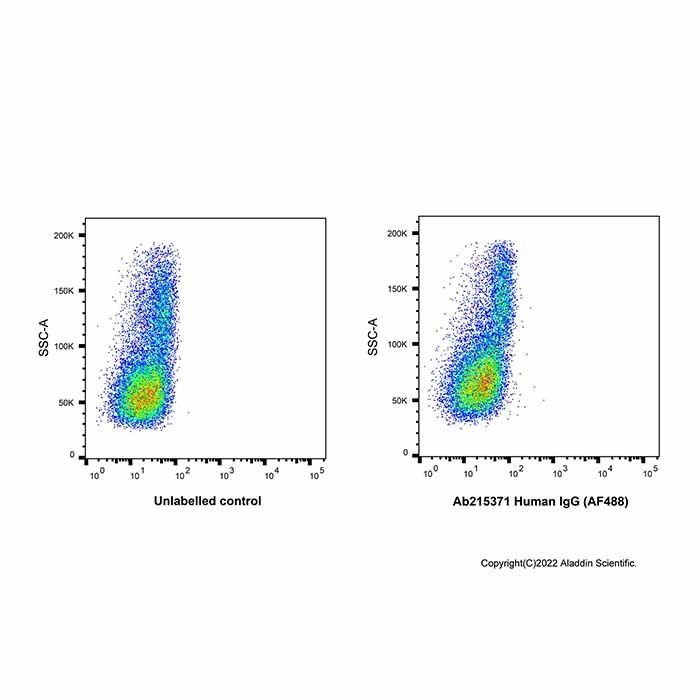
Human IgG (AF488) (Ab215371) - Flow Cytometry
Human peripheral blood cells stained with Human IgG (AF488) (Ab215371) (right panel). Left panel - Unlabelled control, cells without incubation with primary antibody.

Application
Application
Dilution info
Flow Cytometry

Use at an assay dependent concentration.
Each lot of this antibody is quality control tested by flow cytometric analysis as negative control. Use at concentrations comparable to those of the speci

Documentation

📋 Safety Data Sheet (SDS)

Comprehensive hazard, handling, storage, and regulatory compliance document.

<<<<<<< HEAD Download SDS → ======= Download SDS → >>>>>>> release248-p3

✅ Certificate of Analysis (COA)

Lot-specific quality data. Enter your lot number to retrieve the exact COA.

Look up COA →

📊 Datasheet

Quick-reference summary of product specifications and applications.

View datasheet →

🔬 Specification Sheet

Full quality attributes and acceptance criteria for this grade.

View spec sheet →

Advanced Data

Certificates (CoA,COO,BSE/TSE and Analysis Chart)
C of A & Other Certificates(BSE/TSE, COO):
Analytical Chart:

Find and download the COA for your product by matching the lot number on the packaging.

6 results found

Lot NumberCertificate TypeDateItem
ZJ25F0319892ZJ25F0319892Certificate of AnalysisOct 08, 2026 Ab215371
ZJ25F0319893ZJ25F0319893Certificate of AnalysisOct 08, 2026 Ab215371
ZJ25F1230138ZJ25F1230138Certificate of AnalysisSep 05, 2026 Ab215371
ZJ26F0838585ZJ26F0838585Certificate of AnalysisAug 25, 2026 Ab215371
ZJ26F0838584ZJ26F0838584Certificate of AnalysisAug 25, 2026 Ab215371
ZJ26F0838583ZJ26F0838583Certificate of AnalysisAug 25, 2026 Ab215371
Documents & Articles
Solution Calculators
Reviews

Customer Reviews

Application Protocols

Tested applications, recommended dilutions, positive controls, and protocol steps for this specific item are Not specified; refer to the product’s CoA/Spec Sheet and SDS for authoritative guidance.

Please consult the lot-specific documentation for:

  • Intended applications (e.g., IF, IHC, WB, ELISA, Flow) and species/antigen reactivity.
  • Suggested working concentrations or dilution ranges and incubation times.
  • Required blocking reagents, permeabilization conditions (if any), and wash buffers.
  • Representative data and troubleshooting notes.

Until the above are confirmed from the CoA, users should perform small-scale titrations and include appropriate controls to establish optimal conditions in their system.

Biological Roles

Context (general biology)

  • Human immunoglobulin G (IgG) is the predominant antibody isotype in serum, responsible for antigen recognition (via Fab domains) and immune effector functions (via Fc), including complement activation and Fc receptor engagement. IgG subclasses (IgG1–IgG4) differ in hinge structure and effector profiles; glycosylation at Fc Asn297 modulates receptor interactions.

Relevance to the reagent

  • As a labeled IgG, this reagent mirrors the structural and biophysical features of human IgG while bearing covalently attached AF488 fluorophores for optical detection. It can serve in assays studying antibody binding, Fc interactions, and as a control for instrument setup or assay standardization.
  • AF488 contributes no known biological activity; its role is purely as a reporter dye with high quantum yield and photostability (literature).

Applications informed by biology

  • Affinity and avidity: multivalency of IgG enables high functional avidity; conjugation levels should avoid overlabeling that could perturb binding (verify DOL on CoA if provided).
  • Matrix interactions: IgG engages Fc receptors and complement; blocking strategies (e.g., Fc-block) are useful in cell-based assays to reduce background binding (literature).

Note

  • Specific antigen-binding characteristics, subclass, and affinity for this product are Not specified; consult CoA/Spec Sheet for target and performance details if applicable.
Buffer Applications

This product is not a buffering agent. However, successful use depends on compatible buffer systems that preserve antibody structure and AF488 fluorescence.

General, literature-based guidance

  • Storage/handling buffers: neutral pH (7.2–7.6) isotonic buffers such as PBS or TBS. Include inert protein carriers (e.g., 0.1% BSA) to reduce surface adsorption in working dilutions if compatible with your assay. The presence of carriers/preservatives in the supplied vial is Not specified for this item.
  • Washing buffers: PBS/TBS with 0.05–0.1% Tween 20 can reduce nonspecific binding in blotting and IHC/IF. For flow cytometry, PBS + 1–2% serum or BSA helps minimize cell surface stickiness.
  • Mounting media: for IF/IHC imaging, use antifade mounting media compatible with green fluorophores; avoid components that strongly quench AF488.
  • pH and ionic strength: Maintain physiological salt to prevent aggregation and signal loss; avoid extremes of pH that can denature IgG or alter fluorophore brightness.

Not applicable

  • Classical buffer recipes and pKa ranges (e.g., Tris pKa 8.1) are widely available but are not specific to this product. For any constraints imposed by the supplied formulation (e.g., azide, glycerol), consult the CoA/Spec Sheet.
Green Alternatives

Green chemistry considerations for fluorescent antibody use focus on minimizing hazardous components and waste while maintaining assay performance.

Opportunities (general)

  • Aqueous systems: Conduct all incubations and washes in water-based buffers (PBS/TBS/HEPES), avoiding organic solvents that generate hazardous waste.
  • Preservative choices: If live-cell compatibility is needed, select azide-free formulations or remove azide via desalting (presence of azide in this product is Not specified). Alternatives like low-level ProClin or sterile single-use aliquots can reduce bioburden without heavy-metal preservatives (check compatibility).
  • Mounting media: Choose glycerol-based, low-toxicity, VOC-free antifade reagents for microscopy.
  • Process scale: Right-size reaction volumes and use miniaturized formats (96/384-well plates) to reduce reagent consumption and waste.
  • Reusable plastics and glass: Where practical, use validated washable labware to cut single-use waste (ensure no residual binding/contamination that could affect data).

Comparison (literature)

  • AF488 vs fluorescein (FITC): AF488 typically offers better photostability and brightness under identical excitation, reducing required antibody mass and waste generation for equivalent S/N.
  • Direct conjugate vs primary+secondary: Direct conjugates can reduce total antibody and buffer usage and shorten workflows, at the cost of lower signal amplification.

Caveats

  • Do not compromise data quality for marginal “green” gains; optimize blocking and washing to minimize repeats. Verify any formulation changes against the product’s CoA to ensure compatibility.
Pharmaceutical Uses

No clinical or therapeutic use is intended or permitted. For research use only (per Product Data).

Relevant non-clinical/analytical contexts (general)

  • Process development and QC: fluorescently labeled human IgG can serve as a tracer or surrogate in downstream purification development (e.g., resin binding studies, recovery tracking) when spectrally monitored at AF488 wavelengths.
  • Bioanalytical assay development: serves as calibrator or control in ligand-binding assays, immunoassays, and imaging-based potency or target-engagement models.
  • Device and workflow qualification: instrument setup, spectral compensation, cross-talk assessment, and performance benchmarking for cytometers and imagers using 488 nm excitation.
  • Training and method transfer: standardized fluorescent IgG aids in onboarding and SOP validation without use of therapeutic materials.

Constraints

  • Do not use in human or animal diagnostics, or as a drug substance/excipient. Avoid claims of clinical performance. Any references to GMP suitability, compendial status (USP/EP), residuals, or endotoxin limits are Not specified for this item; refer to CoA/Spec Sheet if required for regulated laboratory workflows.
Physical Properties

Item-specific physicochemical specifications (protein concentration, buffer composition, preservative, DOL, absorbance ratios) are Not specified for this item; refer to CoA/Spec Sheet.

General/literature properties relevant to Human IgG (AF488)

  • Protein mass: native human IgG is ~150 kDa (literature, varies with glycoform and subclass).
  • Fluorophore optics (AF488, literature):
    • Excitation/emission maxima ~495/519 nm.
    • Molar extinction coefficient ε ~70,000–75,000 M⁻¹·cm⁻¹ at ~494–495 nm (dye, free in buffer); actual conjugate ε depends on DOL and protein absorbance contributions.
    • High quantum yield (~0.9, literature) and good photostability relative to fluorescein.
  • Appearance: typically a clear to slightly opalescent aqueous solution (or lyophilized cake, product-dependent); Not specified for this item.
  • Solubility: Antibodies are soluble in aqueous buffers (e.g., PBS, TBS) with moderate ionic strength; insoluble in most neat organic solvents (literature).
  • pI: Human IgG pI typically ranges ~6–9 depending on subclass and glycosylation (literature).
  • Stability considerations (literature):
    • Sensitive to repeated freeze–thaw cycles; fluorophore is light-sensitive; conjugate stability depends on buffer, pH ~7–8, and storage temperature.

Important

  • Do not interpret the above literature values as product specifications. For lot-specific details (concentration, buffer, DOL, absorbance at 280/490 nm), consult the CoA/Spec Sheet.
Quality & Grades

Item-specific grade

  • Grade/Purity: ExactAb™, Validated (per Product Data).

Interpretation (general context; not a specification)

  • ExactAb™: Vendor-designated program/line indicating defined antibody identity and controlled production parameters. Specific acceptance criteria (e.g., identity confirmation, DOL windows, purity metrics) are Not specified for this item; refer to CoA/Spec Sheet.
  • Validated: Indicates the antibody–dye conjugate has undergone functional checks under defined assay conditions (e.g., signal-to-noise, specificity controls). Exact validation assays, matrices, and performance thresholds are Not specified for this item.

What to look for on the CoA/Spec Sheet (practical guidance)

  • Identity: isotype/subclass, source and purification method.
  • Concentration: mg/mL by A280 with dye-correction, or by protein assay.
  • Degree of labeling (DOL): typically reported as dye/protein (mol/mol) with calculation method.
  • Purity/aggregates: assessed by SEC or SDS-PAGE; monomer % where available.
  • Buffer composition: salts, pH, carrier proteins (e.g., BSA), and preservatives (e.g., sodium azide) if present.
  • Functional validation: application types and species/antigen tested, recommended dilutions/titration ranges, and representative data.

Takeaway

  • Use the Grade to match your application risk tolerance: for quantitative flow cytometry or imaging, prioritize lots with documented DOL, low aggregation, and clear validation data. Always verify lot-specific parameters before critical experiments.
Reaction & Applications

As a fluorescent antibody conjugate, this product is intended for bioanalytical detection rather than chemical synthesis. Common research applications (general, literature) include:

  • Flow cytometry (FCM): AF488’s bright, photostable green emission (Ex/Em ~495/519 nm) is efficiently excited by 488 nm lasers and detected in FITC-like channels, offering improved photostability over fluorescein.
  • Fluorescence microscopy (IF) and high-content imaging: robust signal with low background when used at titrated concentrations and with appropriate blocking to minimize nonspecific binding.
  • Immunohistochemistry on frozen sections (IHC-F): direct detection with minimal secondary antibodies to reduce background and simplify multiplexing.
  • Western blotting (WB): fluorescent detection on scanners equipped for ~520 nm emission enables multiplex with red/far-red channels.
  • ELISA and bead-based assays: direct conjugates simplify workflows and reduce variability introduced by secondary reagents.
  • Controls and standards: use as positive controls for instrument setup, compensation, and alignment in cytometry and imaging.

Practical tips (general)

  • Titrate: determine the minimal concentration giving maximal specific signal in your matrix.
  • Protect from light throughout handling; minimize dwell times on the microscope and use antifade reagents compatible with proteins.
  • Use matched isotype controls and Fc-blocking (where relevant) to assess specificity.

Note: Specific tested applications, species reactivity, and recommended dilutions are Not specified for this item; refer to CoA/Spec Sheet.

Reaction Conditions

Classical reaction-condition guidance (solvents, temperatures, catalysts, yields) is not applicable to a ready-to-use antibody–dye conjugate.

Assay handling conditions (general, literature)

  • Temperature: Keep on ice or at 2–8°C during setup to preserve activity; perform incubations at recommended ambient or physiological temperatures as dictated by your assay. Do not exceed room temperature for prolonged storage of working solutions.
  • Light: Minimize exposure; protect with foil and work under dim light where possible.
  • pH/Buffer: Maintain near-neutral pH in isotonic buffers (PBS/TBS/HEPES) to ensure protein stability and AF488 brightness.
  • Incubation times: Determined empirically by titration; shorter times often suffice with direct conjugates due to rapid binding kinetics.

Important

  • Product-specific tested conditions, stability windows, and recommended dilutions are Not specified for this item; consult the CoA/Spec Sheet and SDS before designing experiments.
Safety & Handling

GHS/SDS

  • Signal word, hazard statements, classification, pictograms: Not specified for this item; refer to SDS. Many antibody conjugates are not classified as hazardous, but always verify lot-specific SDS.

General laboratory safety (good practice)

  • PPE: lab coat, gloves, and safety glasses. Handle as a protein biological reagent; avoid generating aerosols.
  • Light protection: AF488 is light-sensitive; minimize ambient light exposure. Keep vials wrapped in foil or stored in light-protective secondary containers.
  • Thermal sensitivity: Maintain 2–8°C; do not freeze (per Product Data). Avoid heating and drying.
  • Incompatibilities (general): Avoid strong oxidizers, extremes of pH, and organic solvents that denature proteins. Avoid amine-reactive reagents that could further modify the antibody.
  • First aid (general guidance; defer to SDS):
    • Skin/eye contact: rinse with water. Remove contaminated clothing/gloves.
    • Ingestion/inhalation: seek medical advice; move to fresh air if aerosol exposure suspected.
  • Waste: Dispose of aqueous protein solutions and dye-containing waste per institutional and local regulations for nonhazardous biological/chemical waste. AF488-containing solutions are typically drain-incompatible; collect as lab chemical waste.

Notes

  • This product is of research-grade origin; it is not derived from known hazardous pathogens, but treat all biological materials with universal precautions.
  • For definitive hazard and transport classifications, consult the SDS and shipping documents for the specific lot.
Solvent Selection

Applicability

  • This product is an aqueous antibody–dye conjugate. Classical organic solvent selection is not applicable. Focus on biologically compatible buffers that preserve protein structure and AF488 fluorescence.

General guidance (literature)

  • Preferred media: isotonic, neutral pH buffers (e.g., PBS, TBS, HEPES-buffered saline) at pH ~7.2–7.6 to maintain IgG stability and AF488 brightness.
  • Additives: 0.05–0.1% protein carriers (e.g., BSA) and 0.01–0.05% nonionic detergents (e.g., Tween 20) can reduce nonspecific binding and adsorption to plastics in working solutions; confirm compatibility with your assay and product formulation. Presence of carriers/preservatives in the supplied vial is Not specified for this item.
  • Avoid: high percentages of organic solvent (alcohols, acetone, acetonitrile), strong acids/bases, or chaotropes that denature IgG or quench fluorescence.
  • Light: AF488 requires protection from light in all solvents/buffers to prevent photobleaching.

Comparison (general)

  • PBS vs TBS: Both maintain IgG structure; TBS can reduce phosphate-sensitive interactions in some assays. HEPES offers better pH control in open systems (CO₂-independent cell work).

Note

  • If the formulation includes sodium azide (Not specified for this item), avoid direct use with live cells or peroxidase-based detection. Verify buffer components on the CoA before selecting assay diluents.
Storage & Reconstitution

Item-specific storage (from Product Data)

  • Store at 2–8°C.
  • Protect from light.
  • Do not freeze.
  • Shipped on wet ice (do not freeze during transport).

Additional notes

  • Appearance (liquid vs lyophilized), concentration, buffer composition, carrier proteins, and preservatives are Not specified for this item; refer to CoA/Spec Sheet.
  • If provided as a liquid, avoid repeated opening and prolonged exposure to ambient temperatures; consider preparing single-use aliquots at 2–8°C if allowed by formulation. If lyophilized (Not specified), follow the CoA for reconstitution buffer, volume, and gentle mixing; avoid vigorous vortexing that can induce aggregation or foaming.
  • Do not store in frost-free refrigerators that undergo warm cycles; use secondary containment to protect from light and temperature fluctuations.
  • Avoid freeze–thaw cycles (explicitly contraindicated by Product Data). If freezing is ever necessary for experimental reasons, confirm compatibility with the supplier and consider cryoprotectants; otherwise, do not freeze.

Stability

  • Shelf-life and post-opening stability are Not specified for this item; rely on the CoA and observe for signs of precipitation, turbidity, or loss of fluorescence as indicators of degradation.
Structure & Identity

Human IgG (AF488) is a fluorescently labeled immunoglobulin G reagent. As an IgG-class antibody, it is a Y-shaped heterotetrameric glycoprotein comprising two identical heavy chains and two identical light chains linked by disulfide bonds, with variable domains that bind antigen and Fc domains that mediate effector functions. The AF488 suffix denotes covalent conjugation to the green-emitting Alexa Fluor 488 dye via amine-reactive chemistry (typically NHS-ester coupling) to lysine residues on the protein surface.

Item-specific identifiers

  • CAS, CID, InChIKey, SMILES: Not applicable for a heterogeneous, protein–dye conjugate; Not specified for this item; refer to CoA/Spec Sheet.
  • Molecular formula / exact molecular weight: Not specified for this item; refer to CoA/Spec Sheet.

Structural features (general, literature)

  • IgG architecture: two Fab arms (antigen binding) and one Fc region (effector), stabilized by inter- and intra-chain disulfides; N-linked glycans on the Fc heavy chains (literature).
  • AF488 fluorophore: xanthene-type dye with high quantum yield and photostability; typically coupled through a stable amide linkage to antibody lysines (literature).
  • 2D description in words: a ~150 kDa (literature) branched protein scaffold bearing multiple pendant AF488 chromophores distributed across solvent-accessible lysines; no defined small-molecule stereochemistry applies beyond native protein chirality.

Notes

  • Degree of labeling (DOL), isotype, and source (monoclonal vs polyclonal) are Not specified for this item; refer to CoA/Spec Sheet.
Synthetic Utility

Not typically applicable. Human IgG (AF488) is a finished biological detection reagent rather than a synthetic building block or catalyst.

General notes (for completeness)

  • Conjugation chemistry (literature): AF488 is commonly introduced via NHS-ester coupling to lysine residues, forming amide bonds. Alternative site-specific methods (e.g., cysteine maleimide coupling, glycan remodeling) exist but pertain to conjugate manufacturing, not end-user synthetic transformations.
  • Downstream modifications: Further chemical modification of this product is generally discouraged, as it can impair binding and fluorescence. If derivatization is required (e.g., biotinylation), validate on a small aliquot and verify that existing AF488 labeling and buffer components (Not specified) are compatible with the intended chemistry.

Recommendation

  • For organic synthesis or bioconjugation method development, source unconjugated IgG or specifically functionalized intermediates rather than altering a ready-to-use AF488 conjugate.
Target Specificity

Antigen/target, species reactivity, clone, and isotype information are Not specified for this item; refer to CoA/Spec Sheet.

Notes

  • The product name “Human IgG (AF488)” may describe either a labeled human IgG reagent (e.g., isotype control/standard) or an antibody directed against human IgG (secondary). The definitive target identity, binding specificity (e.g., Fc vs Fab), cross-reactivity, and epitope mapping, if applicable, must be confirmed from the item’s CoA/Spec Sheet.
  • Without target details, users should verify compatibility with their assay species and detection architecture before use.

Frequently Asked Questions

What does ExactAb? mean?
ExactAb? indicates the product has been validated for use in rigorous antibody validation workflows. Validation may include positive/negative control samples, signal-to-noise testing, and protocol-specific QC. Lot-specific test data is published on the Certificate of Analysis where available.
What does Validated mean?
Validated indicates the product has been validated for use in rigorous antibody validation workflows. Validation may include positive/negative control samples, signal-to-noise testing, and protocol-specific QC. Lot-specific test data is published on the Certificate of Analysis where available.
How should this product be stored?
Store at 2–8 °C, protected from light. Do not freeze. Freezing may cause irreversible damage to this material.
How is this product shipped?
This product ships chilled on wet ice. Unpack on arrival and transfer it to the storage condition stated above.
What documentation is provided?
Available product documentation, including Certificates of Analysis (COA), Safety Data Sheets (SDS), and specification sheets, is shown in the product document area. Document availability and access follow the current site policy.
Which species reactivity has this antibody been validated against?
Validated reactivity is listed on the PDP and on each lot's datasheet. We validate against the most commonly tested species for the target (Human IgG (AF488)); cross-reactivity in untested species may exist but is not guaranteed. Contact technical support for specific species inquiries.

Need help choosing the grade?

Our grade selection guide covers purity, stabilizer status, and application suitability for all variants in our catalog.

View Validated grade guide → View ExactAb™ grade guide →

Related Products

Human IgG - Isotype Control Antibody, for WB,CLIA,LF,EIA,PRTIA various applications, generated in Human, >95%, IgG
Human IgG2-Kappa - Isotype Control Antibody, Human IgG2
Human IgG3-kappa - Isotype Control Antibody, Human IgG3
Human IgG1-kappa, anti-Spike RBD - Isotype Control Antibody, specific to Spike RBD, Human IgG1
Human IgG4-kappa - Isotype Control Antibody, IgG4
Human IgG (FITC) - Isotype Control Antibody, IgG
Human IgG (APC) - Isotype Control Antibody, IgG
Human IgG (PE) - Isotype Control Antibody, IgG
Human IgG1(P331S/E430G)-kappa, anti-HEL - Isotype Control Antibody, specific to HEL, Human IgG1(P331S/E430G)
Human IgG1(D265A/N297A)-kappa, anti-HEL - Isotype Control Antibody, specific to HEL, Human IgG1(D265A/N297A)
Human IgG1(K409R/E356D/M358L)-kappa, anti-HEL - Isotype Control Antibody, specific to HEL, Human IgG1(K409R/E356D/M358L)
Human IgG1(P329G/E356D/M358L)-kappa, anti-HEL - Isotype Control Antibody, specific to HEL, Human IgG1(P329G/E356D/M358L)
Human IgG1(F405L)-kappa, anti-HEL - Isotype Control Antibody, specific to HEL, Human IgG1(F405L)
Human IgG1(N297Q)-kappa, anti-HEL - Isotype Control Antibody, specific to HEL, Human IgG1(N297Q)
Human IgG (Biotin) - Isotype Control Antibody, IgG
Human IgG1(N297S)-kappa, anti-HEL - Isotype Control Antibody, specific to HEL, Human IgG1(N297S)
Human IgG1(E233A/L235A)-kappa, anti-HEL - Isotype Control Antibody, specific to HEL, Human IgG1(E233A/L235A)
Human IgG1(K214R/N297A)-kappa, anti-HEL - Isotype Control Antibody, specific to HEL, Human IgG1(K214R/N297A)
Human IgG1(K214R/L234A/L235A)-kappa, anti-HEL - Isotype Control Antibody, specific to HEL, Human IgG1(K214R/L234A/L235A)
Human IgG1(N297A/E356D/M358L)-kappa, anti-HEL - Isotype Control Antibody, specific to HEL, Human IgG1(N297A/E356D/M358L)
Human IgG1(L234F/L235E)-kappa, anti-HEL - Isotype Control Antibody, specific to HEL, Human IgG1(L234F/L235E)
Human IgG1(D265A)-kappa, anti-HEL - Isotype Control Antibody, specific to HEL, Human IgG1(D265A)
Human IgG1(K214R/L234F/L235E/P331S)-kappa, anti-HEL - Isotype Control Antibody, specific to HEL, Human IgG1(K214R/L234F/L235E/P331S)
Human IgG1(K214R/E356D/M358L)-kappa, anti-HEL - Isotype Control Antibody, specific to HEL, Human IgG1(K214R/E356D/M358L)
Human IgG1(L234A/L235A/G237A)-kappa, anti-HEL - Isotype Control Antibody, specific to HEL, Human IgG1(L234A/L235A/G237A)
Human IgG1(L234A/L235A/F405L)-kappa, anti-HEL - Isotype Control Antibody, specific to HEL, Human IgG1(L234A/L235A/F405L)
Human IgG1(D270N)-kappa, anti-HEL - Isotype Control Antibody, specific to HEL, Human IgG1(D270N)
Human IgG4(S228P)-kappa, anti-HEL - Isotype Control Antibody, specific to HEL, Human IgG4(S228P)
Human IgG1(N297A)-kappa, anti-HEL - Isotype Control Antibody, specific to HEL, Human IgG1(N297A)
Human IgG4(S228P/L235E/P329G)-kappa, anti-HEL - Isotype Control Antibody, specific to HEL, Human IgG4(S228P/L235E/P329G)
Human IgG1-lambda1, anti-Spike RBD - Isotype Control Antibody, specific to Spike RBD, Human IgG1
Human IgG1-lambda2, anti-Spike RBD - Isotype Control Antibody, specific to Spike RBD, Human IgG1
Human IgG1-kappa (AF405), anti-Spike RBD - Isotype Control Antibody, specific to Spike RBD
Human IgG1-kappa (AF647), anti-Spike RBD - Isotype Control Antibody, specific to Spike RBD
Human IgG1-kappa (APC), anti-Spike RBD - Isotype Control Antibody, specific to Spike RBD
Human IgG1-kappa (Biotin), anti-Spike RBD - Isotype Control Antibody, specific to Spike RBD
Human IgG1-kappa (AF700), anti-Spike RBD - Isotype Control Antibody, specific to Spike RBD
Human IgG1-kappa (FITC), anti-Spike RBD - Isotype Control Antibody, specific to Spike RBD
Human IgG1-kappa (AF555), anti-Spike RBD - Isotype Control Antibody, specific to Spike RBD
Human IgG (AF647) - Isotype Control Antibody
Human IgG (AF700) - Isotype Control Antibody
Human IgG (AF405) - Isotype Control Antibody
Human IgG (AF555) - Isotype Control Antibody

Shall we send you a message when we have discounts available?

Remind me later

Thank you! Please check your email inbox to confirm.

Oops! Notifications are disabled.