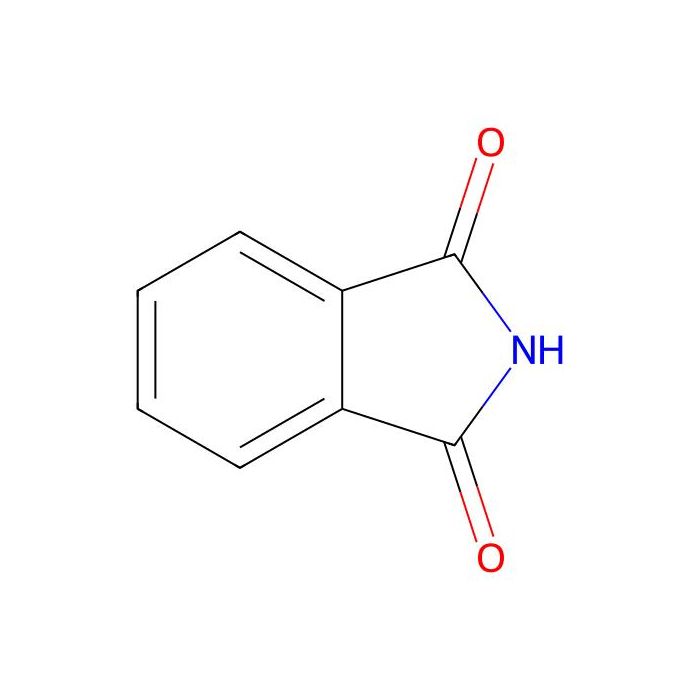
Phthalimide - 10mM in DMSO , CAS No.85-41-6

CAS: 85-41-6 Cat. No.: P661266 Formula: C8H5NO2 Molecular Weight: 147.13 Beilstein Registry Number: 118522 EC Number: 201-603-3
AVAILABLE TO ORDER
GRADE & PURITY 10mM in DMSO
Storage
Store at -80°C
Shipped In
Dry ice packs + Cold packs
★
Size
USA
Germany (EU)*
Price
Qty
1ml
P661266-1ml
Made to order · 8–12 wks

$57.90

$66.90
Save $9.00 (13.45%)
Enter a quantity for the sizes you want to add.

Overview

Phthalimide is a reagent used to transform allyl- and alkyl halides into protected primary amines.
A reagent used to transform allyl- and alkyl halides into protected primary amines

Specifications

Specifications & Purity
10mM in DMSO
Storage
Store at -80°C
Shipped In
Dry ice packs + Cold packs
This product requires cold chain shipping. Ground and other economy services are not available.
Names and Identifiers
Isomeric SMILES
C1=CC=C2C(=C1)C(=O)NC2=O
WGK Germany
1
RTECS
TI3920000
Molecular Weight
147.13
Beilstein
118522
Reaxy-Rn
118522
Reaxys-RN_link_address
https://www.reaxys.com/reaxys/secured/hopinto.do?context=S&query=IDE.XRN=118522&ln=

Advanced Data

Certificates (CoA,COO,BSE/TSE and Analysis Chart)
C of A & Other Certificates(BSE/TSE, COO):
Analytical Chart:

Find and download the COA for your product by matching the lot number on the packaging.

1 results found

Lot NumberCertificate TypeDateItem
G2606488G2606488Certificate of AnalysisJul 09, 2026 P661266
Chemical and Physical Properties
SolubilitySoluble in water (1 mg/ml at 19.5 °C), aqueous alkali hydroxides, acetone (2.5%), and hot methanol.
Flash Point(°C)150℃
Boil Point(°C)366°C
Melt Point(°C)238°C
Documents & Articles
Phthaloyl: Its Role in Primary Amine Protection and Practical Considerations for Experimental Selection
Experimental Decision-Making for Introducing Aminoalkyl Side Chains Using N-Haloalkyl Phthalimides: Chain Length, Leaving Group, and Deprotection Choice
What Are Polyamines? Structural Features, Classification and Representative Compounds, Applications, and Synthetic Strategies
Build the Three-Membered Ring First, or Form the Carbon–Nitrogen Bond First?—Retrosynthetic Strategies, Route Selection, and Stereochemical Control in Cyclopropylamine Synthesis
Why Primary and Secondary Amines Have Difficulty Participating Directly in the Classical Mitsunobu Reaction: Mechanism, Inversion of Configuration, and Reaction Scope of BEHT-Mediated Alcohol Amination
Kinetic Matching in Photoredox/Nickel C(sp²)–C(sp³) Coupling: Radical Generation, Nickel-Species Stability, and Photon Flux
Citations of This Product
Solution Calculators
Reviews

Customer Reviews

Shall we send you a message when we have discounts available?

Remind me later

Thank you! Please check your email inbox to confirm.

Oops! Notifications are disabled.