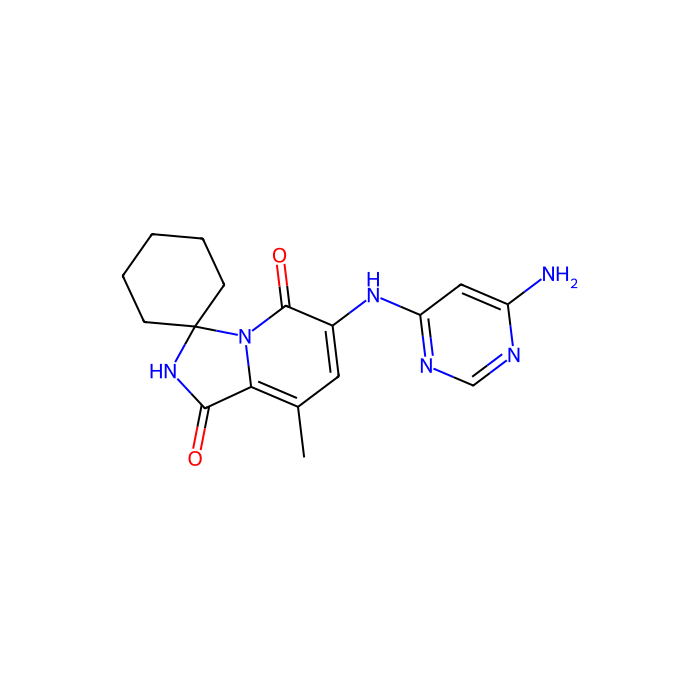
Tomivosertib (eFT-508) - Moligand™, ≥97% , Inhibitor of CDC like kinase 4;Inhibitor of MAPK interacting serine/threonine kinase 1;Inhibitor of MAPK interacting serine/threonine kinase 2;Inhibitor of serine/threonine kinase 17a, CAS No.1849590-01-7, Inhibitor of CDC like kinase 4;Inhibitor of MAPK interacting serine/threonine kinase 1;Inhibitor of MAPK interacting serine/threonine kinase 2;Inhibitor of serine/threonine kinase 17a

CAS: 1849590-01-7 Cat. No.: T413958 Formula: C17H20N6O2 Molecular Weight: 340.38 PubChem CID: 118598754
AVAILABLE TO ORDER
GRADE & PURITY Moligand™ ? Moligand™ — Aladdin's line of ligands and bioactive small molecules. Use for receptor, pathway, and binding studies needing defined small-molecule tools. ≥97%
Synonyms
(R)-Pulegone - 90% | 1849590-01-7 | UNII-U2H19X4WBV | 6'-[(6-aminopyrimidin-4-yl)amino]-8'-methyl-2'H-spiro[cyclohexane-1,3'-imidazo[1,5-a]pyridine]-1',5'-dione | HY-100022 | Z2740419312 | 6'-((6-AMINOPYRIMIDIN-4-YL)AMINO)-8'-METHYL-2'HSPIRO(CYCLOHEXANE-1
Storage
Store at -20°C
Shipped In
Ice chest + Ice pads
★
Size
USA
Germany (EU)*
Price
Qty
1mg
T413958-1mg
3 In stock
—
$86.90
5mg
T413958-5mg
3 In stock
—
$219.90
10mg
T413958-10mg
2 In stock
—
$348.90
25mg
T413958-25mg
2 In stock
—
$469.90
50mg
T413958-50mg
2 In stock
—
$783.90
100mg
T413958-100mg
2 In stock
—
$1,096.90
250mg
T413958-250mg
2 In stock
—
$2,193.90
Enter a quantity for the sizes you want to add.
🧪
Why this grade

Moligand™, ≥97% Moligand™ for sensitive chromatographic and analytical workflows requiring minimal baseline interference.

🌡

Storage & shipping

Store at -20°C Ships Ice chest + Ice pads Check lot-specific COA for exact specifications.

📋

Quality documents

SDS, COA, datasheet, and spec sheet available for download. Lot-specific COA accessible via lot number lookup.

📚

Literature proof

Cited in 0 peer-reviewed publications across chromatography, organic synthesis, and cross-coupling reactions.

Overview

Information

Tomivosertib (eFT-508) Tomivosertib (eFT-508) is a potent and selective MNK1/2 inhibitor with IC50s of 2.4 nM and 1 nM, respectively. It potentially results in decreased tumor cell proliferation and tumor growth. Tomivosertib (eFT-508) inhibits eIF4E phosphorylation and dramatically downregulates PD-L1 protein abundance.


Targets

MNK2 (Cell-free assay); MNK1 (Cell-free assay) 1 nM; 2.4 nM


In vitro

eFT508 has a half-maximal inhibitory concentration (IC50) of 1-2 nM against both MNK isoforms in enzyme assays and inhibits the kinase through a reversible, ATP-competitive mechanism of action. Treatment of tumor cell lines with eFT508 leads to a dose-dependent reduction in eIF4E phosphorylation at serine 209 (IC50 = 2-16 nM). In a panel of ~50 hematological cancers, eFT508 shows anti-proliferative activity against multiple DLBCL cell lines. Sensitivity to eFT508 in TMD8, OCI-Ly3 and HBL1 DLBCL cell lines is associated with dose-dependent decreases in production of pro-inflammatory cytokines including TNFα, IL-6, IL-10 and CXCL10.


In vivo

eFT508 is well-tolerated and shows efficacy against MyD88-mutant DLBCL models in vivo. Significant anti-tumor activity of eFT508 is observed in the TMD8 and HBL-1 ABC-DLBCL models(subcutaneous human lymphoma xenograft models), both of which harbor activating MyD88 mutations.


Cell Research(from reference)

Cell lines:TMD8 cells 

Concentrations:0.01, 0.1, 1, 3, 10 μM 

Incubation Time:24 h 

Specifications

Synonyms
(R)-Pulegone - 90% | 1849590-01-7 | UNII-U2H19X4WBV | 6'-[(6-aminopyrimidin-4-yl)amino]-8'-methyl-2'H-spiro[cyclohexane-1,3'-imidazo[1,5-a]pyridine]-1',5'-dione | HY-100022 | Z2740419312 | 6'-((6-AMINOPYRIMIDIN-4-YL)AMINO)-8'-METHYL-2'HSPIRO(CYCLOHEXANE-1
Specifications & Purity
Moligand™, ≥97%
Biochemical and Physiological Mechanisms
Tomivosertib (eFT-508) is a potent and selective MNK1/2 inhibitor with IC50s of 2.4 nM and 1 nM, respectively. It potentially results in decreased tumor cell proliferation and tumor growth. Tomivosertib (eFT-508) inhibits eIF4E phosphorylation and dramati
Storage
Store at -20°C
Shipped In
Ice chest + Ice pads
This product requires cold chain shipping. Ground and other economy services are not available.
Grade
Moligand™
Action Type
INHIBITOR
Mechanism of action
Inhibitor of CDC like kinase 4;Inhibitor of MAPK interacting serine/threonine kinase 1;Inhibitor of MAPK interacting serine/threonine kinase 2;Inhibitor of serine/threonine kinase 17a
Purity
≥97%
Product Properties
ALogP
1.3
Names and Identifiers
Pubchem Sid
Pubchem Sid Url
https://pubchem.ncbi.nlm.nih.gov/substance/504772874
Canonical Smiles
CC1=C2C(=O)NC3(N2C(=O)C(=C1)NC4=NC=NC(=C4)N)CCCCC3
IUPAC Name
6-[(6-aminopyrimidin-4-yl)amino]-8-methylspiro[2H-imidazo[1,5-a]pyridine-3,1'-cyclohexane]-1,5-dione
InChIKey
HKTBYUWLRDZAJK-UHFFFAOYSA-N
INCHI
1S/C17H20N6O2/c1-10-7-11(21-13-8-12(18)19-9-20-13)16(25)23-14(10)15(24)22-17(23)5-3-2-4-6-17/h7-9H,2-6H2,1H3,(H,22,24)(H3,18,19,20,21)
Isomeric SMILES
CC1=C2C(=O)NC3(N2C(=O)C(=C1)NC4=NC=NC(=C4)N)CCCCC3
Alternate CAS
1849590-01-7
PubChem CID
118598754
MeSH Entry Terms
6'-((6-Amino-4-pyrimidinyl)amino)-8'-methyl-2'H-spiro(cyclohexane-1,3'-imidazo(1,5-a)pyridine)-1',5'-dione;eFT508;spiro(cyclohexane-1,3'(2'H)-imidazo(1,5-a)pyridine)-1',5'-dione, 6'-((6-amino-4-pyrimidinyl)amino)-8'-methyl-;tomivosertib
Molecular Weight
340.38

Documentation

📋 Safety Data Sheet (SDS)

Comprehensive hazard, handling, storage, and regulatory compliance document.

<<<<<<< HEAD Download SDS → ======= Download SDS → >>>>>>> release248-p3

✅ Certificate of Analysis (COA)

Lot-specific quality data. Enter your lot number to retrieve the exact COA.

Look up COA →

📊 Datasheet

Quick-reference summary of product specifications and applications.

View datasheet →

🔬 Specification Sheet

Full quality attributes and acceptance criteria for this grade.

View spec sheet →

Advanced Data

Taxonomic Classification

Taxonomy Tree

KingdomOrganic compounds
SuperclassOrganic acids and derivatives
ClassCarboxylic acids and derivatives
SubclassCarboxylic acid derivatives
Intermediate Tree Nodes Carboxylic acid amides
Direct Parent2-heteroaryl carboxamides
Alternative Parents Pyridinones  Methylpyridines  Aminopyrimidines and derivatives  Aminopyridines and derivatives  Imidolactams  Heteroaromatic compounds  Secondary carboxylic acid amides  Lactams  Amino acids and derivatives  Secondary amines  Azacyclic compounds  Primary amines  Organopnictogen compounds  Organooxygen compounds  Organic oxides  Hydrocarbon derivatives  
Molecular FrameworkAromatic heteropolycyclic compounds
Substituents 2-heteroaryl carboxamide - Methylpyridine - Pyridinone - Aminopyrimidine - Aminopyridine - Imidolactam - Pyrimidine - Pyridine - Heteroaromatic compound - Secondary carboxylic acid amide - Lactam - Amino acid or derivatives - Azacycle - Organoheterocyclic compound - Secondary amine - Organic nitrogen compound - Organic oxygen compound - Organopnictogen compound - Organic oxide - Hydrocarbon derivative - Primary amine - Organooxygen compound - Organonitrogen compound - Amine - Aromatic heteropolycyclic compound
DescriptionThis compound belongs to the class of organic compounds known as 2-heteroaryl carboxamides. These are compounds containing a heteroaromatic ring that carries a carboxamide group.
External Descriptors Not available
3D Structure
Interactive Chemical Structure Model


Associated Targets(Human)
STK17A Tchem Serine/threonine-protein kinase 17A (1 Activities)
Activity TypeActivity Value -log(M)Mechanism of ActionActivity ReferencePublications (PubMed IDs)
MKNK2 Tchem MAP kinase-interacting serine/threonine-protein kinase 2 (4 Activities)
Activity TypeActivity Value -log(M)Mechanism of ActionActivity ReferencePublications (PubMed IDs)
MKNK1 Tchem MAP kinase-interacting serine/threonine-protein kinase 1 (4 Activities)
Activity TypeActivity Value -log(M)Mechanism of ActionActivity ReferencePublications (PubMed IDs)
CLK4 Tchem Dual specificity protein kinase CLK4 (1 Activities)
Activity TypeActivity Value -log(M)Mechanism of ActionActivity ReferencePublications (PubMed IDs)
CLK4 Tchem Dual specificity protein kinase CLK4 (4053 Activities)
Activity TypeRelationActivity valueUnitsAction TypeJournalPubMed IddoiAssay Aladdin ID
MKNK2 Tchem MAP kinase signal-integrating kinase 2 (3518 Activities)
Activity TypeRelationActivity valueUnitsAction TypeJournalPubMed IddoiAssay Aladdin ID
STK17A Tchem Serine/threonine-protein kinase 17A (1791 Activities)
Activity TypeRelationActivity valueUnitsAction TypeJournalPubMed IddoiAssay Aladdin ID
HL-60 (67320 Activities)
Activity TypeRelationActivity valueUnitsAction TypeJournalPubMed IddoiAssay Aladdin ID
K562 (73714 Activities)
Activity TypeRelationActivity valueUnitsAction TypeJournalPubMed IddoiAssay Aladdin ID
PC-3 (62116 Activities)
Activity TypeRelationActivity valueUnitsAction TypeJournalPubMed IddoiAssay Aladdin ID
SK-OV-3 (52876 Activities)
Activity TypeRelationActivity valueUnitsAction TypeJournalPubMed IddoiAssay Aladdin ID
U2OS (164939 Activities)
Activity TypeRelationActivity valueUnitsAction TypeJournalPubMed IddoiAssay Aladdin ID
A549 (127892 Activities)
Activity TypeRelationActivity valueUnitsAction TypeJournalPubMed IddoiAssay Aladdin ID
HCT-116 (91556 Activities)
Activity TypeRelationActivity valueUnitsAction TypeJournalPubMed IddoiAssay Aladdin ID
A2780 (11979 Activities)
Activity TypeRelationActivity valueUnitsAction TypeJournalPubMed IddoiAssay Aladdin ID
MDA-MB-435 (38290 Activities)
Activity TypeRelationActivity valueUnitsAction TypeJournalPubMed IddoiAssay Aladdin ID
MDA-MB-231 (73002 Activities)
Activity TypeRelationActivity valueUnitsAction TypeJournalPubMed IddoiAssay Aladdin ID
EIF4E Tchem Eukaryotic translation initation factor (600 Activities)
Activity TypeRelationActivity valueUnitsAction TypeJournalPubMed IddoiAssay Aladdin ID
MV4-11 (7307 Activities)
Activity TypeRelationActivity valueUnitsAction TypeJournalPubMed IddoiAssay Aladdin ID
MKNK1 Tchem MAP kinase-interacting serine/threonine-protein kinase MNK1 (2071 Activities)
Activity TypeRelationActivity valueUnitsAction TypeJournalPubMed IddoiAssay Aladdin ID
Liver (3974 Activities)
Activity TypeRelationActivity valueUnitsAction TypeJournalPubMed IddoiAssay Aladdin ID
EIF4EBP1 Tbio Eukaryotic translation initiation factor 4E-binding protein 1 (33 Activities)
Activity TypeRelationActivity valueUnitsAction TypeJournalPubMed IddoiAssay Aladdin ID
HEK-293T (167025 Activities)
Activity TypeRelationActivity valueUnitsAction TypeJournalPubMed IddoiAssay Aladdin ID
MOLM-13 (2241 Activities)
Activity TypeRelationActivity valueUnitsAction TypeJournalPubMed IddoiAssay Aladdin ID
MKNK2 Tchem MAP kinase-interacting serine/threonine-protein kinase 1/2 (155 Activities)
Activity TypeRelationActivity valueUnitsAction TypeJournalPubMed IddoiAssay Aladdin ID
TMD8 (415 Activities)
Activity TypeRelationActivity valueUnitsAction TypeJournalPubMed IddoiAssay Aladdin ID
Associated Targets(non-human)
Canis familiaris (36305 Activities)
Activity TypeRelationActivity valueUnitsAction TypeJournalPubMed IddoiAssay Aladdin ID
Mus musculus (284745 Activities)
Activity TypeRelationActivity valueUnitsAction TypeJournalPubMed IddoiAssay Aladdin ID
Rattus norvegicus (775804 Activities)
Activity TypeRelationActivity valueUnitsAction TypeJournalPubMed IddoiAssay Aladdin ID
Cynomolgus monkey (4946 Activities)
Activity TypeRelationActivity valueUnitsAction TypeJournalPubMed IddoiAssay Aladdin ID
rep Replicase polyprotein 1ab (378 Activities)
Activity TypeRelationActivity valueUnitsAction TypeJournalPubMed IddoiAssay Aladdin ID
Plasma (328 Activities)
Activity TypeRelationActivity valueUnitsAction TypeJournalPubMed IddoiAssay Aladdin ID
SARS-CoV-2 (38078 Activities)
Activity TypeRelationActivity valueUnitsAction TypeJournalPubMed IddoiAssay Aladdin ID
Mechanisms of Action
Certificates (CoA,COO,BSE/TSE and Analysis Chart)
C of A & Other Certificates(BSE/TSE, COO):
Analytical Chart:

Find and download the COA for your product by matching the lot number on the packaging.

8 results found

Lot NumberCertificate TypeDateItem
C2303120C2303120Certificate of AnalysisDec 12, 2025 T413958
C2303124C2303124Certificate of AnalysisDec 12, 2025 T413958
C2303125C2303125Certificate of AnalysisDec 12, 2025 T413958
C2303129C2303129Certificate of AnalysisDec 12, 2025 T413958
C2303131C2303131Certificate of AnalysisDec 12, 2025 T413958
C2303132C2303132Certificate of AnalysisDec 12, 2025 T413958
C2303134C2303134Certificate of AnalysisDec 12, 2025 T413958
C2302134C2302134Certificate of AnalysisSep 24, 2022 T413958
Chemical and Physical Properties
SolubilitySolubility (25°C) In vitro DMSO: 13 mg/mL (38.19 mM); Water: Insoluble; Ethanol: Insoluble;
Molecular Weight340.400 g/mol
XLogP31.300
Hydrogen Bond Donor Count3
Hydrogen Bond Acceptor Count6
Rotatable Bond Count2
Exact Mass340.165 Da
Monoisotopic Mass340.165 Da
Topological Polar Surface Area113.000 Ų
Heavy Atom Count25
Formal Charge0
Complexity664.000
Isotope Atom Count0
Defined Atom Stereocenter Count0
Undefined Atom Stereocenter Count0
Defined Bond Stereocenter Count0
Undefined Bond Stereocenter Count0
The total count of all stereochemical bonds0
Covalently-Bonded Unit Count1
Documents & Articles
Solution Calculators
Reviews

Customer Reviews

Application Protocols

No vendor-validated application protocols are provided for this item.

  • Item-specific

    • Tested applications, recommended working concentrations, and positive controls: Not specified for this item; refer to CoA/Spec Sheet.
  • General guidance (use your lab’s SOPs; not product specs)

    • Stock solutions: Prepare in anhydrous DMSO; sterile-filter if required by your workflow and if solubility permits.
    • Dosing: Establish a concentration range empirically using vehicle-matched controls; document final DMSO percentage in all treatments.
    • Readouts: For MNK pathway studies, confirm pharmacodynamics by monitoring phospho-eIF4E (Ser209) reduction via Western blot or phospho-specific assays.
    • Replicates and controls: Include temporal controls to capture on-target kinetics and recovery after washout.

Always adapt to your assay platform and institutional SOPs; the above is informational and not a substitute for validated protocols.

Biological Roles
  • Literature/general context (not item-specific claims)

    • Biological pathway: Tomivosertib is widely cited as a potent, selective inhibitor of MNK1 and MNK2, kinases that phosphorylate eIF4E at Ser209, a key regulatory node in cap-dependent translation initiation.
    • Functional consequences: Inhibition of MNK1/2 generally reduces eIF4E phosphorylation, modulating translation of mRNAs involved in stress responses, cell growth, and survival. This makes Tomivosertib a valuable tool for dissecting translational control and its coupling to upstream MAPK signaling (ERK/p38).
    • Research uses: Employed to probe mechanisms of adaptive resistance, stress granule dynamics, and the selective translation of mRNAs with structured 5′ UTRs. It is also used for pathway deconvolution alongside mTOR/PI3K inhibitors and ribosome profiling studies.
    • Selectivity considerations: Reports describe high selectivity for MNK1/2 versus broader kinomes, enabling cleaner interpretation of translational changes relative to less selective inhibitors. Nonetheless, orthogonal validation (e.g., genetic knockdown) is recommended to exclude off-target effects in specific models.
  • Item-specific notes

    • This listing provides no biological performance specifications. For exact potency/selectivity metrics, consult primary literature and your in-house validation data for the lot in hand.

For research use only; not for diagnostic or therapeutic use.

Buffer Applications

This product is not a buffering agent and is not used to set or maintain pH.

  • Guidance

    • Prepare Tomivosertib in an appropriate organic cosolvent (commonly DMSO), then dilute into your chosen biological buffer or culture medium while maintaining a low final cosolvent fraction.
    • Common biological buffers (PBS, HBSS, HEPES-buffered media) serve as vehicles for delivery but are not altered by the compound to provide buffering capacity.
  • Not specified for this item

    • Any pKa values, buffer recipes, or compatibility tables are not provided for this listing; refer to assay-specific literature and conduct pilot tests to confirm solubility and stability under your conditions.
Green Alternatives

Green chemistry comparisons are not directly applicable because Tomivosertib is a specialized bioactive probe, not a solvent or common synthetic auxiliary.

  • Context

    • Selection of a chemical probe is driven by biological target specificity and assay performance, not by roles that typically have greener substitutes (e.g., replacing THF with 2-MeTHF).
  • Practical “green” considerations for handling (general)

    • Minimize scale: Use micro- to milligram quantities appropriate for screening to reduce waste.
    • Concentrated stocks: Maintain high-concentration DMSO stocks to limit solvent use and shipping mass.
    • Waste management: Segregate halogen-free organic waste; neutralize and dispose according to institutional and regulatory requirements.
    • Data-rich experiments: Employ high-content or multiplexed assays to extract maximal information per unit of compound consumed.
  • Alternative probes (general comment)

    • If your objective is to interrogate the MNK–eIF4E pathway with different chemical matter, consider orthogonal MNK1/2 inhibitors or genetic perturbation (e.g., siRNA/CRISPR). Choice should be based on selectivity profile and assay context rather than environmental attributes.

Note: There are no greener “equivalents” in the usual sense for a selective kinase inhibitor; performance and selectivity dominate selection criteria.

Pharmaceutical Uses
  • Scope of this listing

    • For research use only. No clinical, diagnostic, or therapeutic use is stated or implied.
  • Literature/general formulation context (not product specs or claims)

    • As a reference small-molecule inhibitor, Tomivosertib may be used in preclinical workflows for ADME profiling, permeability/efflux assessments (e.g., Caco-2/MDCK), microsomal stability, and protein binding studies to benchmark translational inhibitor chemotypes.
    • In discovery settings, it can serve as a positive control to validate MNK pathway assays, phospho-eIF4E readouts, and target engagement methods (e.g., CETSA, NanoBRET), thereby supporting medicinal chemistry optimization without itself being the subject of formulation.
  • Practical considerations

    • Stock solution practice: Maintain DMSO stocks at −20°C, aliquoted to reduce freeze–thaw.
    • Excipient selection for in vivo research is outside the scope of this listing; any such work must follow institutional approvals and is not covered by this product’s intended use.
  • Not specified for this item

    • Any pharmacopeial status, excipient compatibility, or dosage-form information: Not specified; refer to CoA/Spec Sheet and relevant regulations.
Physical Properties
  • Item-specific (Product Data)

    • Appearance: Not specified for this item; refer to CoA/Spec Sheet.
    • Molecular weight: Not specified for this item; refer to CoA/Spec Sheet.
    • Molecular formula: Not specified for this item; refer to CoA/Spec Sheet.
    • Melting point: Not specified for this item; refer to CoA/Spec Sheet.
    • Boiling point: Not applicable/unknown for a high-melting solid; not specified for this item.
    • Density: Not specified for this item; refer to CoA/Spec Sheet.
    • Refractive index: Not applicable for solids.
    • Solubility: Not specified for this item; refer to CoA/Spec Sheet.
  • Literature/general guidance (not product specs)

    • Handling as a bioactive small molecule typically involves preparing concentrated DMSO stock solutions (e.g., 10–50 mM) due to common hydrophobicity of kinase inhibitors; final working dilutions are made into aqueous buffers or media with ≤0.1–0.5% DMSO cosolvent. Actual solubility for this lot must be verified experimentally.
    • Partition behavior: Kinase inhibitors often display moderate to high lipophilicity; anticipate adsorption to plastic and consider low-bind labware.

Note: Where exact numeric values are required (e.g., mp, solubility limits), consult the lot-specific CoA/SDS or primary literature. Do not treat the above as item specifications.

Quality & Grades
  • Item-specific (Product Data)

    • Grade/Purity designation: Moligand™
    • Research Use Note: For research use only
  • What Moligand™ implies (general explanation; not item-specific specs)

    • Moligand™ denotes inclusion in a curated small-molecule/ligand library intended for discovery, screening, and mechanism-of-action studies. Materials are typically prepared and handled to support reproducible bioassay use, with identity and purity controlled by standard analytical techniques appropriate for small-molecule probes.
    • Exact analytical methods (e.g., HPLC purity threshold, NMR, MS) and any stabilizers are not specified for this item; refer to the lot-specific CoA/Spec Sheet for definitive details.
  • Practical notes for this product

    • As a bioactive kinase inhibitor, Tomivosertib is commonly used as a reference compound or tool molecule in MNK1/2–eIF4E pathway studies. For screening consistency, verify lot identity and purity via the supplied CoA.
    • If low-adsorption packaging or light protection was used, it will be indicated on the label/CoA. In absence of such notes, store at −20°C and protect from moisture; minimize freeze–thaw cycles by aliquoting.
  • Not included/unspecified for this listing

    • Stabilizers, residual solvent limits, water content, metal limits, and UV cutoff: Not specified for this item; refer to CoA/Spec Sheet.
Reaction & Applications

This product is supplied as a bioactive tool compound rather than a synthetic reagent.

  • Not typically applicable

    • It is not generally employed as a reagent or catalyst in preparative organic synthesis, and it is not a solvent or auxiliary for standard named reactions.
  • Relevant research applications (literature/general)

    • Acts as a chemical probe of the MNK1/2–eIF4E axis, enabling studies of cap-dependent translation, stress-response signaling, and oncogenic translational programs.
    • Useful as a reference inhibitor in target-validation experiments, orthogonal assay benchmarking, and structure–activity relationship comparisons.
    • Can serve as a control in phospho-eIF4E (Ser209) readouts (e.g., immunoblotting, phospho-ELISA) when establishing MNK pathway assay windows.
  • Practical suggestions (general)

    • Prepare a fresh DMSO stock or use aliquoted frozen stocks to minimize potency drift from adsorption or multiple freeze–thaw cycles.
    • Include vehicle controls matched for DMSO content; titrate across a relevant concentration range to define IC50/EC50 in your system.

For synthetic transformations or catalyst applications, this product is not recommended; consult our catalog for reagents specifically designed for chemical synthesis.

Reaction Conditions

Not applicable in the conventional synthetic sense. Tomivosertib is not used to catalyze or undergo planned synthetic reactions as part of routine laboratory transformations.

  • Relevant handling conditions (general for bioassays; not product specs)
    • Stock preparation: Dissolve in dry DMSO under ambient conditions; vortex and, if necessary, briefly sonicate to ensure complete dissolution.
    • Storage during use: Keep thawed working stocks on ice, protected from light if photosensitivity is suspected; return to −20°C promptly.
    • Assay addition: Deliver small volumes of concentrated stock to achieve target concentrations while keeping DMSO low; include matched vehicle controls.

For actual chemical reaction parameters (solvents, catalysts, temperatures), this product is not intended or recommended.

Safety & Handling
  • Item-specific (Product Data)

    • GHS Classification: Not specified for this item; refer to SDS.
    • Signal word: Not specified for this item; refer to SDS.
    • Hazard statements (H-Statements): Not specified for this item; refer to SDS.
    • Pictograms: Not specified for this item; refer to SDS.
    • Storage conditions: Store at −20°C.
    • Shipping: Ice chest + ice pads.
  • General laboratory precautions (literature/general; defer to SDS)

    • PPE: Use laboratory coat, safety glasses, and suitable chemical-resistant gloves. Work in a certified chemical fume hood when handling powders/solutions.
    • Avoid inhalation of dust or aerosols; prevent contact with skin and eyes. Wash thoroughly after handling.
    • Incompatibilities: Avoid strong oxidizing agents and strong acids/bases until compatibility is known. Use dry, clean tools to minimize contamination and moisture exposure.
    • First aid (overview): If inhaled—move to fresh air; skin/eye contact—rinse with water for at least 15 minutes; ingestion—rinse mouth. Seek medical attention per SDS guidance.
    • Waste: Collect as organic hazardous waste; do not discharge to drains.

Note: No medical or clinical use. For research use only. The SDS is the authoritative source for hazard classification and response procedures.

Solvent Selection

Tomivosertib is a bioactive small molecule rather than a bulk solvent. Solvent selection here refers to dissolving and dispensing the compound for assays.

  • Item-specific

    • No solubility data are provided for this item; refer to CoA/Spec Sheet.
  • Literature/general guidance for similar kinase inhibitors (not product specs)

    • Primary solvent: DMSO is typically preferred for preparing concentrated stock solutions due to broad solubilizing power for heteroaromatic inhibitors.
    • Aqueous compatibility: Working solutions are usually prepared by diluting the DMSO stock into buffer or culture media; maintain DMSO below commonly tolerated levels (e.g., ≤0.1–0.5% v/v) depending on the biological system.
    • Alternative cosolvents: If needed, small amounts of ethanol or DMF can assist solubilization; confirm compatibility with your assay and materials.
    • Adsorption minimization: Use low-binding polypropylene or glass vials and pre-wet pipette tips with DMSO to improve delivery accuracy at low micromolar concentrations.
  • Comparison (general)

    • DMSO: Highest likelihood of complete dissolution; excellent stability for freezer stocks.
    • Ethanol: Useful for less lipophilic molecules; higher volatility may complicate dosing.
    • Aqueous buffers: Direct dissolution is often limited for hydrophobic inhibitors; typically used only after DMSO pre-dissolution.

Always confirm solubility and compatibility empirically with your specific lot and assay.

Storage & Reconstitution
  • Item-specific (Product Data)

    • Storage temperature: Store at −20°C.
    • Shipping: Ice chest + ice pads.
  • Reconstitution

    • Reconstitution solvent, concentration, and stabilizers: Not specified for this item; refer to CoA/Spec Sheet.
  • General handling guidance (informational; not product specs)

    • Allow the container to equilibrate to room temperature in a desiccated environment before opening to avoid moisture condensation.
    • If preparing solutions, anhydrous DMSO is commonly used for small-molecule inhibitors; filter through a low-protein-binding membrane if sterility is required and solubility allows.
    • Aliquot solutions to minimize freeze–thaw cycles; store aliquots at −20°C or below. Track preparation dates and concentrations on the vial label.
  • Stability

    • Shelf-life and solution stability are not specified for this item; consult the CoA/SDS and verify stability under your exact storage and assay conditions prior to critical experiments.
Structure & Identity

Brief overview: Tomivosertib (eFT-508) is a research-grade, small-molecule kinase inhibitor supplied as a Moligand™ library member.

  • Item-specific (Product Data)

    • Product name: Tomivosertib (eFT-508)
    • SKU: T413958
    • CAS: 1849590-01-7
    • PubChem CID: 118598754
    • InChIKey: 124111 (as provided)
    • Molecular formula: Not specified for this item; refer to CoA/Spec Sheet.
    • Molecular weight: Not specified for this item; refer to CoA/Spec Sheet.
    • SMILES: Not specified for this item; refer to CoA/Spec Sheet.
  • Literature/general identity (for reference; not item-specific specs)

    • Common description: a potent, selective inhibitor of MNK1/2 (MAP kinase–interacting kinases) used to modulate eIF4E Ser209 phosphorylation in translational control studies.
    • Structural class: small-molecule heteroaromatic kinase inhibitor scaffold (exact substituents vary by source; consult primary references for definitive structure drawings).
  • Two-dimensional structure (descriptive)

    • Not provided in this listing. Consult the product CoA/SDS or authoritative databases (e.g., PubChem CID 118598754) for the exact 2D depiction and stereochemical details.
Synthetic Utility

Tomivosertib is a finished bioactive probe and is not typically used as a reagent, catalyst, or building block in synthetic chemistry.

  • Not typically applicable

    • It does not serve as a functional-group transfer reagent, coupling partner, or ligand in common synthetic transformations.
  • If synthetic derivatization is desired (general comment)

    • Any semisynthetic modifications (e.g., installation of reporter handles for target engagement assays) should be guided by structure–activity relationship data to avoid disrupting MNK binding. Such work is custom and outside the scope of this catalog entry.

For conventional synthetic needs (cross-couplings, reductions, oxidations, etc.), please consult our catalog of dedicated reagents and catalysts rather than using this bioactive small molecule.

Target Specificity
  • Literature/general specificity profile (not item-specific specs)

    • Primary targets: MNK1 (MKNK1) and MNK2 (MKNK2), serine/threonine kinases downstream of ERK and p38 MAPKs.
    • Mechanistic outcome: Inhibition of MNK1/2 activity leading to decreased phosphorylation of eIF4E at Ser209, affecting cap-dependent translation of select mRNAs.
    • Use as a probe: Employed to interrogate the MNK–eIF4E node in translational control, stress signaling, and adaptive resistance models. Frequently used alongside orthogonal inhibitors and genetic perturbations for pathway validation.
  • Item-specific information

    • This listing does not include quantitative potency (e.g., IC50/Ki) or kinome selectivity panels. Consult primary literature and perform in-assay titration and target engagement measurements to establish activity in your system.

Note: Target binding and selectivity can vary with cell type, protein expression, and assay conditions; verify with appropriate controls (e.g., phospho-eIF4E immunoblotting, CETSA/NanoBRET).

Frequently Asked Questions

What is the purity of this product?
This product is supplied at ≥97% purity (chemical assay). Lot-specific values are stated on the Certificate of Analysis.
What is Moligand??
Moligand? is one of Aladdin Scientific's premium product lines, formulated for high-purity applications across multiple workflows. Compared to standard grades in the same workflow, Moligand? products typically offer tighter specifications, more rigorous QC, and stronger lot-to-lot consistency.
How should this product be stored?
Store at ?20 °C. Freezer storage is required to maintain the specified shelf life.
How is this product shipped?
This product ships in an insulated container with ice pads. Unpack on arrival and transfer it to the storage condition stated above.
What are the CAS number, molecular formula and molecular weight?
The CAS Number is 1849590-01-7, the molecular formula is C17H20N6O2, and the molecular weight is 340.38 g/mol. InChIKey HKTBYUWLRDZAJK-UHFFFAOYSA-N.
What documentation is provided?
Available product documentation, including Certificates of Analysis (COA), Safety Data Sheets (SDS), and specification sheets, is shown in the product document area. Document availability and access follow the current site policy.

Shall we send you a message when we have discounts available?

Remind me later

Thank you! Please check your email inbox to confirm.

Oops! Notifications are disabled.