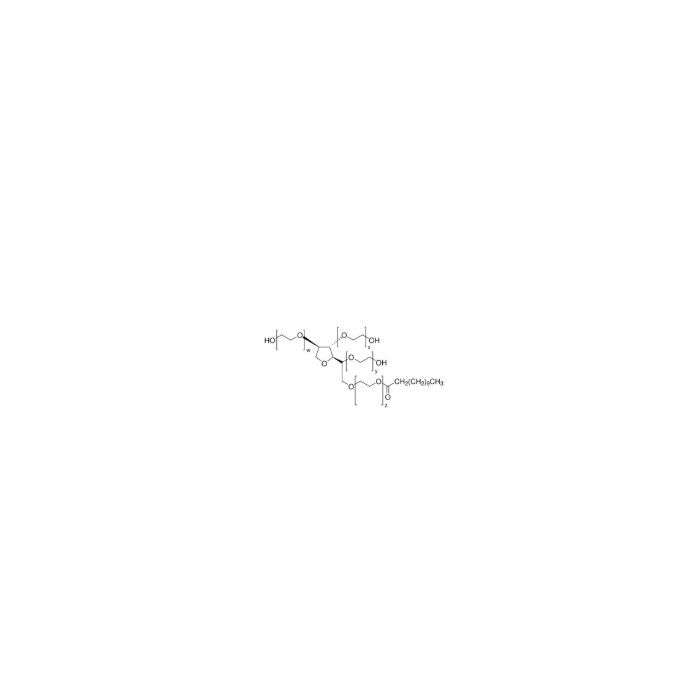
TWEEN® 20 - for cell culture, viscous liquid , CAS No.9005-64-5

CAS: 9005-64-5 Cat. No.: T434506 Fórmula: C58H114O26(for n = 20) Peso molecular: 1228 (for n= 20) Número EC: 500-018-3
Disponible para pedir
GRADE & PURITY for Cell culture ? Cell-culture grade — low endotoxin and contaminants to support viable cell growth. Use in mammalian/other cell culture media and supplements. viscous liquid
Synonyms
POE (6) sorbitol monolaurate | Tween(R) 20 | 2-{2-[3,4-bis(2-hydroxyethoxy)oxolan-2-yl]-2-(2-hydroxyethoxy)ethoxy}ethyl dodecanoate | SCHEMBL118527 | Tween 40 (TN) | 1052273-76-3 | 2-(2-(3,4-bis(2-hydroxyethoxy)tetrahydrofuran-2-yl)-2-(2-hydroxyethoxy)eth
Storage
Room temperature
★
Size
USA
Alemania (EU)*
Price
Qty
100ml
T434506-100ml
3 Disponible
—
39,90US$
500ml
T434506-500ml
3 Disponible
1 Disponible
72,90US$
Enter a quantity for the sizes you want to add.
🧪
Why this grade

for cell culture, viscous liquid for Cell culture for sensitive chromatographic and analytical workflows requiring minimal baseline interference.

🌡

Storage & shipping

Room temperature Ships Check lot-specific COA for exact specifications.

📋

Quality documents

SDS, COA, datasheet, and spec sheet available for download. Lot-specific COA accessible via lot number lookup.

📚

Literature proof

Cited in 494 peer-reviewed publications across chromatography, organic synthesis, and cross-coupling reactions.

Descripción general

ECO TWEEN® 20, also known as Polyoxyethylenesorbitan monolaurate, is a bio-based, nonionic detergent manufactured from a natural fatty acid. This surfactant, derived from natural sources, provides various functional advantages, such as detergency, emulsification, and wetting. Its versatility makes it well-suited for a variety of applications in biochemical and biological research, with common uses including cell lysis, protein extraction, nuclei isolation and cell fractionation. We are committed to bringing you Greener Alternative Products, which adhere to one or more of The 12 Principles of Green Chemistry. This product is a biobased surfactant and is aligned with the 7th principle of Green Chemistry "Use of Renewable Feedstocks" and the 10th principle "Design for Degradation".
TWEEN 20 is a polyoxyethylene sorbitol ester that belongs to the polysorbate family. It is a nonionic detergent having a molecular weight of 1,225 daltons, assuming 20 ethylene oxide units, 1 sorbitol, and 1 lauric acid as the primary fatty acid. The ethylene oxide subunits are responsible for the hydrophilic nature of the surfactant, while the hydrocarbon chains provide the hydrophobic environment. Sorbitol forms the backbone ring to which the ethylene oxide polymers are attached.

Specifications

Sinónimos
POE (6) sorbitol monolaurate | Tween(R) 20 | 2-{2-[3,4-bis(2-hydroxyethoxy)oxolan-2-yl]-2-(2-hydroxyethoxy)ethoxy}ethyl dodecanoate | SCHEMBL118527 | Tween 40 (TN) | 1052273-76-3 | 2-(2-(3,4-bis(2-hydroxyethoxy)tetrahydrofuran-2-yl)-2-(2-hydroxyethoxy)eth
Especificaciones y pureza
for cell culture, viscous liquid
Información jurídica
TWEEN is a registered trademark of Croda International PLC
Condiciones de almacenamiento de almacenamiento
Room temperature
Grado
for Cell culture
Nota
Note: Tween 20 may be unstable under autoclaving, particularly in buffered solutions containing metal cations. Autoclaving is not recommended without testing for performance changes. Tween 20 is heat-sensitive and darkens when exposed to elevated temperatures. Polysorbates are reported to be incompatible with alkalis, heavy metal salts, phenols, and tannic acid. They may reduce the activity of many preservatives. Polysorbate aqueous solutions undergo auto-oxidation during storage, with changes catalyzed by light, elevated temperatures, and copper sulfate.
Nombres e identificadores
Pubchem Sid
Pubchem Sid Url
https://pubchem.ncbi.nlm.nih.gov/substance/504758799
Sonrisas canónicas
CCCCCCCCCCCC(=O)OCCOCC(C1C(C(CO1)OCCO)OCCO)OCCO
IUPAC Name
2-[2-[3,4-bis(2-hydroxyethoxy)oxolan-2-yl]-2-(2-hydroxyethoxy)ethoxy]ethyl dodecanoate
InChIKey
HMFKFHLTUCJZJO-UHFFFAOYSA-N
INCHI
1S/C26H50O10/c1-2-3-4-5-6-7-8-9-10-11-24(30)34-19-18-31-20-22(32-15-12-27)26-25(35-17-14-29)23(21-36-26)33-16-13-28/h22-23,25-29H,2-21H2,1H3
Isómeros SMILES
CCCCCCCCCCCC(=O)OCCOCC(C1C(C(CO1)OCCO)OCCO)OCCO
WGK Alemania
1
RTECS
TR7400000
Peso molecular
1228 (for n= 20)

Documentation

📋 Safety Data Sheet (SDS)

Comprehensive hazard, handling, storage, and regulatory compliance document.

Download SDS →

✅ Certificate of Analysis (COA)

Lot-specific quality data. Enter your lot number to retrieve the exact COA.

Look up COA →

📊 Datasheet

Quick-reference summary of product specifications and applications.

View datasheet →

🔬 Specification Sheet

Full quality attributes and acceptance criteria for this grade.

View spec sheet →

Advanced Data

Taxonomic Classification

Taxonomy Tree

KingdomOrganic compounds
SuperclassLipids and lipid-like molecules
ClaseFatty Acyls
SubclassFatty acid esters
Intermediate Tree Nodes Not available
Direct ParentFatty acid esters
Alternative Parents Tetrahydrofurans  Carboxylic acid esters  Oxacyclic compounds  Monocarboxylic acids and derivatives  Dialkyl ethers  Primary alcohols  Organic oxides  Hydrocarbon derivatives  Carbonyl compounds  
Molecular FrameworkAliphatic heteromonocyclic compounds
Substituents Fatty acid ester - Tetrahydrofuran - Carboxylic acid ester - Carboxylic acid derivative - Dialkyl ether - Ether - Monocarboxylic acid or derivatives - Organoheterocyclic compound - Oxacycle - Organic oxide - Carbonyl group - Alcohol - Organooxygen compound - Primary alcohol - Hydrocarbon derivative - Organic oxygen compound - Aliphatic heteromonocyclic compound
DescripciónThis compound belongs to the class of organic compounds known as fatty acid esters. These are carboxylic ester derivatives of a fatty acid.
External Descriptors a small molecule
Estructura 3D
Modelo de Estructura Química Interactiva


Mecanismos de acción
Certificados (CoA, COO, BSE/TSE y tabla de análisis)
C of A & Other Certificates(BSE/TSE, COO):
Analytical Chart:

Find and download the COA for your product by matching the lot number on the packaging.

14 results found

Lot NumberCertificate TypeFechaArticulo
G2610020Certificate of AnalysisJul 20, 2026 T434506
G2610024Certificate of AnalysisJul 20, 2026 T434506
C2625187Certificate of AnalysisMar 30, 2026 T434506
D23061250Certificate of AnalysisJan 21, 2026 T434506
D23061251Certificate of AnalysisJan 21, 2026 T434506
D23061256Certificate of AnalysisJan 21, 2026 T434506
A2614088Certificate of AnalysisApr 08, 2023 T434506
D2417042Certificate of AnalysisApr 08, 2023 T434506
E2506254Certificate of AnalysisApr 08, 2023 T434506
E2520078Certificate of AnalysisApr 08, 2023 T434506
G2512088Certificate of AnalysisApr 08, 2023 T434506
H2407064Certificate of AnalysisApr 08, 2023 T434506
J2417296Certificate of AnalysisApr 08, 2023 T434506
L2419388Certificate of AnalysisApr 08, 2023 T434506
Propiedades químicas y físicas
Índice de refracción1.4685-1.4715
Punto de inflamación (°C)>149℃
Punto de ebullición (°C)100°C
Punto de fusión (°C)-14 °C
Peso molecular522.700 g/mol
XLogP32.500
Hydrogen Bond Donor Count3
Hydrogen Bond Acceptor Count10
Rotatable Bond Count26
Exact Mass522.34 Da
Monoisotopic Mass522.34 Da
Topological Polar Surface Area133.000 Ų
Heavy Atom Count36
Formal Charge0
Complexity507.000
Isotope Atom Count0
Defined Atom Stereocenter Count0
Undefined Atom Stereocenter Count4
Defined Bond Stereocenter Count0
Undefined Bond Stereocenter Count0
The total count of all stereochemical bonds0
Covalently-Bonded Unit Count1
Preguntas frecuentes y artículos
Tween 20 and Tween 80 as Non-Ionic Surfactants: Structure, Properties, and Applications
For Cell Culture
Enzyme Protectants and Common Methods to Prolong Enzymatic Activity
Common Issues for Western Blot (WB)
How to Choose Between Tween 20, Tween 60, and Tween 80?
Buffer Additives to Prevent Protein Precipitation
Common Protectants and Formulations for Protein Storage
11 Common Methods for Protein Concentration Determination
Differences Among Antibodies for WB/FC/IP/ChIP/IF/IHC
NPE (NP-n) Selection Guide: How EO Number Affects Solubility, HLB, Cloud Point, and CMC | With an Aladdin Product Reference Table
A Practical Guide to Fragrance Compositions: Turning a Black-Box Formula into an Engineerable System—Compatibility, Stability, Controlled Release, Traceability, and Selection
A Panoramic Guide to Surfactants: Definitions & Mechanisms, Key Metrics, Application Scenarios, and Selection Navigation (Tables 1–3)
Protein Tags Demystified: Classification, Properties, and Suitable Experimental Applications
Why Acridine Can Turn “Trace Molecules” into a Measurable Light Signal: A Mechanistic, Selection, and Troubleshooting Guide to Acridinium Ester Chemiluminescent Immunoassays (Including Product Tables 1–4)
Acid Phosphatase: Dephosphorylation Reactions in Acidic Microenvironments and Their Research, Assay, and Detection Applications
Diaphorase: NAD(P)H-Dependent Electron-Transfer Activity and Its Applications in Detection and Research
Haptoglobin (Hp): A Key Carrier in the Free Hemoglobin Clearance–Detoxification Axis, with Assays and Applications
Urinary Follicle-Stimulating Hormone (uFSH): Source Attributes, Molecular Properties, and Research Application Frameworks
Cholesterol Esterase: Mechanistic Insights and Application Frameworks Driven by Interfacial Hydrolysis
Angiotensin-Converting Enzyme (ACE): A Review of Molecular Features, Catalytic Functions, and Research and Translational Applications
Hemicellulases: A Review of Substrate Specificity, Catalytic Systems, and Research and Industrial Applications
Phytase: Enzymological Properties, Mechanism of Action, and Applications in Feed and Food
Chitinases: Substrate-Specific Degradation Mechanisms, Enzymatic Properties, and Application Directions
Review of the Principles, Common Methods, and Key Application Considerations for the Determination of Glycerol and Triglyceride Contents
Glycoprotein Hormone Family: Molecular Features, Signaling Bias, and In Vivo Pharmacokinetics
Tyramide Signal Amplification in In Situ Fluorescence Detection
Selection Strategy for PBS, TBS, PBST, and TBST Washing Systems in IHC
Preparation Methods and Precautions for Silane Coupling Agent Primer Solutions
Solvents, Co-solvents, and Solubilization Systems in Home and Personal Care Formulations: Classification, Functions, and Selection Guide
Practical Guide to TSA Tyramide Signal Amplification: How to Select Reagents, Optimize the Workflow, and Reduce Background When Detection Signals Are Weak for Low-Abundance Targets
Signal Transduction Mechanism of Graphene Biosensors: From Molecular Recognition to Electrical/Optical Signal Readout and Materials Selection
Why Limonene Can Soften Greasy Soils Yet Is Difficult to Dissolve in Water: Understanding the Cleaning Mechanism and Formulation Applications of Naturally Derived Solvents from Molecular Structure
Interfacial Mechanism and Formulation Applications of AEO-9 (Fatty Alcohol Polyoxyethylene Ether): An Analysis of Emulsification, Wetting, Oil Soil Removal, and Co-Formulation Compatibility
Analysis of the Foaming Performance Differences Between K12 and AOS: Structure, Acid–Base Stability, and Formulation Selection
Structural Characteristics, Low-Temperature Flowability, and Home-Care Cleaning Applications of Palm-Derived Isomeric Alcohol Polyoxyethylene Ether PLE-S9
Structural Logic of Nonionic Surfactants: Mechanisms of Action, Classification Features, and Selection Principles
Why Are Daily Chemical Products Prone to Viscosity Thinning in Summer? Core Mechanisms, Troubleshooting Methods, and Solutions
Understanding the Four Classes of Surfactants Through Molecular Charge: Application Logic of Anionic, Cationic, Amphoteric and Zwitterionic, and Nonionic Surfactants in Personal Care and Home Care
Comparison of Bilirubin Detection Methods: Application Selection of the Diazo Method, Vanadate Oxidation Method, Bilirubin Oxidase Method, and HPLC
Antioxidant Mechanisms of Ferulic Acid in Skincare, Vitamin C/E Synergy, and Stable Delivery Applications
Bacterial Cell Wall Degradation Technology
Mechanisms of Action, Formulation Screening, and Safety Evaluation of Solubilizers, Hydrotropes, and Cosolvents in Drug-Delivery Systems
Citations of This Product
Calculadoras de soluciones
Reseñas

Reseñas de cliente

Preguntas frecuentes

What does for cell culture mean?
for cell culture indicates that the product has been processed and tested for cell culture and tissue engineering. Specifications may include endotoxin limits, microbial controls, sterility, low DNase/RNase/protease activity, and verified biological activity where relevant.
How should this product be stored?
Store at room temperature.
What are the CAS number, molecular formula and molecular weight?
The CAS Number is 9005-64-5, the molecular formula is C58H114O26(for n = 20), and the molecular weight is 1228 (for n= 20) g/mol. InChIKey HMFKFHLTUCJZJO-UHFFFAOYSA-N.
What documentation is provided?
Available product documentation, including Certificates of Analysis (COA), Safety Data Sheets (SDS), and specification sheets, is shown in the product document area. Document availability and access follow the current site policy.

Shall we send you a message when we have discounts available?

Remind me later

Thank you! Please check your email inbox to confirm.

Oops! Notifications are disabled.