Recombinant eIF4EBP1 Antibody - Primary antibody, specific to EIF4EBP1, Rabbit IgG

Cat. No.: Ab101403
AVAILABLE TO ORDER
GRADE & PURITY Recombinant ? Recombinant — produced via recombinant expression for defined sequence and consistency. Use for reproducible, animal-free proteins of known origin. ExactAb™ ? ExactAb™ — Aladdin's antibody line emphasizing precision and validated quality. Use for reliable, specificity-validated antibody applications. Validated ? Validated grade — performance confirmed in defined applications before release. Use when you want documented assurance the reagent works as stated. 0.2 mg/mL
Application
IF/ICC, IHC, WB
Host species
Rabbit
Reactive species
Hamster, Human, Mouse, Rat
Isotype
Rabbit IgG
Conjugation
Unconjugated
★
Size
USA
Germany (EU)*
Price
Qty
10μl
Ab101403-10μl
2 In stock
—
$99.90
50μl
Ab101403-50μl
1 In stock
—
$259.90
100μl
Ab101403-100μl
US Made to order · 2–4 wks ·
—
$419.90
1ml
Ab101403-1ml
US Made to order · 2–4 wks ·
—
$3,399.90
Enter a quantity for the sizes you want to add.
🧪
Why this grade

ExactAb™, Validated, Recombinant, 0.2 mg/mL ExactAb™,Recombinant,Validated for sensitive chromatographic and analytical workflows requiring minimal baseline interference.

🌡

Storage & shipping

Store at -20°C,Avoid repeated freezing and thawing Ships Ice chest + Ice pads Check lot-specific COA for exact specifications.

📋

Quality documents

SDS, COA, datasheet, and spec sheet available for download. Lot-specific COA accessible via lot number lookup.

📚

Literature proof

Cited in 0 peer-reviewed publications across chromatography, organic synthesis, and cross-coupling reactions.

Overview

Rabbit anti Human eIF4EBP1 Antibody, Recombinant, could be used for WB, IHC and so on.
Application:
WB: 1/500-1/1000
IHC: 1/50-1/100
Protein Function
Regulates eIF4E activity by preventing its assembly into the eIF4F complex. Mediates the regulation of protein translation by hormones, growth factors and other stimuli that signal through the MAP kinase and mTORC1 pathways.

Specifications

Product Name
Recombinant eIF4EBP1 Antibody - Primary antibody, specific to EIF4EBP1, Rabbit IgG
Synonyms
4EBP1 | 4E-BP1 | eIF4E-binding protein 1 | EIF4EBP1 | eukaryotic translation initiation factor 4E binding protein 1,4EBP1,4E-BP1BP-1 | eukaryotic translation initiation factor 4E-binding protein 1 | PHAS-I | PHAS-IMGC4316 | Phosphorylated heat- and acid-s
Specifications & Purity
ExactAb™, Validated, Recombinant, 0.2 mg/mL
Host species
Rabbit
Specificity
EIF4EBP1
Immunogen
A synthetic peptide derived from human eIF4EBP1 (AA 16-33)
Positive Control
WB: Jurkat, HEK293, Hep G2, HeLa, MCF7, A431, NIH/3T3 and C6 cell lysates. IHC: Human breast cancer tissue. IF/ICC: HeLa cells.
Conjugation
Unconjugated
Grade
ExactAb™, Recombinant, Validated
Isotype
Rabbit IgG
SDS-PAGE
150 kDa
Purification Method
Antigen affinity purified
Concentration
0.2 mg/mL
Product Line
Biological Products
Storage and Shipping
Shape
Liquid
Storage
Store at -20°C,Avoid repeated freezing and thawing
Shipped In
Ice chest + Ice pads
Stability And Storage
Store at 4°C short term (1-2 weeks). Store at -20°C long term (24 months). Upon receipt, it is recommended to aliquot. Avoid freeze/thaw cycle.
Images

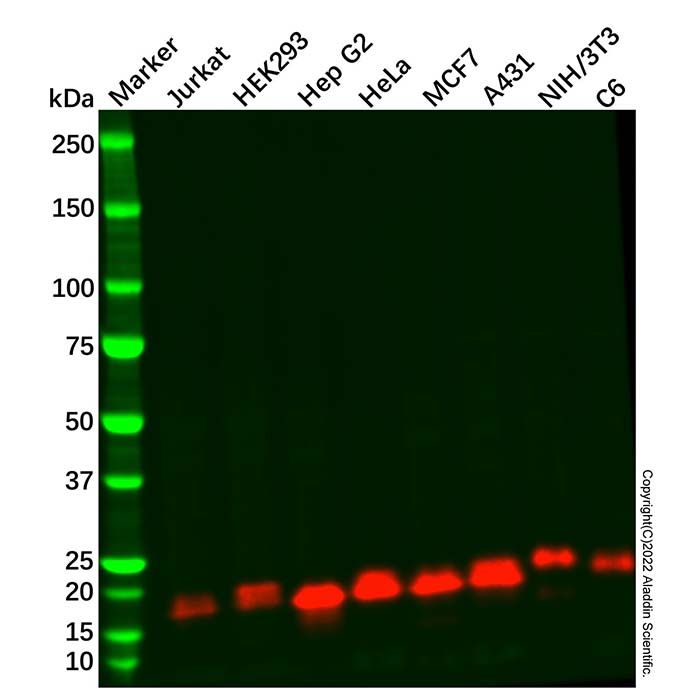
Recombinant eIF4EBP1 Antibody (Ab101403) - Western Blot
All lanes: Recombinant eIF4EBP1 Antibody (Ab101403) at 1/1000 dilution
Samples: Lysates at 20 µg per lane
Secondary: Goat Anti-Rabbit IgG H&L (HRP) (Ab170144) at 1/20000 dilution

Predicted band size: 13 kDa
Observed band size: 18 kDa
Exposure time: 78.9 s

Recombinant eIF4EBP1 Antibody (Ab101403) - IHC
Immunohistochemistry analysis of paraffin-embedded Human breast cancer using Recombinant eIF4EBP1 Antibody (Ab101403). High-pressure and temperature Sodium Citrate pH 6.0 was used for antigen retrieval.

Recombinant eIF4EBP1 Antibody (Ab101403) - IF/ICC
IF analysis of Recombinant eIF4EBP1 Antibody (Ab101403) in HeLa cells. The cells were fixed and permeabilized with 100% methanol for 5 minutes, and blocked with 5% BSA for 1 hour at room temperature. Cells were stained with Recombinant eIF4EBP1 Antibody (Ab101403) at 1/200 dilution in blocking buffer overnight at 4°C, and then incubated with Goat Anti-Rabbit IgG H&L (AF488) (Ab181954) at a dilution of 1/1000 for 1 hour at room temperature in the dark (green). Cells were counterstained with DAPI (blue).

Application
Application
Dilution info
WB

1/500-1/1000

IHC

1/50 - 1/100

IF/ICC

1/200

Documentation

📋 Safety Data Sheet (SDS)

Comprehensive hazard, handling, storage, and regulatory compliance document.

Download SDS →

✅ Certificate of Analysis (COA)

Lot-specific quality data. Enter your lot number to retrieve the exact COA.

Look up COA →

📊 Datasheet

Quick-reference summary of product specifications and applications.

View datasheet →

🔬 Specification Sheet

Full quality attributes and acceptance criteria for this grade.

View spec sheet →

Advanced Data

Associated Targets(Human)
EIF4EBP1 Tbio Eukaryotic translation initiation factor 4E-binding protein 1 (0 Activities)
Activity TypeActivity Value -log(M)Mechanism of ActionActivity ReferencePublications (PubMed IDs)
Mechanisms of Action
Certificates(CoA,COO,BSE/TSE and Analysis Chart)
C of A & Other Certificates(BSE/TSE, COO):
Analytical Chart:

Find and download the COA for your product by matching the lot number on the packaging.

3 results found

Lot NumberCertificate TypeDateItem
ZJ24F0303772Certificate of AnalysisJan 22, 2026 Ab101403
ZJ24F0303773Certificate of AnalysisJan 22, 2026 Ab101403
ZJ26F0635979Certificate of AnalysisJan 22, 2026 Ab101403
Documents & Articles
Solution Calculators
Reviews

Customer Reviews

Application Protocols

Tested applications, recommended dilutions, and detailed protocols are not specified for this item; refer to CoA/Spec Sheet.

General starting-point protocols (literature/general; adjust empirically)

  • Western blot (WB):
    • Sample: Denatured lysates; include phosphatase inhibitors for phospho-analysis.
    • Load: 10–40 µg total protein per lane.
    • Primary: Start at 1:500–1:2,000; incubate 1 h RT or overnight 4°C in TBS-T/5% BSA.
    • Secondary: Species-specific HRP conjugate; 1:5,000–1:20,000.
  • Immunoprecipitation (IP):
    • Antibody: 1–5 µg per 0.5–1 mg lysate; rotate 1–4 h at 4°C; capture with Protein A/G.
  • IF/ICC:
    • Fixation: 4% PFA or methanol; permeabilization 0.1–0.5% Triton X-100 as required.
    • Primary: 1:100–1:500; incubate 1–2 h RT or overnight 4°C.
  • ELISA:
    • Coating: 0.5–2 µg/mL; block with 1–5% BSA; detection antibody titrated to optimize S/N.

Controls (general)

  • Include pathway modulators (e.g., mTOR inhibitors) and known positive/negative control lysates.

Note: Optimize for your system. Without item-specific validation data, small-scale pilot experiments are recommended.

Biological Roles

Target background (literature/general)

  • eIF4EBP1 (eukaryotic translation initiation factor 4E-binding protein 1) is a key repressor of cap-dependent translation. In its hypophosphorylated state, 4E-BP1 binds eIF4E and prevents assembly of the eIF4F complex, thereby limiting translation initiation.
  • Regulation: Phosphorylated by mTORC1 and other kinases at multiple sites (e.g., Thr37/46, Ser65, Thr70). Progressive phosphorylation reduces its affinity for eIF4E, enabling translation initiation.
  • Cellular processes: Integrates nutrient, growth factor, and stress signals to modulate protein synthesis, impacting cell growth, metabolism, and stress responses.
  • Localization: Predominantly cytosolic; associates with mRNA cap-binding machinery.

Utility of anti-eIF4EBP1 antibodies (general)

  • Detection/quantification of total or phospho-4E-BP1 levels to monitor mTOR pathway activity in biochemical and cell-based assays.
  • Mapping pathway dynamics in response to inhibitors/activators and environmental conditions (e.g., amino acid deprivation).

Notes for this item

  • This product name indicates specificity to eIF4EBP1, but epitope, phospho-selectivity, species reactivity, clonality, and isotype are not specified for this item; consult CoA/Spec Sheet for these details.

All content is for research use only; no clinical or diagnostic claims are made.

Buffer Applications

Antibody performance is highly dependent on buffer composition. Item-specific buffer formulation for this product is not provided; consult the CoA/Spec Sheet.

General guidance for antibody buffers (literature/general)

  • Storage buffers: PBS or TBS at pH 7.2–7.6; consider 10–50% glycerol for −20°C storage to mitigate freeze–thaw damage. Include 0.02–0.05% sodium azide for antimicrobial protection if not used in live-cell systems.
  • Assay buffers:
    • WB/ELISA: TBS or PBS with 0.05–0.1% Tween-20; include 1–5% BSA or milk in blocking buffers to reduce non-specific binding.
    • IP: Lysis buffers tailored to preserve protein–protein interactions; for phospho-analysis, include phosphatase inhibitors (e.g., sodium fluoride, β-glycerophosphate, sodium orthovanadate) and protease inhibitor cocktails.
    • IF/ICC: PBS-based buffers; adjust permeabilization with mild detergents (e.g., 0.1–0.5% Triton X-100) as required by fixation method.
  • Buffer exchange: Prior to conjugation or sensitive assays, remove amines (for NHS ester coupling) and preservatives (e.g., azide for HRP conjugation) via desalting columns or spin filters.

Critical note

  • Exact buffer composition, pH, and any stabilizers for this product are not specified; verify compatibility with your downstream application.
Green Alternatives

While “green alternatives” typically address organic solvents and reagents, sustainability considerations for antibody workflows focus on buffer selection, formulation, and process efficiency.

Greener practice recommendations (general)

  • Aqueous systems: Favor PBS/TBS buffers over organic co-solvents. Avoid unnecessary organic additives.
  • Preservatives: Where feasible, use sterile filtration and aliquoting to reduce or eliminate sodium azide, especially for waste minimization. Note: Removing preservatives may reduce shelf life; balance sustainability with stability.
  • Concentration/aliquoting: Prepare experiment-sized aliquots to avoid freeze–thaw cycles and product loss, improving efficiency and reducing waste.
  • Reusable labware: Employ validated cleaning and sterilization protocols for reusable containers to minimize single-use plastics.
  • Cold-chain optimization: Plan shipments and consolidations to minimize dry-ice/ice-pack consumption while protecting product integrity.

Comparison (general)

  • Sodium azide vs sterile practice:
    • Azide: Broad antimicrobial activity; hazardous in drains and incompatible with metals.
    • Sterile handling: Reduced environmental impact; requires aseptic technique and shorter open-bottle lifetimes.

Item-specific formulation/preservative content: Not specified for this item; refer to CoA/Spec Sheet.

Pharmaceutical Uses

This product is designated for research use only.

General context (literature/general)

  • Research antibodies may be used as analytical tools in bioprocess development, target validation, and quality control assays (e.g., ELISA-based quantitation of pathway markers) but are not manufactured or released under GMP for clinical use unless specifically stated.
  • As analytical reagents, antibodies can support characterization of signaling pathways (e.g., mTOR–eIF4E axis) in discovery programs, high-content screening, and biomarker method development.

Item-specific regulatory status

  • No pharmacopeial or GMP status is specified for this item. Not specified for this item; refer to CoA/Spec Sheet.

Usage note

  • Do not use in humans or animals for therapeutic or diagnostic purposes. Integrate into preclinical workflows only under appropriate institutional approvals.
Physical Properties

Item-specific physicochemical specifications are not provided in the Product Data and are generally not defined for protein biologics as boiling/melting points, density, and logP are not meaningful for aqueous antibody preparations.

Item-specific facts (from Product Data)

  • Appearance: Not specified for this item; refer to CoA/Spec Sheet.
  • Concentration, buffer composition, preservatives: Not specified for this item; refer to CoA/Spec Sheet.

General properties for recombinant antibodies (literature/general)

  • Typical molecular weight: ~150 kDa for full-length IgG; smaller for Fab/scFv formats.
  • Isoelectric point (pI): Commonly ~6–9 depending on isotype and sequence.
  • Solubility: Readily soluble in aqueous buffers (e.g., PBS, TBS) over pH ~6.5–8.5. Avoid extreme pH or high ionic detergents unless validated.
  • Stability: Enhanced by neutral pH, moderate ionic strength, and stabilizers (e.g., 10–50% glycerol for frozen storage). Avoid repeated freeze–thaw.
  • Aggregation susceptibility: Reduced by filtering (0.22 µm), minimizing shear, and storing at recommended temperatures.

Optical/Lab handling (general)

  • Typical A280 extinction coefficient depends on sequence; not specified for this item. Quantify concentration with A280 using the exact E(1%) or by BCA/Bradford when sequence is unknown.

For definitive, item-specific values (buffer, concentration, additives, pH), consult the CoA/Spec Sheet.

Quality & Grades

Item-specific facts (from Product Data)

  • Grade/Purity: Recombinant, ExactAb™, Validated.

Interpretation (general/literature)

  • Recombinant: Indicates production from a defined expression system with sequence-controlled manufacturing, improving lot-to-lot consistency versus hybridoma-derived antibodies.
  • Validated: Signifies that functional performance has been verified using defined assays; however, the exact applications and validation datasets are not specified for this item. Refer to CoA/Spec Sheet for scope of validation (e.g., WB, IHC, ELISA) and species tested.
  • ExactAb™: Brand/line designation indicating engineered or sequence-defined recombinant antibodies. Specific attributes (e.g., species isotype, Fc engineering, endotoxin specifications, low cross-reactivity) are not specified for this item.

What this means for your work

  • Reproducibility: Recombinant production minimizes drift in affinity and specificity across lots.
  • Traceability: Sequence-defined constructs facilitate consistent analytical performance when paired with proper storage and handling.
  • Documentation: Obtain the lot-specific CoA for details such as concentration, buffer composition, preservative (e.g., sodium azide), endotoxin level, and residual host-cell proteins—none are specified here for this item.

Recommendation

  • Before deploying in critical experiments, confirm application-specific performance under your conditions, and record lot numbers to ensure reproducibility.
Reaction & Applications

As an antibody reagent, this product is used in affinity-based detection and capture rather than chemical reactions.

General research applications for anti-eIF4EBP1 antibodies (literature/general)

  • Western blotting (WB): Detection of total eIF4EBP1 or specific phosphorylation states following pathway modulation (e.g., mTOR inhibition/activation). Choice of phospho-specific vs total antibody is critical; the specificity of this item (total vs phospho) is not specified.
  • Immunoprecipitation (IP)/Co-IP: Enrichment of eIF4EBP1 and associated complexes to study translation initiation dynamics.
  • Immunofluorescence (IF)/Immunocytochemistry (ICC): Subcellular localization studies under conditions that alter translation control.
  • ELISA/AlphaLISA: Quantification of eIF4EBP1 levels or phosphorylation ratios when paired with appropriate capture/detection reagents.

Practical considerations (general)

  • Sample handling: Include phosphatase inhibitors for phospho-state preservation if analyzing phosphorylation; use denaturing vs native conditions based on application.
  • Controls: Use known pathway modulators (e.g., rapamycin, Torin1) as positive/negative controls in signaling experiments.
  • Antibody optimization: Titrate antibody and validate secondary reagents to minimize background; verify species cross-reactivity of secondaries.

Item-specific tested applications, recommended dilutions, and validation data: Not specified for this item; refer to CoA/Spec Sheet.

Reaction Conditions

Not applicable in the sense of chemical reaction conditions. However, experimental conditions for immunoassays influence antibody performance.

General assay condition guidance (literature/general)

  • Western blot: Typical primary incubations 1–16 h at 4–22°C in TBS-T or PBS-T with 1–5% BSA/milk; optimize antibody dilution empirically.
  • Immunoprecipitation: Use 1–5 µg antibody per mg lysate protein as a starting point; incubate 1–4 h at 4°C with rotation; capture with Protein A/G resins depending on isotype (isotype for this item is not specified).
  • IF/ICC: Primary incubation 1–2 h at room temperature or overnight at 4°C; fixation/permeabilization conditions must be validated for the antigen state (phospho vs total).
  • ELISA: Coating 0.5–2 µg/mL capture antibody; detection antibody titrated to achieve desired signal-to-noise.

Note

  • The above are literature-based starting points. Item-specific optimal conditions and tested applications are not specified; consult the CoA/Spec Sheet and perform titration under your system conditions.
Safety & Handling

Item-specific hazard information has not been provided. For authoritative safety data, consult the SDS.

Item-specific facts (from Product Data)

  • Storage: Store at -20°C. Avoid repeated freezing and thawing.
  • Shipping: Ice chest + ice pads.
  • GHS classification, signal word, pictograms, H-statements: Not specified for this item; refer to SDS.

General safety guidance for antibody reagents (literature/general)

  • PPE: Laboratory coat, disposable gloves, and eye protection when handling solutions or lyophilized material.
  • Biological origin: Recombinant product; typically produced in non-pathogenic expression systems. Handle as a laboratory chemical/biological reagent using aseptic technique where needed.
  • Incompatibilities: Avoid strong oxidizers, extreme pH, and microbial contamination. Do not autoclave protein solutions.
  • First aid overview: In case of skin or eye contact, rinse with water. If inhaled (aerosols, powders), move to fresh air. If ingested, rinse mouth and seek medical attention. Follow institutional protocols.
  • Spill/leak: Absorb with inert material, clean with water/detergent, and dispose according to local regulations.
  • Waste: Dispose of proteinaceous materials and buffers according to institutional biosafety and chemical waste guidelines.

Note: Absence of GHS data here does not imply non-hazardous status. Always defer to the product SDS and your institution’s risk assessment.

Solvent Selection

This product is an aqueous protein reagent; organic solvent selection is typically not applicable.

General buffer guidance for antibodies (literature/general)

  • Primary buffers: PBS (pH 7.2–7.6) or TBS (pH 7.4–8.0) are commonly used for dilution and storage.
  • Additives: 10–50% glycerol for frozen storage at −20°C can reduce freeze–thaw damage; low levels of carrier proteins (e.g., BSA) may stabilize in dilute solutions; 0.02–0.05% sodium azide may suppress microbial growth for samples not intended for live-cell applications.
  • Detergents: 0.05–0.1% Tween-20 is often used in wash buffers for immunoassays; avoid high detergent concentrations that can denature or interfere with binding.
  • pH/Ionic strength: Maintain near-neutral pH with moderate ionic strength (100–200 mM salt) to limit aggregation and non-specific adsorption.

Selection tips

  • For live-cell or cell-based binding studies, avoid azide and choose sterile, endotoxin-controlled buffers.
  • For conjugation workflows (e.g., HRP, fluorophore), exchange into amine-free buffers (e.g., PBS without Tris for NHS-ester chemistry) and remove preservatives that interfere with conjugation.

Item-specific buffer/preservative details: Not specified for this item; refer to CoA/Spec Sheet.

Storage & Reconstitution

Item-specific facts (from Product Data)

  • Storage conditions: Store at −20°C. Avoid repeated freezing and thawing.
  • Shipping: Ice chest + ice pads.

Item-specific details not provided

  • Exact buffer composition, concentration, preservative content, and physical form (liquid vs lyophilized): Not specified for this item; refer to CoA/Spec Sheet.

General guidance (literature/general)

  • Upon receipt: Inspect for container integrity and temperature. If liquid, store at −20°C per Product Data; for extended storage, aliquot into single-use volumes to prevent freeze–thaw cycles. If lyophilized, reconstitute with sterile, neutral pH buffer (e.g., PBS) to the desired concentration; gently invert—do not vortex.
  • Stabilization: For frozen storage, consider adding sterile glycerol to 10–50% final concentration if compatible with intended applications; avoid azide when enzyme conjugation or live-cell use is planned.
  • Short-term handling: Keep on ice during use. Avoid prolonged exposure to ambient temperatures. Use low-protein-binding tubes and tips to minimize adsorption losses, especially at low concentrations.
  • Filtration: If sterility is required and formulation permits, 0.22 µm filter post-reconstitution.

Always consult the lot-specific CoA/Spec Sheet for definitive instructions on reconstitution volume, buffer composition, and storage durations.

Structure & Identity

Item-specific identifiers for this recombinant antibody have not been provided in the Product Data. For exact construct details and sequence-level information, consult the CoA/Spec Sheet.

Item-specific facts (from Product Data)

  • Product name: Recombinant eIF4EBP1 Antibody (SKU: Ab101403)
  • Grade/Purity: Recombinant, ExactAb™, Validated
  • CAS, CID, InChIKey, SMILES: Not applicable to protein biologics; not assigned.
  • Molecular formula and exact molecular weight: Not specified for this item; refer to CoA/Spec Sheet.

General characteristics (literature/general)

  • Molecule type: Recombinant immunoglobulin-based affinity reagent (antibody). Exact isotype, species, and clonality not specified for this item.
  • Typical architecture: Two heavy and two light chains forming a Y-shaped glycoprotein; may be full-length IgG or an engineered recombinant format (e.g., scFv, Fab, or IgG). Exact format for this item is not specified.
  • Antigen: eIF4EBP1 (eukaryotic translation initiation factor 4E-binding protein 1), a regulator of cap-dependent translation downstream of mTOR signaling.

2D/functional description (general)

  • Variable domains provide paratope complementarity to an epitope on eIF4EBP1. Constant domains define isotype and effector properties; specific isotype for this item is not specified.

Notes

  • For sequence, epitope region, and any post-translational modifications (e.g., Fc mutations, glyco-engineering), see the product’s detailed datasheet when available.
Synthetic Utility

Not typically applicable. This product is a recombinant antibody used for affinity-based detection and capture, not as a building block or reagent in chemical synthesis.

For researchers performing conjugations (literature/general)

  • Antibody conjugation to enzymes (HRP), fluorophores, or biotin can be performed using NHS-esters (amine labeling), maleimides (thiol labeling after partial reduction), or click chemistry (azide–alkyne) after appropriate buffer exchange.
  • Maintain protein integrity by avoiding extreme pH and removing interfering additives (e.g., Tris, azide for HRP, primary amines) prior to labeling.

Item-specific conjugation readiness (buffer composition, amine/thiol availability) is not specified; consult CoA/Spec Sheet.

Target Specificity

Item-specific facts (from Product Data)

  • Antigen/Target name: eIF4EBP1 (eukaryotic translation initiation factor 4E-binding protein 1).

Not specified for this item; refer to CoA/Spec Sheet

  • Clone ID and clonality (monoclonal vs polyclonal): Not specified.
  • Isotype/host species: Not specified.
  • Epitope/region (total vs phospho-specific, domain, peptide mapping): Not specified.
  • Species reactivity (human/mouse/rat/etc.): Not specified.
  • Cross-reactivity and non-specific binding profile: Not specified.
  • Application validations (WB, IHC, IF, IP, ELISA) and positive control samples: Not specified.

General notes (literature/general)

  • eIF4EBP1 shares homology with other 4E-BP family members; epitope selection is critical to avoid cross-reactivity. Verify whether the antibody is total or phospho-specific before interpreting signaling data.

Frequently Asked Questions

How should this product be stored?
Store at ?20 °C. Avoid repeated freeze–thaw cycles. Aliquot into single-use volumes before freezing.
What does ExactAb? mean?
ExactAb? indicates the product has been validated for use in rigorous antibody validation workflows. Validation may include positive/negative control samples, signal-to-noise testing, and protocol-specific QC. Lot-specific test data is published on the Certificate of Analysis where available.
What does Recombinant mean?
Recombinant is a defined analytical purity tier suitable for workflows requiring a specific validated property. It specifies a minimum assay percentage, controlled limits on common impurities (water, heavy metals, residue on ignition), and lot-to-lot consistency. Recombinant is one of several purity tiers — choose based on the sensitivity and regulatory requirements of your method.
How is this product shipped?
This product ships in an insulated container with ice pads. Unpack on arrival and transfer it to the storage condition stated above.
What documentation is provided?
Available product documentation, including Certificates of Analysis (COA), Safety Data Sheets (SDS), and specification sheets, is shown in the product document area. Document availability and access follow the current site policy.
Which species reactivity has this antibody been validated against?
Validated reactivity is listed on the PDP and on each lot's datasheet. We validate against the most commonly tested species for the target (Recombinant eIF4EBP1 Antibody); cross-reactivity in untested species may exist but is not guaranteed. Contact technical support for specific species inquiries.

Need help choosing the grade?

Our grade selection guide covers purity, stabilizer status, and application suitability for all variants in our catalog.

View Recombinant grade guide → View Validated grade guide → View ExactAb™ grade guide →

Related Products

Goat Anti-Rabbit IgG H&L Antibody - Secondary antibody, for ELISA,LF,GICA various applications, from Rabbit, generated in Goat
Goat Anti-Rabbit IgG H&L (AF594) - Secondary antibody, IgG
Goat Anti-Rabbit IgG H&L (Biotin) - Secondary antibody, IgG
Goat Anti-Rabbit IgG H&L (AF488) - Secondary antibody, IgG
Goat Anti-Rabbit IgG H&L (AF405) - Secondary antibody, IgG
Donkey Anti-Rabbit IgG H&L (AF647) - Secondary antibody, specific to , IgG
Donkey Anti-Rabbit IgG H&L (Biotin) - Secondary antibody, IgG
Goat Anti-Rabbit IgG H&L (HRP) - Secondary antibody
Goat Anti-Rabbit IgG H&L Antibody - Secondary antibody, Goat IgG
Goat Anti-Rabbit IgG H&L (Biotin) - Secondary antibody
Goat Anti-Rabbit IgG H&L (Cy5) - Secondary antibody
Goat Anti-Rabbit IgG H&L (FITC) - Secondary antibody
Goat Anti-Rabbit IgG H&L (TRITC) - Secondary antibody
Goat Anti-Rabbit IgG H&L (Biotin) - Secondary antibody, Goat IgG
Goat Anti-Rabbit IgG H&L (HRP) - Secondary antibody, Goat IgG
Goat Anti-Rabbit IgG H&L (Cy5) - Secondary antibody, Goat IgG
Goat Anti-Rabbit IgG H&L (TRITC) - Secondary antibody, Goat IgG
Goat Anti-Rabbit IgG H&L (FITC) - Secondary antibody, Goat IgG
Goat Anti-Rabbit IgG H&L (PE) - Secondary antibody, Goat IgG
Goat Anti-Rabbit IgG H&L (APC) - Secondary antibody, Goat IgG
Goat Anti-Rabbit IgG H&L (AF647) - Secondary antibody, Goat IgG
Goat Anti-Rabbit IgG H&L (AF405) - Secondary antibody, Goat IgG
Goat Anti-Rabbit IgG H&L (AF555) - Secondary antibody, Goat IgG
Goat Anti-Rabbit IgG H&L (AF546) - Secondary antibody, specific to Rabbit IgG
Goat Anti-Rabbit IgG H&L (AF700) - Secondary antibody, specific to Rabbit IgG
Goat Anti-Rabbit IgG H&L (AF488) - Secondary antibody
Goat Anti-Rabbit IgG H&L (AF647) (Ready to use) - Secondary antibody, specific to Rabbit IgG

Shall we send you a message when we have discounts available?

Remind me later

Thank you! Please check your email inbox to confirm.

Oops! Notifications are disabled.