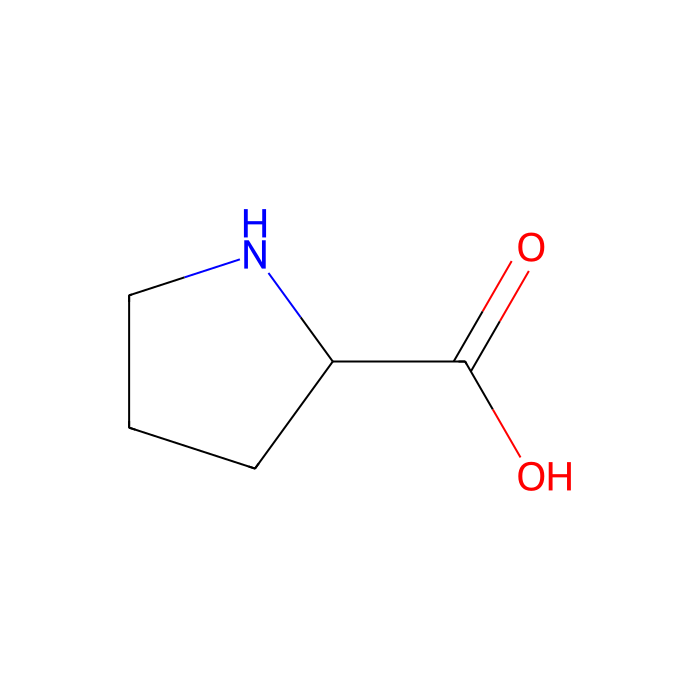
L-Proline - UltraBio™, ≥99.5% , CAS No.147-85-3

CAS: 147-85-3 Cat. No.: L476193 Formula: C5H9NO2 Molecular Weight: 115.13 Beilstein Registry Number: 80810 EC Number: 205-702-2 PubChem CID: 145742
AVAILABLE TO ORDER
GRADE & PURITY UltraBio™ ? UltraBio™ — Aladdin's line for molecular-biology applications. Use for nuclease-free, high-consistency reagents across molecular workflows. ≥99.5%
Synonyms
Bis(2,4,6-trinitro-phenyl)-amin [German]|L-Proline,(S)|PROLINE (II)|(2S)-proline|FEMA Number 3319|s-proline|(-)-2-Pyrrolidinecarboxylic acid|PROLINE [USAN]|2-Pyrrolidinecarboxylic acid, (S)-|L-Pyrrolidine-2-carboxylic acid|PROLINE [VANDF]|(2S)-pyrrolidine-2-carboxylic acid|(S)-Pyrrolidine-2-carboxylic acid|PROLINE [II]|Pro-OH|2-pyrrolidinecarboxylic acid|L-PROLINE [FCC]|PROLINE [USP MONOGRAPH]|L-PROLINE [FHFI]|L-alpha-Pyrrolidinecarboxylic acid|N(sup1)-Acetyl-N(sup4)-phthalylsulfanilamide|Prolina [Spanish]|Proline, L-|(S)-2-Pyrrolidinecarboxylate|L-2-pyrrolidinecarboxylic acid|H-Pro|L-PROLINE [JAN]|Proline (USP)|L-Proline (JP17)|rac-proline|(-)-Proline (S)-2-Carboxypyrrolidine|(S)-2-Pyrralidinecarboxylate|PROLINE [INCI]|pyrrolidine-2-(S)-carboxylic acid|pyrrolidin-2-(S)-carboxylic acid|L-proline|PROLINE (MART.)|PROLINE [EP MONOGRAPH]|Proline [USAN:INN]|(S)-2-Pyrrolidinecarboxylic acid|PROLINE [HSDB]|Proline, (S)-pyrrolidine-2-carboxylic acid, (-)-2-Pyrrolidinecarboxylic acid, (-)-Proline, (S)-(-)-Proline, (S)-2-Carboxypyrrolidine, (S)-2-Pyrrolidinecarboxylic acid, (S)-Proline, 2-Pyrrolidinecarboxylic acid, Carboxypyrrolidine, L-(-)-Proline, L-Pyrroli|L-(2,3-3H)Proline|PROLINE (USP MONOGRAPH)|prolina|PROLINE (EP MONOGRAPH)|(S)-2-Carboxypyrrolidine|PROXAZOLE CITRATE [JAN]|proline|(S)-2-Pyrralidinecarboxylic acid|Prolinum (Latin)|(L)-PROLINE|PROLINE [WHO-DD]|Proline (L-Proline)|(-)-(S)-Proline|(S)-(-)-PROLIN|Carboxypyrrolidine|Fenanthren Brown R|L-Prolin|prol|racemic proline|(S) -pyrrolidine-2-carboxylic acid|(S)-Proline|H-Pro-OH|L-(-)-Proline|PRO (IUPAC abbreviation)|(-)-2-Pyrrolidinecarboxylate|pro|PROLINE [MART.]|Pharmakon1600-01301007|2-Pyrrolidinecarboxylate|(2S)-pyrrolidin-1-ium-2-carboxylate|L-PROLINE [USP-RS]|L-Proline, labeled with carbon-14|PROLINE [INN]|3h-l-proline|Prolinum [Latin]|L-Pro-OH|(2S)-2-carboxypyrrolidine|Diatrizoate meglumine (USP)|(S)-(-)-Proline|(S)-(-)-Pyrrolidine-2-carboxylate|(S)-(-)-Pyrrolidine-2-carboxylic acid|Prolinum
Storage
Protected from light,Room temperature
Shipped In
Normal
★
Size
USA
Germany (EU)*
Price
Qty
10g
L476193-10g
3 In stock
—
$49.90
25g
L476193-25g
3 In stock
—
$88.90
100g
L476193-100g
1 In stock
—
$249.90
500g
L476193-500g
1 In stock
—
$869.90
Enter a quantity for the sizes you want to add.

Specifications

Synonyms
Bis(2,4,6-trinitro-phenyl)-amin [German] | L-Proline,(S) | PROLINE (II) | (2S)-proline | FEMA Number 3319 | s-proline | (-)-2-Pyrrolidinecarboxylic acid | PROLINE [USAN] | 2-Pyrrolidinecarboxylic acid, (S)- | L-Pyrrolidine-2-carboxylic acid | PROLINE [VANDF] | (2S)-pyrrolidine-2-carboxylic acid | (S)-Pyrrolidine-2-carboxylic acid | PROLIN Show more
Specifications & Purity
UltraBio™, ≥99.5%
Storage
Protected from light,Room temperature
Shipped In
Normal
Grade
UltraBio™
Note
Protects enzymes against heat inactivation; Growth requirement of various microorganisms
Purity
≥99.5%
Names and Identifiers
Pubchem Sid
Pubchem Sid Url
https://pubchem.ncbi.nlm.nih.gov/substance/504757290
IUPAC Name
(2S)-pyrrolidine-2-carboxylic acid
InChIKey
ONIBWKKTOPOVIA-BYPYZUCNSA-N
InChI
1S/C5H9NO2/c7-5(8)4-2-1-3-6-4/h4,6H,1-3H2,(H,7,8)/t4-/m0/s1
Isomeric SMILES
C1C[C@H](NC1)C(=O)O
WGK Germany
1
RTECS
TW3584000
PubChem CID
145742
Molecular Weight
115.13
Beilstein
80810
Reaxys
80810

Advanced Data

Associated Targets(Human)
F2 Tclin Thrombin (11687 Activities)
Activity TypeRelationActivity valueUnitsAction TypeJournalPubMed IddoiAssay Aladdin ID
ESR1 Tclin Estrogen receptor alpha (17718 Activities)
Activity TypeRelationActivity valueUnitsAction TypeJournalPubMed IddoiAssay Aladdin ID
PGR Tclin Progesterone receptor (8562 Activities)
Activity TypeRelationActivity valueUnitsAction TypeJournalPubMed IddoiAssay Aladdin ID
EPHX1 Tchem Epoxide hydrolase 1 (644 Activities)
Activity TypeRelationActivity valueUnitsAction TypeJournalPubMed IddoiAssay Aladdin ID
CHRM2 Tclin Muscarinic acetylcholine receptor M2 (10671 Activities)
Activity TypeRelationActivity valueUnitsAction TypeJournalPubMed IddoiAssay Aladdin ID
HTR1A Tclin Serotonin 1a (5-HT1a) receptor (14969 Activities)
Activity TypeRelationActivity valueUnitsAction TypeJournalPubMed IddoiAssay Aladdin ID
ADRA2A Tclin Alpha-2a adrenergic receptor (9450 Activities)
Activity TypeRelationActivity valueUnitsAction TypeJournalPubMed IddoiAssay Aladdin ID
AR Tclin Androgen Receptor (11781 Activities)
Activity TypeRelationActivity valueUnitsAction TypeJournalPubMed IddoiAssay Aladdin ID
CHRM1 Tclin Muscarinic acetylcholine receptor M1 (12690 Activities)
Activity TypeRelationActivity valueUnitsAction TypeJournalPubMed IddoiAssay Aladdin ID
ACE Tclin Angiotensin-converting enzyme (1423 Activities)
Activity TypeRelationActivity valueUnitsAction TypeJournalPubMed IddoiAssay Aladdin ID
GABRA1 Tclin GABA receptor alpha-1 subunit (399 Activities)
Activity TypeRelationActivity valueUnitsAction TypeJournalPubMed IddoiAssay Aladdin ID
MAOA Tclin Monoamine oxidase A (11911 Activities)
Activity TypeRelationActivity valueUnitsAction TypeJournalPubMed IddoiAssay Aladdin ID
DRD1 Tclin Dopamine D1 receptor (9720 Activities)
Activity TypeRelationActivity valueUnitsAction TypeJournalPubMed IddoiAssay Aladdin ID
ACHE Tclin Acetylcholinesterase (18204 Activities)
Activity TypeRelationActivity valueUnitsAction TypeJournalPubMed IddoiAssay Aladdin ID
PTGS1 Tclin Cyclooxygenase-1 (9233 Activities)
Activity TypeRelationActivity valueUnitsAction TypeJournalPubMed IddoiAssay Aladdin ID
SLC6A2 Tclin Norepinephrine transporter (10102 Activities)
Activity TypeRelationActivity valueUnitsAction TypeJournalPubMed IddoiAssay Aladdin ID
SLC6A4 Tclin Serotonin transporter (12625 Activities)
Activity TypeRelationActivity valueUnitsAction TypeJournalPubMed IddoiAssay Aladdin ID
ADRA1A Tclin Alpha-1a adrenergic receptor (8359 Activities)
Activity TypeRelationActivity valueUnitsAction TypeJournalPubMed IddoiAssay Aladdin ID
OPRM1 Tclin Mu opioid receptor (19785 Activities)
Activity TypeRelationActivity valueUnitsAction TypeJournalPubMed IddoiAssay Aladdin ID
DRD3 Tclin Dopamine D3 receptor (14368 Activities)
Activity TypeRelationActivity valueUnitsAction TypeJournalPubMed IddoiAssay Aladdin ID
SLC6A3 Tclin Dopamine transporter (10535 Activities)
Activity TypeRelationActivity valueUnitsAction TypeJournalPubMed IddoiAssay Aladdin ID
GRIN1 Tclin Glutamate (NMDA) receptor subunit zeta 1 (122 Activities)
Activity TypeRelationActivity valueUnitsAction TypeJournalPubMed IddoiAssay Aladdin ID
KCNH2 Tclin HERG (29587 Activities)
Activity TypeRelationActivity valueUnitsAction TypeJournalPubMed IddoiAssay Aladdin ID
PDE3A Tclin Phosphodiesterase 3A (3309 Activities)
Activity TypeRelationActivity valueUnitsAction TypeJournalPubMed IddoiAssay Aladdin ID
HTR2B Tclin Serotonin 2b (5-HT2b) receptor (10323 Activities)
Activity TypeRelationActivity valueUnitsAction TypeJournalPubMed IddoiAssay Aladdin ID
TBXA2R Tclin Thromboxane A2 receptor (5717 Activities)
Activity TypeRelationActivity valueUnitsAction TypeJournalPubMed IddoiAssay Aladdin ID
PDE4A Tclin Phosphodiesterase 4A (1943 Activities)
Activity TypeRelationActivity valueUnitsAction TypeJournalPubMed IddoiAssay Aladdin ID
ADORA3 Tchem Adenosine A3 receptor (15931 Activities)
Activity TypeRelationActivity valueUnitsAction TypeJournalPubMed IddoiAssay Aladdin ID
HRH3 Tclin Histamine H3 receptor (10389 Activities)
Activity TypeRelationActivity valueUnitsAction TypeJournalPubMed IddoiAssay Aladdin ID
KDR Tclin Vascular endothelial growth factor receptor 2 (20924 Activities)
Activity TypeRelationActivity valueUnitsAction TypeJournalPubMed IddoiAssay Aladdin ID
CYP2D6 Tclin Cytochrome P450 2D6 (33882 Activities)
Activity TypeRelationActivity valueUnitsAction TypeJournalPubMed IddoiAssay Aladdin ID
CYP1A2 Tchem Cytochrome P450 1A2 (26471 Activities)
Activity TypeRelationActivity valueUnitsAction TypeJournalPubMed IddoiAssay Aladdin ID
SLC1A4 Tbio Neutral amino acid transporter A (18 Activities)
Activity TypeRelationActivity valueUnitsAction TypeJournalPubMed IddoiAssay Aladdin ID
CYP2C9 Tchem Cytochrome P450 2C9 (32119 Activities)
Activity TypeRelationActivity valueUnitsAction TypeJournalPubMed IddoiAssay Aladdin ID
CYP2C19 Tchem Cytochrome P450 2C19 (29246 Activities)
Activity TypeRelationActivity valueUnitsAction TypeJournalPubMed IddoiAssay Aladdin ID
CYP3A4 Tclin Cytochrome P450 3A4 (53859 Activities)
Activity TypeRelationActivity valueUnitsAction TypeJournalPubMed IddoiAssay Aladdin ID
Liver microsomes (16955 Activities)
Activity TypeRelationActivity valueUnitsAction TypeJournalPubMed IddoiAssay Aladdin ID
LMNA Tbio Prelamin-A/C (36751 Activities)
Activity TypeRelationActivity valueUnitsAction TypeJournalPubMed IddoiAssay Aladdin ID
SLC36A1 Tchem Proton-coupled amino acid transporter 1 (102 Activities)
Activity TypeRelationActivity valueUnitsAction TypeJournalPubMed IddoiAssay Aladdin ID
SLC1A5 Tchem Neutral amino acid transporter B(0) (65 Activities)
Activity TypeRelationActivity valueUnitsAction TypeJournalPubMed IddoiAssay Aladdin ID
Associated Targets(non-human)
Slc25a20 Carnitine/acylcarnitine translocase (26 Activities)
Activity TypeRelationActivity valueUnitsAction TypeJournalPubMed IddoiAssay Aladdin ID
Pkm Pyruvate kinase isozymes M1/M2 (66 Activities)
Activity TypeRelationActivity valueUnitsAction TypeJournalPubMed IddoiAssay Aladdin ID
lef Anthrax lethal factor (7585 Activities)
Activity TypeRelationActivity valueUnitsAction TypeJournalPubMed IddoiAssay Aladdin ID
Grin1 Glutamate NMDA receptor (6467 Activities)
Activity TypeRelationActivity valueUnitsAction TypeJournalPubMed IddoiAssay Aladdin ID
Slc16a10 Monocarboxylate transporter 10 (73 Activities)
Activity TypeRelationActivity valueUnitsAction TypeJournalPubMed IddoiAssay Aladdin ID
Hyaloperonospora parasitica (23 Activities)
Activity TypeRelationActivity valueUnitsAction TypeJournalPubMed IddoiAssay Aladdin ID
Brassica oleracea (32 Activities)
Activity TypeRelationActivity valueUnitsAction TypeJournalPubMed IddoiAssay Aladdin ID
GAP1 General amino-acid permease GAP1 (481 Activities)
Activity TypeRelationActivity valueUnitsAction TypeJournalPubMed IddoiAssay Aladdin ID
Slc1a5 Amino acid transporter (271 Activities)
Activity TypeRelationActivity valueUnitsAction TypeJournalPubMed IddoiAssay Aladdin ID
Slc7a10 Asc-type amino acid transporter 1 (14 Activities)
Activity TypeRelationActivity valueUnitsAction TypeJournalPubMed IddoiAssay Aladdin ID
SARS-CoV-2 (38078 Activities)
Activity TypeRelationActivity valueUnitsAction TypeJournalPubMed IddoiAssay Aladdin ID
Mechanisms of Action
Certificates (CoA,COO,BSE/TSE and Analysis Chart)
C of A & Other Certificates(BSE/TSE, COO):
Analytical Chart:

Find and download the COA for your product by matching the lot number on the packaging.

10 results found

Lot NumberCertificate TypeDateItem
B2421307B2421307Certificate of AnalysisMar 07, 2024 L476193
B2421308B2421308Certificate of AnalysisMar 07, 2024 L476193
B2421599B2421599Certificate of AnalysisMar 07, 2024 L476193
B2421601B2421601Certificate of AnalysisMar 07, 2024 L476193
B2421602B2421602Certificate of AnalysisMar 07, 2024 L476193
B2421603B2421603Certificate of AnalysisMar 07, 2024 L476193
B2421604B2421604Certificate of AnalysisMar 07, 2024 L476193
B2421606B2421606Certificate of AnalysisMar 07, 2024 L476193
B2510026B2510026Certificate of AnalysisMar 07, 2024 L476193
J2614299J2614299Certificate of AnalysisMar 07, 2024 L476193
Chemical and Physical Properties
Solubility H2O: 1M at20°C, clear, colorless
SensitivityMoisture and light sensitive
Specific Rotation[α]-85 ° (C=4, H2O)
Melt Point228°C
Molecular Weight115.13
XLogP3-2.500
Hydrogen Bond Donor Count2
Hydrogen Bond Acceptor Count3
Rotatable Bond Count1
Exact Mass115.063 Da
Monoisotopic Mass115.063 Da
Topological Polar Surface Area49.300 Ų
Heavy Atom Count8
Formal Charge0
Complexity103.000
Isotope Atom Count0
Defined Atom Stereocenter Count1
Undefined Atom Stereocenter Count0
Defined Bond Stereocenter Count0
Undefined Bond Stereocenter Count0
The total count of all stereochemical bonds0
Covalently-Bonded Unit Count1
Safety and Hazards(GHS)
WGK Germany
1
RTECS
TW3584000
Reaxys
80810
Merck Index
7780
Documents & Articles
Macrophage Activation
Asymmetric Organocatalysts
N-Fluorobenzenesulfonimide (NFSI)
UltraBio™: Defining Excellence in Molecular Biology Applications
Peptide Basics
Buffer Additives to Prevent Protein Precipitation
Common Protectants and Formulations for Protein Storage
Structure, Function, and Applications of Glutamate Dehydrogenase
Chiral Amines in Asymmetric Synthesis: Role Map (A–F), a Minimal Evidence Chain, and a Research Selection Guide (with Tables 1–3)
Pyrrolidine and Its Derivative Systems: How a Five-Membered N-Heterocycle Tunes Properties and Use Cases via “Charge State–Conformation–Functional-Group Switching” (with Tables 1–4 for Selection Navigation)
β-Acyloxy Alkenyl Amides (AAAs): A New Approach to Amide Bond and Peptide Bond Construction Worth Attention
Silicon Reagent-Assisted Peptide Synthesis: Research Progress and Methodological Value of Peptide Bond Formation from Unprotected Substrates
From Analytical Instrument to Synthetic Platform: A New Strategy for Reconstructing Automated Flow Solid-Phase Peptide Synthesis with Standard Analytical HPLC
Reassessing Trimethylaluminum: Method Design and Experimental Value of One-Pot Peptide Elongation from Unprotected Amino Acids
Technical Comparison and Method Selection for Hydroxyproline Determination
Chiral Catalyst and Ligand Selection Guide: From Reaction Task to Catalytic System Screening
Why Small Molecules Can Also Serve as Catalysts: Judging Organocatalytic Systems from Reaction Objectives and Activatable Structural Sites
Performance Sources and Formulation Applications of Enzyme-Based Ingredients in Daily Chemical Products: Fermentation Transformation, Enzymatic Reactions, and Application Principles
Analysis of Hydrolyzed Pearl as a Cosmetic Raw Material: Preparation Process, Active Components, and Skincare Formulation Applications
How Do Collagen Peptides Act on the Skin? From Surface Hydration and Percutaneous Delivery to Fibroblasts and Collagen Homeostasis
Anti-Photoaging Potential of Artemia Extract: UV-Induced Damage Cascades, HSP70-Related Stress Protection, and GP4G Metabolic Insights
How Palmitoyl Pentapeptide-4 Acts on the Skin: From the KTTKS Sequence and Skin Delivery to Collagen Matrix Responses
How Does Collagen Tripeptide Act on the Skin: Stratum Corneum Delivery, Matrix Protection, and Regulation of Collagen Homeostasis
What Determines Collagen Function: From Triple-Helix Formation to Hierarchical Assembly, Crosslink Maturation, and Dynamic Remodeling
Mechanisms of Retinol Action in the Skin: From Metabolic Activation and RAR/RXR-Mediated Transcriptional Regulation to Epidermal Renewal and Collagen Homeostasis
What Is “Plant Collagen”? Distinguishing Ingredient Types, Structural Differences, Production Methods, and Skincare Effects
The Combination Logic of Palmitoyl Tripeptide-1 and Palmitoyl Pentapeptide-4: Skin Delivery, Matrix Signaling, and Regulation of Collagen Homeostasis
Differences Between Animal-Derived Collagen and Recombinant Collagen in Skincare: Sequence and Structure, Safety, Skin Effects, and Evidence Evaluation
3,3-Spiro-α-Proline Building Blocks: Structural Features, Complementary Synthetic Routes, and Multigram-Scale Preparation
Conformational Control by Proline Derivatives and Their Medicinal Chemistry Effects: Ring Puckering, Amide Cis–Trans Isomerization, and Drug Properties
Citations of This Product
Solution Calculators
Reviews

Customer Reviews

Application Protocols

No assay-specific, item-validated protocols are provided in the Product Data for this reagent. Typical research uses (literature; general) include:

  • Preparation of concentrated aqueous stock solutions for use as osmolyte/stabilizer in protein formulation screens; sterile-filter through 0.22 μm for cell-related work.
  • Use as an organocatalyst in small-scale asymmetric reactions (aldol/Mannich/Michael). Dissolve the required mol% of L-proline in the chosen solvent system, pre-equilibrate with substrates, and maintain temperature control.
  • Peptide chemistry/chiral pool synthesis: convert to protected derivatives (e.g., Boc-L-Pro-OH, Fmoc-L-Pro-OH) following standard protection/activation protocols.

Item-specific recommended dilutions, concentrations, or validated applications: Not specified for this item; refer to CoA/Spec Sheet and SDS. Implement in-house optimization and controls consistent with your application.

Biological Roles

General biochemistry (literature; research context only):

  • Proteinogenic amino acid: L-Proline is one of the 20 standard amino acids. Its cyclic secondary amine restricts backbone φ angle, profoundly influencing protein folding and stability.
  • Collagen structure: High proline and hydroxyproline content stabilize collagen triple helices via stereoelectronic and entropic effects.
  • Osmolyte/compatible solute: Accumulates in many organisms under osmotic or drought stress; in vitro, often used as an osmoprotectant in cell and protein studies (research use only).
  • Metabolism: Interconverts with pyrroline-5-carboxylate (P5C); ties into glutamate metabolism and redox balance in mitochondria (proline dehydrogenase/oxidase pathways).
  • Folding/aggregation modulation: Added to refolding buffers can suppress protein aggregation and assist proper folding in model systems; effects are protein- and condition-dependent.

Physicochemical features relevant to biology:

  • Zwitterionic at physiological pH; pI ~6.3 (literature).
  • Side chain cyclization reduces hydrogen-bond donation relative to primary amines, influencing secondary structure propensity (e.g., helix breaker, β-turn former).

Note: No medical or clinical claims are made. All statements refer to basic research and laboratory use.

Buffer Applications

Scope: L-Proline is not a classical buffering agent with defined pKa spacing for common biological pH ranges; however, it is used as a co-solute/osmolyte and stabilizer in buffer systems for research use.

Literature-guided practices (general):

  • Protein formulation/refolding: 0.2–1.0 M proline is frequently explored to mitigate aggregation during refolding or storage; typical base buffers include phosphate, HEPES, or Tris adjusted to target pH. Optimize concentration empirically based on target protein.
  • Osmotic stress studies: Supplement cell-compatible media or physiological buffers (e.g., PBS) with proline to study osmoadaptation mechanisms in vitro (ensure sterility; filter sterilize solutions through 0.22 μm).
  • Enzymology/biophysics: Proline can modulate solvent activity and crowding; consider ionic strength and pH near the protein’s stability maximum; monitor viscosity effects at high osmolality.

Preparation notes:

  • Readily dissolves in water; adjust pH with NaOH/HCl only if needed. Because proline is zwitterionic, pH drift upon dissolution is minimal near neutral.
  • Avoid using proline as the sole buffer; pair with a true buffering system providing adequate capacity in the desired pH window.

Item-specific buffer-grade attributes: Not specified for this item; refer to CoA/Spec Sheet.

Green Alternatives

L-Proline itself is a metal-free, biogenic organocatalyst and often serves as a greener alternative to traditional metal-based Lewis acids.

Perspective (literature; general):

  • Benefits:
    • Renewable, readily available from biosources; low toxicity profile relative to many metal catalysts.
    • Eliminates metal contamination concerns in downstream products; facilitates aqueous processing and simple workup.
    • Effective in water or water-containing solvent systems; supports solvent minimization and lower E-factors.
  • Trade-offs:
    • Sometimes higher catalyst loadings (10–30 mol%) vs. ppm–mol% for metal catalysts.
    • Reaction rates/selectivities may require solvent optimization (e.g., brine, DMSO/H2O) or additives.

Comparison snapshot (literature):

  • Proline vs. TiCl4/SnCl4 aldol methods: avoids corrosive, moisture-sensitive reagents; broader tolerance for functional groups and aqueous conditions; generally slower but cleaner.
  • Proline vs. diarylprolinol silyl ethers: proline is simpler, cheaper, and more benign; diarylprolinols often give higher ee in demanding enantioinductions but are less "green" to prepare.
  • Solvent choices: Favor water, ethanol, 2-MeTHF, or ethyl acetate as greener media when compatible with substrates; avoid halogenated hydrocarbons when possible.

Implementation tips:

  • Explore water-rich or solvent-free protocols; consider mechanochemistry to remove bulk solvent.
  • Use recyclable/immobilized proline catalysts to reduce waste and ease separation.
Pharmaceutical Uses

Context: For research and development use only. No therapeutic claims.

Formulation and process roles (literature; general):

  • Stabilizer/osmolyte in protein and peptide formulations to reduce aggregation and improve solubility; investigated in monoclonal antibody and enzyme formulations.
  • Lyophilization/cryopreservation studies: Used as a bulking agent or co-lyoprotectant in combination with sugars/polyols to tune glass transition and cake structure.
  • Chiral building block: Source of the (S)-pyrrolidine-2-carboxylate motif in the synthesis of small-molecule intermediates; relevant to API route scouting (non-GMP research stage).
  • Excipients landscape: While not a compendial buffer, proline may appear in exploratory excipient screenings alongside arginine, histidine, trehalose, sucrose, and glycine to optimize stability profiles.

Regulatory/quality considerations:

  • Pharmacopeial status and specific excipient grades for proline vary by supplier; for this item, such status is Not specified for this item; refer to CoA/Spec Sheet.
  • For preclinical development, ensure suitable controls on bioburden, endotoxin, elemental impurities, and residual solvents; verify with supplier documentation or conduct in-house testing.
Physical Properties

Item-specific specifications: Not specified for this item; refer to CoA/Spec Sheet.

Literature/general properties (for planning and method development; not item-specific):

  • Appearance: white to off-white crystalline solid (literature).
  • Melting point: ~220–225 °C (decomp.) (literature).
  • Acid–base: diprotic zwitterion; pKa1 (COOH) ≈ 1.95; pKa2 (NH2+/NH) ≈ 10.6; isoelectric point pI ≈ 6.3 (literature).
  • Solubility: freely soluble in water; sparingly soluble in ethanol; practically insoluble in nonpolar solvents such as diethyl ether and chloroform (literature qualitative profile).
  • Partitioning: very low hydrophobicity (XlogP3 ≈ −2.5, literature estimate).
  • Optical activity: [α]D typically negative for L-proline in aqueous media; magnitude depends on concentration/temperature/solvent (literature; consult specific CoA for item value, if reported).

Practical notes (general):

  • Highly hygroscopic uptake is not typical, but the zwitterionic nature can retain moisture; dry to constant weight if gravimetry is critical.
  • Forms strongly hydrated solutions; density and viscosity of concentrated solutions increase markedly with wt% (literature trend).
Quality & Grades
  • Item-specific listing: UltraBio™ grade (as provided). Specific analytical limits (e.g., assay, optical rotation, microbial/bioburden/endotoxin, heavy metals, residual solvents) are Not specified for this item; refer to CoA/Spec Sheet.

  • What UltraBio™ typically implies (general description; not a guarantee for this item):

    • Intended for advanced biochemical/biotechnology workflows where consistency, low impurities, and low bioburden are important (e.g., cell culture supplements, protein formulation studies, enzyme assays).
    • Often emphasizes lot-to-lot consistency, low UV-absorbing impurities, and tight control of inorganic/organic contaminants. Specific acceptance criteria must be confirmed in the CoA.
  • Practical implications for users:

    • For peptide synthesis or chiral catalysis, verify optical rotation/enantiomeric purity on the CoA.
    • For biologics formulation or cell-related work, review microbial/endotoxin and DNase/RNase activity statements if applicable; if not present, implement in-house controls and sterile filtration.
    • Stabilizers/additives: Not specified for this item; refer to CoA/Spec Sheet.
  • Documentation: Request the batch CoA and, where available, a specification sheet to confirm compliance with your internal quality standards (e.g., ICH Q3A/B impurity expectations for research materials).

Reaction & Applications

Key roles (literature; general):

  • Chiral organocatalyst: Prototypical enamine/iminium catalyst for asymmetric aldol, Mannich, Michael, and α-functionalization reactions. Central in the Hajos–Parrish–Eder–Sauer–Wiechert intramolecular aldol (enantioselective cyclizations to enones).
  • Phase behavior: Effective under solvent-minimized or aqueous conditions; tolerates a range of polar media and even solvent-free grinding protocols (mechanochemistry literature).
  • Biochemical/bioprocess: Common osmoprotectant/stabilizer for proteins and cells; used in refolding screens and to suppress aggregation in vitro (research use only).

Practical tips (general):

  • Loading: 10–30 mol% is typical for many aldol/Mannich reactions; lower loadings possible with optimized conditions or immobilized variants.
  • Additives: Weak acids (e.g., benzoic acid) or co-catalysts (thiourea H-bond donors) can accelerate and improve enantioselectivity; water can beneficially modulate rate and selectivity in aldol reactions.
  • Substrates: Activated ketones (e.g., acetone, cyclohexanone) and aromatic/aldehydic partners are classic; aldehyde–aldehyde couplings often require careful control of enamine formation and iminium pathways.
  • Heterogeneous/immobilized proline on silica, polystyrene, or MOFs enables recovery and reuse; performance varies with support and reaction.
  • Purification: Reactions generally produce minimal metal residues; simple aqueous workup removes proline due to high water solubility.

Limitations:

  • Basicity is modest; for strongly deactivated electrophiles, diarylprolinol silyl ethers or MacMillan imidazolidinones may outperform.
  • High catalyst loading and longer times may be needed for sterically hindered partners.
Reaction Conditions

General guidance from literature (not item-specific; optimize per system):

  • Asymmetric aldol (ketone + aldehyde):

    • Catalyst: L-Proline 10–30 mol%.
    • Solvent: DMSO, DMF, acetone, or acetone/water; brine additives often beneficial.
    • Temperature: 0 to 25 °C (some systems at −20 to 0 °C for higher ee).
    • Additives: 0.1–1.0 equiv water or weak acids can accelerate; molecular sieves may invert effects depending on pathway.
    • Time: 6–72 h depending on substrate; typical isolated yields 60–95% with ee up to >90% for favorable pairs.
  • Mannich/Michael reactions:

    • Solvent: polar aprotic (DMSO, DMF) or mixed aqueous alcohols.
    • Base/acid balance: mild acid co-catalysts (e.g., benzoic acid) can enhance rate/ee via proton shuttling.
  • Intramolecular aldol (Hajos–Parrish):

    • Catalyst loadings 5–20 mol%; often performed in acetone or neat.
    • Temperatures ambient to slightly elevated; monitor for dehydration to enone.
  • Practical tips:

    • Ensure substrate purity and control water content judiciously; small amounts of water often beneficial in aldol but detrimental in some Michael additions.
    • For heterogeneous or immobilized proline, adjust stirring/particle size to avoid mass-transfer limitations.
    • Workup: dilute with water, extract organic products with EtOAc; proline remains in aqueous phase.

Always validate and scale cautiously; kinetics and selectivity are substrate- and medium-dependent.

Safety & Handling

Item-specific hazard statements/classification: Not specified for this item; refer to SDS.

General GHS context (literature; not a substitute for SDS): L-Proline is widely regarded as of low acute toxicity and often not classified as hazardous under GHS for laboratory quantities. Nonetheless, good laboratory practice must be followed.

Handling recommendations (general best practice):

  • PPE: lab coat, safety glasses, and appropriate gloves (e.g., nitrile). Avoid creating dust and inhalation of particulates.
  • Hygiene: wash hands after handling; avoid contact with eyes/skin. Do not ingest. Use in well-ventilated area.
  • Incompatibilities: strong oxidizing agents and strong acids/bases may cause decomposition or salt formation; avoid mixing with nitrosating agents (amines can form nitrosamines under harsh nitrosation conditions).
  • First aid (overview):
    • Inhalation: move to fresh air; seek medical attention if symptoms persist.
    • Skin/eye contact: rinse with water for several minutes; remove contaminated clothing; seek medical advice if irritation develops.
    • Ingestion: rinse mouth with water; do not induce vomiting; seek medical advice.
  • Spills: sweep up gently to minimize dust; collect in suitable container; wash spill area with water.

Always consult the current SDS for authoritative hazard, first-aid, exposure limits, and disposal guidance for this specific lot/product.

Solvent Selection

Applicability: As a solid amino acid, L-proline is typically used in aqueous or polar media rather than selected as a reaction solvent.

General solubility/polarity profile (literature):

  • Highly water-soluble; forms zwitterionic solutions from acidic to neutral pH.
  • Soluble to moderately soluble in highly polar, protic/amide solvents (e.g., methanol to limited extent, formamide, DMSO, DMF), with solubility enhanced by salt formation (e.g., proline hydrochloride) or pH adjustment.
  • Poorly soluble in nonpolar or weakly polar organic solvents (e.g., ethers, hydrocarbons, chlorinated solvents).

Use scenarios:

  • Aqueous catalysis and organocatalytic aldol reactions often tolerate water or brine co-solvents; mixtures such as DMSO/water, acetone/water, or DMF are common to dissolve the catalyst (proline) while maintaining reactant solubility.
  • Biochemical applications typically use buffered saline or formulation buffers where ionic strength and pH are controlled near the pI (~6.3) or process-appropriate values.

Comparison (literature perspective):

  • L-Proline vs. tertiary amine bases (e.g., triethylamine): Proline is zwitterionic and not used as a bulk base; it functions as a chiral, bifunctional catalyst via enamine/iminium pathways.
  • L-Proline vs. other amino acids: Unique cyclic secondary amine enhances organocatalytic activity compared with primary amine amino acids (e.g., alanine, lysine).
Storage & Reconstitution
  • Item-specific storage conditions (from Product Data):

    • Store protected from light at room temperature.
    • Shipped under normal conditions.
  • Stability notes (general literature guidance; not item-specific):

    • L-Proline is a stable solid under dry, ambient conditions. Avoid prolonged exposure to elevated humidity to prevent caking or variable water content.
    • For long-term storage, keep container tightly closed; use desiccant if humidity control is needed.
  • Reconstitution (general):

    • Dissolves readily in water. To prepare sterile solutions, dissolve in water for injection or appropriate buffer, then sterile-filter (0.22 μm). Adjust pH only if required by the application.
    • For organocatalysis, prepare a concentrated stock in the reaction solvent (e.g., DMSO or acetone/water) to enable accurate dosing; verify complete dissolution before substrate addition.
  • Shelf life and assay specifications: Not specified for this item; refer to CoA/Spec Sheet.

  • Research Use Note: For research use only.

Structure & Identity

Brief overview: L-Proline is a cyclic, secondary amino acid (pyrrolidine-2-carboxylic acid), the L-enantiomer used broadly in biochemistry, peptide science, and asymmetric organocatalysis.

  • From Product Data (item-specific):

    • SKU: L476193
    • Product Name: L-Proline
    • CAS: 147-85-3
    • PubChem CID: 145742
    • InChIKey (as listed): 262439
    • Grade/Purity: UltraBio™
  • Literature/standard identifiers (for reference; not item-specific specs):

    • Molecular formula: C5H9NO2 (literature)
    • Molecular weight: 115.13 g/mol (literature)
    • SMILES: O=C(O)[C@@H]1CCCN1 (literature)
    • InChIKey (L-proline, literature): ONIBWKKTOPOVIA-BYPYZUCNSA-N
  • Structural features (general chemistry):

    • Ring system: 5-membered saturated heterocycle (pyrrolidine).
    • Functional groups: secondary amine embedded in the ring; α-carboxylic acid.
    • Stereochemistry: single stereocenter at C-2 (α-carbon); L-configuration (S by CIP).
    • Zwitterionic character at neutral pH (–NH2+/–COO–) common to amino acids.
    • 2D description: a pyrrolidine ring with the carboxyl substituent at the 2-position adjacent to the ring nitrogen; side chain cyclizes back to the backbone nitrogen, conferring conformational constraint.
Synthetic Utility

Functional group logic (general):

  • Secondary amine (embedded in pyrrolidine) + carboxylic acid enables bifunctional catalysis via enamine formation (nucleophile activation) and carboxyl H-bonding/acid activation of electrophiles.
  • The constrained cyclic scaffold imparts stereocontrol, transmitting chirality to forming stereocenters.

Named reactions and uses (literature):

  • Hajos–Parrish–Eder–Sauer–Wiechert reaction: intramolecular enantioselective aldol to bicyclic enones.
  • Direct asymmetric aldol/Mannich/Michael reactions: catalytic generation of enamines from ketones/aldehydes followed by C–C bond formation.
  • α-Functionalization: α-oxygenation, α-amination, and α-halogenation of carbonyl compounds via enamine or iminium pathways.
  • Organocascade sequences and enantioselective cyclizations; proline often serves as a benchmark catalyst against more elaborate organocatalysts.

Chiral pool/auxiliary roles:

  • L-Proline derivatives (e.g., proline amides/esters) act as chiral auxiliaries or ligands; N-protection (Boc, Cbz, Fmoc) and side-chain modification are straightforward.

Operational advantages:

  • Metal-free conditions; catalyst and byproducts are highly water-soluble, aiding purification.

Limitations:

  • Substrates with severe steric hindrance or very low electrophilicity may require modified catalysts (e.g., diarylprolinol silyl ethers) or alternative activation modes.
Target Specificity

Not applicable. This product is a small-molecule amino acid, not a biological targeting reagent (e.g., antibody, ligand with defined biomolecular target). No target/epitope, clone, isotype, or species reactivity information applies.

Frequently Asked Questions

What is the purity of this product?
This product is supplied at ≥99.5% purity (chemical assay). Lot-specific values are stated on the Certificate of Analysis.
What does UltraBio? mean?
UltraBio? indicates that the product has been processed and tested for biological and biochemical applications. Specifications may include endotoxin limits, microbial controls, sterility, low DNase/RNase/protease activity, and verified biological activity where relevant.
How should this product be stored?
Store at room temperature, protected from light. The material is light-sensitive — keep it in its original opaque or amber container.
How is this product shipped?
This product ships under standard ambient conditions. No temperature-controlled packaging is required.
What are the CAS number, molecular formula and molecular weight?
The CAS Number is 147-85-3, the molecular formula is C5H9NO2, and the molecular weight is 115.13 g/mol. InChIKey ONIBWKKTOPOVIA-BYPYZUCNSA-N.
What documentation is provided?
Available product documentation, including Certificates of Analysis (COA), Safety Data Sheets (SDS), and specification sheets, is shown in the product document area. Document availability and access follow the current site policy.

Shall we send you a message when we have discounts available?

Remind me later

Thank you! Please check your email inbox to confirm.

Oops! Notifications are disabled.