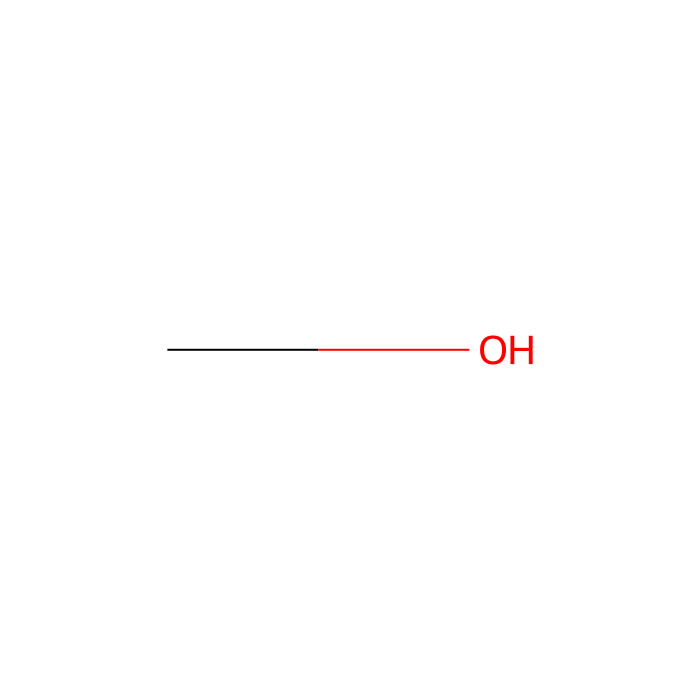
Methanol - Ultra dry, ≥99.8%, H2O≤20ppm , CAS No.67-56-1

CAS: 67-56-1 Cat. No.: M116117 Formula: CH3OH Molecular Weight: 32.04 Beilstein Registry Number: 3662861 EC Number: 200-659-6
AVAILABLE TO ORDER
GRADE & PURITY Ultra dry ? Ultra-dry grade with extremely low water content, packaged to exclude moisture. Use for moisture-sensitive reactions and air-free chemistry. ≥99.8% H2O≤20ppm
Synonyms
DTXCID801731 | Methanol, p.a., 99.9% | Methylalkohol | METHANOL (D2) | Surflo-B17 | Methanol, anhydrous, 99.8% | Methanol, HPLC grade | Alcool metilico [Italian] | Metanolo [Italian] | Methanol, low water for titration | Methylol | NSC 85232 | Methanol, a
Storage
Room temperature
Shipped In
FedEx DG Service
★
Size
USA
Germany (EU)*
Price
Qty
100ml
M116117-100ml
In stock ≥10
7 In stock
$79.90
Enter a quantity for the sizes you want to add.
🧪
Why this grade

Ultra dry, ≥99.8%, H2O≤20ppm Ultra dry for sensitive chromatographic and analytical workflows requiring minimal baseline interference.

🌡

Storage & shipping

Room temperature Ships FedEx DG Service Check lot-specific COA for exact specifications.

📋

Quality documents

SDS, COA, datasheet, and spec sheet available for download. Lot-specific COA accessible via lot number lookup.

📚

Literature proof

Cited in 7007 peer-reviewed publications across chromatography, organic synthesis, and cross-coupling reactions.

Specifications

Synonyms
DTXCID801731 | Methanol, p.a., 99.9% | Methylalkohol | METHANOL (D2) | Surflo-B17 | Methanol, anhydrous, 99.8% | Methanol, HPLC grade | Alcool metilico [Italian] | Metanolo [Italian] | Methanol, low water for titration | Methylol | NSC 85232 | Methanol, a
Specifications & Purity
Ultra dry, ≥99.8%, H2O≤20ppm
Storage
Room temperature
Shipped In
FedEx DG Service
Grade
Ultra dry
Purity
≥99.8%
Names and Identifiers
Pubchem Sid
Canonical Smiles
CO
IUPAC Name
methanol
InChIKey
OKKJLVBELUTLKV-UHFFFAOYSA-N
INCHI
1S/CH4O/c1-2/h2H,1H3
Isomeric SMILES
CO
WGK Germany
1
RTECS
1
UN Number
1230
Packing Group
II
Molecular Weight
32.04
Beilstein
3662861

Documentation

📋 Safety Data Sheet (SDS)

Comprehensive hazard, handling, storage, and regulatory compliance document.

Download SDS →

✅ Certificate of Analysis (COA)

Lot-specific quality data. Enter your lot number to retrieve the exact COA.

Look up COA →

📊 Datasheet

Quick-reference summary of product specifications and applications.

View datasheet →

🔬 Specification Sheet

Full quality attributes and acceptance criteria for this grade.

View spec sheet →

Advanced Data

Taxonomic Classification

Taxonomy Tree

KingdomOrganic compounds
SuperclassOrganic oxygen compounds
ClassOrganooxygen compounds
SubclassAlcohols and polyols
Intermediate Tree Nodes Not available
Direct ParentPrimary alcohols
Alternative Parents Hydrocarbon derivatives  
Molecular FrameworkAliphatic acyclic compounds
Substituents Hydrocarbon derivative - Primary alcohol - Aliphatic acyclic compound
DescriptionThis compound belongs to the class of organic compounds known as primary alcohols. These are compounds comprising the primary alcohol functional group, with the general structure RCOH (R=alkyl, aryl).
External Descriptors a short-chain alcohol
3D Structure
Interactive Chemical Structure Model


Associated Targets(Human)
TSHR Tclin Thyroid stimulating hormone receptor (29986 Activities)
Activity TypeRelationActivity valueUnitsAction TypeJournalPubMed IddoiAssay Aladdin ID
UGT2B4 Tbio UDP-glucuronosyltransferase 2B4 (139 Activities)
Activity TypeRelationActivity valueUnitsAction TypeJournalPubMed IddoiAssay Aladdin ID
UGT2B10 Tbio UDP-glucuronosyltransferase 2B10 (42 Activities)
Activity TypeRelationActivity valueUnitsAction TypeJournalPubMed IddoiAssay Aladdin ID
Associated Targets(non-human)
Pseudomonas aeruginosa (123386 Activities)
Activity TypeRelationActivity valueUnitsAction TypeJournalPubMed IddoiAssay Aladdin ID
Staphylococcus aureus (210822 Activities)
Activity TypeRelationActivity valueUnitsAction TypeJournalPubMed IddoiAssay Aladdin ID
Escherichia coli (133304 Activities)
Activity TypeRelationActivity valueUnitsAction TypeJournalPubMed IddoiAssay Aladdin ID
Bacillus cereus (7522 Activities)
Activity TypeRelationActivity valueUnitsAction TypeJournalPubMed IddoiAssay Aladdin ID
Tetrahymena pyriformis (68 Activities)
Activity TypeRelationActivity valueUnitsAction TypeJournalPubMed IddoiAssay Aladdin ID
Lithobates pipiens (29 Activities)
Activity TypeRelationActivity valueUnitsAction TypeJournalPubMed IddoiAssay Aladdin ID
Colletotrichum gloeosporioides (560 Activities)
Activity TypeRelationActivity valueUnitsAction TypeJournalPubMed IddoiAssay Aladdin ID
Mechanisms of Action
Certificates(CoA,COO,BSE/TSE and Analysis Chart)
C of A & Other Certificates(BSE/TSE, COO):
Analytical Chart:

Find and download the COA for your product by matching the lot number on the packaging.

15 results found

Lot NumberCertificate TypeDateItem
G2607389Certificate of AnalysisMay 18, 2026 M116117
G2607390Certificate of AnalysisMay 18, 2026 M116117
C2620314Certificate of AnalysisMar 25, 2026 M116117
C2620322Certificate of AnalysisMar 24, 2026 M116117
H2515469Certificate of AnalysisFeb 14, 2025 M116117
H2515470Certificate of AnalysisFeb 14, 2025 M116117
D2518373Certificate of AnalysisFeb 10, 2025 M116117
D2518374Certificate of AnalysisFeb 10, 2025 M116117
A2516248Certificate of AnalysisJan 10, 2025 M116117
A2516249Certificate of AnalysisJan 10, 2025 M116117
L2327112Certificate of AnalysisDec 20, 2023 M116117
L2327174Certificate of AnalysisDec 20, 2023 M116117
L2327175Certificate of AnalysisDec 20, 2023 M116117
L2215692Certificate of AnalysisOct 24, 2022 M116117
L2215820Certificate of AnalysisOct 24, 2022 M116117
Chemical and Physical Properties
SensitivityHygroscopic
Refractive Index1.329
Flash Point(°F)49.5 °F
Flash Point(°C)9.7 °C
Boil Point(°C)64.7°C
Melt Point(°C)-97.8°C
Molecular Weight32.042 g/mol
XLogP3-0.500
Hydrogen Bond Donor Count1
Hydrogen Bond Acceptor Count1
Rotatable Bond Count0
Exact Mass32.0262 Da
Monoisotopic Mass32.0262 Da
Topological Polar Surface Area20.200 Ų
Heavy Atom Count2
Formal Charge0
Complexity2.000
Isotope Atom Count0
Defined Atom Stereocenter Count0
Undefined Atom Stereocenter Count0
Defined Bond Stereocenter Count0
Undefined Bond Stereocenter Count0
The total count of all stereochemical bonds0
Covalently-Bonded Unit Count1
Documents & Articles
Aladdin@Guidelines for the formulation of commonly used buffers for biological experiments
Boc resin lysis protocol
Common Questions and Answers for SDS-PAGE Experiments
Common Questions and Answers for Protein Marker Products — Membrane Transfer
How do I load a hydrophobic drug into liposomes?
A New Esterification Method — Rapid Esterification Mediated by the Coupling Reagent NDTP
Protein Tris-Acetate Electrophoresis System Standard Operating Procedure
Ultra-Dry Grade: The Moisture-First Standard for Sensitive Chemistry
Protein Tris-Tricine Electrophoresis System Standard Operating Procedure
Common Protein Gel Staining Methods
Technical Features and Application Studies of Methyl Palmitoleate
Hesperidin: A Multifunctional Flavonoid Hidden in Citrus Peels
Fatty Acids from Basics to Lab Practice: Structural Classification, Research Uses, and Selection Tips (with an Aladdin Representative Product Quick-Reference Table)
PAS Staining (Periodic Acid–Schiff, PAS) Standard Operating Procedure (SOP)
Paeoniflorin: Structural Features, Physicochemical Properties, and Key Considerations for Analytical Quality Control
Biological Characteristics and Application Value of the Aminoglycoside Antibiotic Hygromycin B
Giemsa Staining Protocol: Peripheral Blood and Bone Marrow Smears
A Practical Guide to Small-Molecule Chemical Probes: Concept Clarification, Causal Validation, and Experimental Selection (with Product Navigation and Tables A–D)
Light-Emitting Polymers (LEPs): A Practical Panorama - A Core PL/EL Mechanistic Framework, Material Family Map, and Structural “Design Knobs” (including Product Tables 1–4 and a selection guide)
Practical Guide to Sodium Carboxymethyl Cellulose (CMC-Na): Thickening/Stabilizing Mechanisms, Key Controls for Solution Preparation, and Selection Navigation (including Table 1 and Tables A–C)
Structural–Functional Analysis of the Methoxy Group (–OCH₃) in Approved Small-Molecule Drugs: Mechanisms, Evidence Chains, and Product-Selection Navigation (with Related Product Tables)
A Practical Guide to Organozinc Reagents for Synthesis (Organozinc Reagents): Structural Features, Key Reactions, and a Practical Selection Navigation (Including Aladdin Product Tables)
Why Acridine Can Turn “Trace Molecules” into a Measurable Light Signal: A Mechanistic, Selection, and Troubleshooting Guide to Acridinium Ester Chemiluminescent Immunoassays (Including Product Tables 1–4)
2-Methylpyridine–Borane (2-Picoline·BH₃) Reductive Amination Guide: Process Drivers for Replacing NaBH₃CN, the Practical Operating Window, and Scale-Up/Quench Close-Out Essentials (Including Product Tables 1–3)
16 Frequently Asked Questions About Nourseothricin
Plant Omics Panorama: Workflow Frameworks and Multi-Omics Integration from Genomics to Transcriptomics, Proteomics, and Metabolomics
Amino Acid Oxidases: Oxygen-Dependent Oxidative Deamination Systems and Their Analytical and Applied Uses
Chymosin: A Review of Molecular Features, Coagulation Kinetics, and Activity Evaluation
Chlorophyll: Structural Features, Physicochemical Properties, and Key Points for Research and Industrial Applications
Ferulic Acid: Structural Features, Preparation Routes, and Key Points for Research Applications
Paeonol: Physicochemical Features, Uses, and Key Points for Research Applications
Famotidine: Physicochemical Features, Mechanism of Action, and Key Points for Research Applications
Flavones: Structural Features, Physicochemical Properties, and Key Points for Research and Applications
β-Acyloxy Alkenyl Amides (AAAs): A New Approach to Amide Bond and Peptide Bond Construction Worth Attention
Silane Precursors in Sol-Gel Film Formation: Precursor Selection and Its Influence on Film-Formation Outcomes
Understanding Cbz (Benzyloxycarbonyl): Selection Logic and Practical Value of a Classical Amino Protecting Group
What a Disagreement in Specific Rotation Results Reveals About Method Control: Why Specific Rotation Values for Chiral Samples Cannot Be Discussed Apart from Measurement Conditions
Decision Logic for Peptide Synthesis Routes: Applicability and Criteria for Choosing among SPPS, LPPS, and Recombinant Expression
Triphenylphosphine Dibromide (PPh₃Br₂) Is More Than Just a Brominating Reagent: Experimental Selection Logic from Alcohol-to-Alkyl Bromide Conversion to Carboxylic Acid Activation and One-Pot Esterification, Vinyl Bromide Formation, and Nitrile Constructi
Reaction Roles of DBU in Different Systems: Experimental Judgment from a Strong Organic Base to Nucleophilic Catalysis and Participation in the Reaction Pathway
Boc₂O Selection Cannot Be Judged by Protection Installation Alone: Experimental Decision-Making from Substrate Nucleophilicity and Medium Effects to Deprotection Pathways
Experimental Judgment for Differential Deprotection of Double Boc and Related N-Boc Systems: Substrate Type, Site-Response Differences, and Initial Condition Selection
Preparation Methods and Precautions for Silane Coupling Agent Primer Solutions
Applications and Differences of Neisser Staining, Albert Staining, and Gram Staining in the Differentiation of Corynebacteria
Application Differences Among Glutaraldehyde, Paraformaldehyde, and Formalin in Tissue and Cell Sample Fixation
Microbial Morphological Identification: Observation Systems, Staining Methods, and Result Interpretation
How to Troubleshoot Abnormal Impurities in Peptide Synthesis? Locating Process Issues Through Amino-Related Side Reactions
Peptide Intermediates Difficult to Dissolve and Separate? Route Design and Workup Strategies for Tag-Assisted Liquid-Phase Peptide Synthesis (TAG-LPPS)
Why Do Phenolic Resins Have Good Heat and Chemical Resistance? Analyzing the Source of Their Performance from Molecular Structure to Cured Networks
Porous Graphitic Carbon (PGC) Chromatography Columns: Creating New Selectivity for Challenging Separations through Molecular Shape and the π-Electron Cloud on the Graphitic Surface
Applications of Rosin and Modified Rosin Resins in Coatings and Inks: Structure–Property Relationships, Modification Pathways, and Usage Guidelines
Application of Shellac, a Natural Film-Forming Resin, in Coatings: Alcohol-Soluble Fast-Drying Film Formation, Sealing and Repair, and Performance Boundaries
What Is an Etchant? Etching Mechanisms for Revealing Metallographic Microstructures, Selection Methods, and Applications of Related Wet-Etching Reagents
Formation and Control of Carboxyl- and Hydroxyl-Related Impurities in Peptide Synthesis — Using Asp/Glu and Ser/Thr Residue Side Reactions as Examples
β-Hydroxybutyrate Detection Methods and Metabolic Significance: Comparative Applications of Enzymatic Assays, Blood Ketone Meters, and LC-MS
In Vitro Exposure Simulation and Bioaccessibility Assessment of Particulate Chemicals from Consumer Products Using Simulated Lung Fluid
Discovery and Structural Optimization of the Noncovalent 3CL Protease Inhibitor S-217622
How Coenzyme Q10 Acts on the Skin: Mitochondrial Electron Transfer, Antioxidant Protection of Membrane Lipids, and Lipid-Carrier Delivery
Why Primary and Secondary Amines Have Difficulty Participating Directly in the Classical Mitsunobu Reaction: Mechanism, Inversion of Configuration, and Reaction Scope of BEHT-Mediated Alcohol Amination
Solid Supports in Packed Gas Chromatography Columns: Definition, Mechanisms of Action, Classification, and Selection
Form Selection of 2,5-Dihydropyrrol-3-yl Boron Building Blocks: Functional Roles of Bpin and BF₃K in Coupling, Isolation, and Storage
Kinetic Matching in Photoredox/Nickel C(sp²)–C(sp³) Coupling: Radical Generation, Nickel-Species Stability, and Photon Flux
Construction of the Key α-Bromoketone Intermediate for LY3509754: A β-Keto Ester Strategy and Concomitant Decarboxylation Following Enzymatic Ester Hydrolysis
Bond-Formation Sequence and Process Improvement for 3-Bromo-6-alkyl-1,6-naphthyridin-5(6H)-ones: From Late-Stage N-Alkylation to Enamine Cyclization with Primary Amines
Citations of This Product
Solution Calculators
Reviews

Customer Reviews

Need help choosing the grade?

Our grade selection guide covers purity, stabilizer status, and application suitability for all variants in our catalog.

View Ultra dry grade guide →

Shall we send you a message when we have discounts available?

Remind me later

Thank you! Please check your email inbox to confirm.

Oops! Notifications are disabled.