Human IgG - Isotype Control Antibody, for WB,CLIA,LF,EIA,PRTIA various applications, generated in Human, >95%, IgG

Cat. No.: Ab170213
AVAILABLE TO ORDER
GRADE & PURITY Carrier Free ? Carrier-free — supplied without added carrier protein/stabilizer. Use when carriers (e.g. BSA) would interfere with conjugation or sensitive assays. ExactAb™ ? ExactAb™ — Aladdin's antibody line emphasizing precision and validated quality. Use for reliable, specificity-validated antibody applications. Azide Free ? Azide-free — without sodium azide preservative. Use in conjugations, cell work, or assays where azide is toxic or inhibitory. Validated ? Validated grade — performance confirmed in defined applications before release. Use when you want documented assurance the reagent works as stated. PBS Only ? PBS-only formulation — supplied in phosphate-buffered saline with no other additives. Use when you need a clean PBS buffer free of stabilizers/carriers. ≥95%(SDS-PAGE) See COA
Application
CLIA, EIA, ELISA, LF, PETIA, WB
Host species
Human
Isotype
Human IgG
Conjugation
Unconjugated
★
Size
USA
Germany (EU)*
Price
Qty
1mg
Ab170213-1mg
4 In stock
—
$59.90
10mg
Ab170213-10mg
US Made to order · 2–4 wks ·
—
$299.90
Enter a quantity for the sizes you want to add.
🧪
Why this grade

Carrier Free, ExactAb™, Azide Free, Validated, PBS Only, ≥95%(SDS-PAGE), See COA Azide Free,Carrier Free,ExactAb™,PBS Only,Validated for sensitive chromatographic and analytical workflows requiring minimal baseline interference.

🌡

Storage & shipping

Store at -20°C,Avoid repeated freezing and thawing Ships Ice chest + Ice pads Check lot-specific COA for exact specifications.

📋

Quality documents

SDS, COA, datasheet, and spec sheet available for download. Lot-specific COA accessible via lot number lookup.

📚

Literature proof

Cited in 0 peer-reviewed publications across chromatography, organic synthesis, and cross-coupling reactions.

Overview

Cat IgG Antibody; Isotype Control Antibody

Specifications

Product Name
Human IgG - Isotype Control Antibody, for WB,CLIA,LF,EIA,PRTIA various applications, generated in Human, >95%, IgG
Synonyms
Human IgG | Human IgG
Specifications & Purity
Carrier Free, ExactAb™, Azide Free, Validated, PBS Only, ≥95%(SDS-PAGE), See COA
Host Species
Human
Host species
Human
Conjugation
Unconjugated
Grade
Azide Free, Carrier Free, ExactAb™, PBS Only, Validated
Antibody Type
Isotype Control Antibody
Isotype
IgG
SDS-PAGE
150 kDa
Purification Method
Affinity chromatography
Purity
>95%
Source
Normal, mixed human serum
Concentration
See COA
Product Line
Biological Products
Storage and Shipping
Shape
liquid
Storage
Store at -20°C,Avoid repeated freezing and thawing
Shipped In
Ice chest + Ice pads
Stability And Storage
Store at -20°C long term. Avoid repeated freeze/thaw cycles.
Images

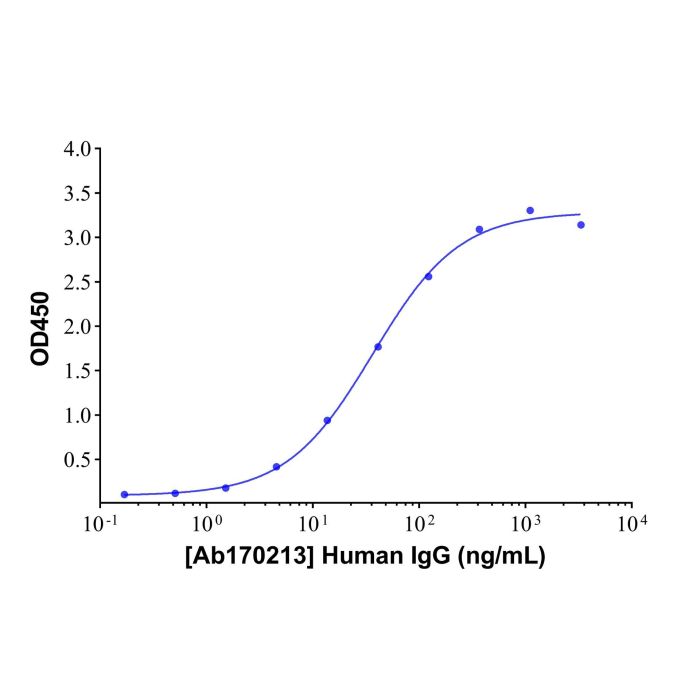
Human IgG (Ab170213) - ELISA
A titer ELISA of Human IgG (Ab170213). The plate was coated with different amounts of Human IgG (Ab170213). Goat Anti-Human IgG H&L (HRP) (Ab137905) at 1/10000 dilution was used as the secondary antibody.

Application
Application
Dilution info
WB

Use at an assay dependent concentration.

ELISA

Use at an assay dependent concentration.

EIA

Use at an assay dependent concentration

CLIA

Use at an assay dependent concentration

LF

Use at an assay dependent concentration

PETIA

Use at an assay dependent concentration.

Documentation

📋 Safety Data Sheet (SDS)

Comprehensive hazard, handling, storage, and regulatory compliance document.

<<<<<<< HEAD Download SDS → ======= Download SDS → >>>>>>> release248-p3

✅ Certificate of Analysis (COA)

Lot-specific quality data. Enter your lot number to retrieve the exact COA.

Look up COA →

📊 Datasheet

Quick-reference summary of product specifications and applications.

View datasheet →

🔬 Specification Sheet

Full quality attributes and acceptance criteria for this grade.

View spec sheet →

Advanced Data

Certificates (CoA,COO,BSE/TSE and Analysis Chart)
C of A & Other Certificates(BSE/TSE, COO):
Analytical Chart:

Find and download the COA for your product by matching the lot number on the packaging.

6 results found

Lot NumberCertificate TypeDateItem
ZJ26F0737268ZJ26F0737268Certificate of AnalysisJul 10, 2026 Ab170213
ZJ25F0420641ZJ25F0420641Certificate of AnalysisApr 18, 2025 Ab170213
ZJ25F0420640ZJ25F0420640Certificate of AnalysisApr 18, 2025 Ab170213
ZJ25F0420639ZJ25F0420639Certificate of AnalysisApr 18, 2025 Ab170213
ZJ23F0700511ZJ23F0700511Certificate of AnalysisJul 06, 2023 Ab170213
ZJ23F0700513ZJ23F0700513Certificate of AnalysisJul 06, 2023 Ab170213
Documents & Articles
Antibody Isotype Controls
Antibody structure and isotypes
Automated Immunohistochemical Staining Protocol for Anti-PD-L1
General Immunoprecipitation Protocol
RNA Immunoprecipitation (RIP) Protocol
Guidelines for Using Isotype Control Antibodies
Protein Molecular Weight Standards
Immunoglobulins (Ig): Structural Basis, Functional Mechanisms, and Practical Considerations—A Technical Review
Urinary Protein Biomarker Analysis in Kidney Injury: Detection Significance of Albumin, Transferrin, IgG, and α2-Macroglobulin
Human IgG: Properties, Applications & Lab Guidelines
Solution Calculators
Reviews

Customer Reviews

Application Protocols

Tested applications and recommended dilutions are not provided for this item.

  • Validated applications: Not specified for this item; refer to CoA/Spec Sheet.
  • Suggested positive controls/detection systems: Not specified for this item; refer to CoA/Spec Sheet.

General workflow guidance (literature/general; not product-specific instructions):

  • For ELISA standards: Prepare serial dilutions in PBS or sample-matched matrix, mix gently, and run in duplicate or triplicate.
  • For isotype control use: Match concentration and isotype/subclass to the primary human IgG reagent; maintain identical incubation and wash conditions.
  • For conjugation: Exchange into amine-free PBS, determine concentration by A280, and perform small-scale pilot labeling to optimize degree-of-labeling. Please consult the item’s CoA/SDS and perform preliminary titrations to establish conditions suitable for your specific assay.
Biological Roles

Literature/general background on human IgG (not item-specific claims):

  • Function: IgG is the predominant immunoglobulin in human serum and extracellular fluid, central to adaptive immunity. It neutralizes pathogens/toxins, opsonizes antigens for phagocytosis, activates complement (subclass-dependent), and engages Fcγ receptors to modulate effector functions.
  • Structure–function: The Fab regions confer antigen specificity via variable domains; the Fc region mediates effector interactions (FcγRs, neonatal Fc receptor FcRn for recycling and transplacental transfer, and C1q for classical complement activation).
  • Subclasses: IgG1, IgG2, IgG3, and IgG4 differ in hinge length, disulfide connectivity, and effector potency. Glycosylation at Asn297 in CH2 influences FcγR affinity and complement activation.
  • Homeostasis: FcRn binding in endosomes extends IgG serum persistence via pH-dependent recycling. Typical serum concentration is ~7–16 mg/mL in healthy adults, with dynamic changes during immune responses.
  • Experimental utility: Purified human IgG serves as a reference standard for immunoassays, a control reagent in cell-based studies, and a substrate for enzymology (e.g., papain/pepsin digestion to generate Fab/F(ab')2 fragments).

Notes for this catalog item:

  • No specific biological activity, subclass, clonality, or antigen-binding characteristics are provided. Any functional role in your experiment should be empirically determined. Item is for research use only (Product Data).
Buffer Applications

Item context: Grade indicates PBS Only, Carrier Free, Azide Free. Exact PBS composition (pH, ionic strength) is Not specified for this item; refer to CoA/Spec Sheet.

General buffer guidance for IgG (literature/general):

  • PBS recipe (typical): 10 mM sodium phosphate, 137 mM NaCl, 2.7 mM KCl, pH 7.2–7.4. Maintain isotonic conditions to preserve IgG conformation.
  • Working solutions: Prepare dilutions in PBS using low-bind plastics to minimize adsorption, especially at ≤0.1 mg/mL. Consider adding user-selected inert stabilizers (e.g., 0.1–1% trehalose) if compatible with your assay; this item is Carrier Free and allows such customization.
  • Additives: Avoid sodium azide for peroxidase-based assays or live cells (this item is Azide Free). If antimicrobial control is required for short-term 2–8°C storage, evaluate compatible, low-toxicity alternatives and validate assay impact.
  • pH/ionic strength: Keep near neutral pH; low ionic strength buffers can increase aggregation and nonspecific binding. For blocking Fc receptors, inclusion of serum proteins may be helpful, but these would negate the carrier-free advantage.

Electrophoresis/analytical notes:

  • For SDS-PAGE/QC, exchange into volatile buffers as needed before MS or peptide mapping.
  • For ELISA coating, carbonate/bicarbonate buffers (pH ~9.4) are commonly used to passively adsorb proteins to plates; after coating, return to PBS-based buffers for detection and washing.
Green Alternatives

Perspective: Environmental impact for antibody reagents is dominated by cold-chain logistics, single-use plastics, and biocidal preservatives. This item is Azide Free and shipped with ice pads, which can reduce certain hazards compared to sodium azide–preserved products and dry-ice shipments.

Considerations (literature/general):

  • Preservatives: Azide-free formulations avoid azide-related acute aquatic toxicity and heavy-metal azide formation risks. If a preservative is needed, consider lower-toxicity options compatible with your assay (e.g., ProClin variants in very low percentages) and evaluate waste disposal requirements.
  • Stabilizers and cryoprotectants: Trehalose or glycerol can enable storage at -20°C rather than -80°C, potentially lowering energy use. Verify compatibility with your assays.
  • Packaging: Use low-bind, recyclable plastics where feasible; consolidate orders to reduce shipping frequency.
  • Process choices: Aliquot once, then store long-term to minimize discard due to freeze–thaw damage.

Comparison (general):

  • Azide-preserved antibodies: Increased shelf life at 2–8°C but require hazardous waste handling; incompatible with peroxidase-based assays and live cells.
  • Azide-free antibodies (this item): Favor live-cell and enzymatic workflows; require stricter aseptic handling and frozen storage to control bioburden.

Best practice:

  • Plan experimental batching to minimize thaw cycles and plastic consumables. Validate room-temperature working stability to reduce repeated cold exposure during active use (without contradicting storage guidance).
Pharmaceutical Uses

Scope: No clinical or therapeutic claims are made. The following describes nonclinical, research, and manufacturing-support contexts (literature/general). Item is for research use only (Product Data).

Typical nonclinical/analytical uses of human IgG standards:

  • Bioanalytical method development: Reference material for assay calibration and system suitability (ELISA titering, HPLC-SEC peak identification, capillary electrophoresis migration control).
  • Process development benchmarking: Model protein for evaluating protein A/G chromatography, polishing steps, resin capacity, and elution conditions.
  • Device/consumable qualification: Assess protein recovery/adsorption on filters, microplates, and tubing.
  • Stability/formulation studies: Model antibody to screen excipients, buffer conditions, and stress profiles prior to using scarce lead candidates.

Regulatory notes:

  • Pharmacopeial status, compendial monographs, endotoxin specifications, and QC attributes for this particular item are Not specified; refer to CoA/Spec Sheet if applicable.

Practical considerations:

  • Use traceable in-house standards and document lot numbers. Confirm concentration by A280 using an appropriate extinction coefficient (general: ε0.1% ~1.35 at 280 nm for IgG; literature) or per CoA for the specific lot. Verify matrix match between calibrators and samples to minimize matrix effects.
Physical Properties

Item-specific physical constants are not provided for this protein reagent.

Item-specific values:

  • Appearance: Not specified for this item; refer to CoA/Spec Sheet.
  • Concentration/formulation: Not specified for this item; refer to CoA/Spec Sheet (grade notes indicate PBS Only, Carrier Free, Azide Free).
  • Molecular weight: Not specified for this item; refer to CoA/Spec Sheet.

Literature/general properties for human IgG (for context only; not specifications for this item):

  • Typical intact mass: ~150 kDa (subclass-dependent; glycosylation adds heterogeneity).
  • Isoelectric point (pI): ~6.5–9.0 depending on subclass/glycoform.
  • Solubility: Readily soluble in physiological buffers (e.g., PBS, ~1–10 mg/mL and above) with stability enhanced by moderate ionic strength and neutral pH.
  • Denaturation: Sensitive to extremes of pH (<4, >9), elevated temperature, shear, interfacial stress, and repeated freeze–thaw cycles.
  • Thermal stability: Apparent melting transitions often in the 60–75°C range (DSC; subclass/ formulation dependent).

Practical notes (general):

  • Maintain neutral pH and isotonic ionic strength to avoid aggregation.
  • Low concentrations may benefit from carrier proteins or stabilizers; this item is Carrier Free, so users may optionally add their own stabilizer if compatible with downstream assays.
  • Avoid organic solvents and strong chaotropes unless intentionally denaturing.
Quality & Grades

Item-specific grade attributes (from Product Data) and their implications:

  • Carrier Free: No added protein carriers (e.g., BSA, gelatin). Advantages: precise mass balance for conjugation (e.g., fluorophore/HRP), reduced background in assays sensitive to carrier proteins, and freedom to add user-selected stabilizers. Considerations: increased susceptibility to surface adsorption at low concentrations; use low-bind plastics and include inert protein or sugars if compatible with your application.
  • Azide Free: No sodium azide preservative. Advantages: compatibility with live-cell assays, enzymatic conjugations (azide inhibits peroxidases), and cell-based functional tests. Considerations: heightened risk of microbial growth; maintain sterility and store frozen in aliquots.
  • ExactAb™: Branded quality indicator denoting lot-to-lot consistency and performance verification. Specific acceptance criteria are Not specified for this item; refer to CoA/Spec Sheet.
  • Validated: Indicates internal verification of identity/purity/performance. The exact validation methods and application scope are Not specified for this item; refer to CoA/Spec Sheet.
  • PBS Only: Formulated solely in phosphate-buffered saline. Exact composition (pH, ionic strength) is Not specified for this item; refer to CoA/Spec Sheet.

What is not specified for this item:

  • Purity percentages, endotoxin level, bioburden, subclass/isotype, clonality, and residual host components: Not specified for this item; refer to CoA/Spec Sheet.

Best practices:

  • For quantitative work (e.g., calibration curves, Fc-receptor studies), verify lot-specific concentration by A280/UV per CoA and perform small pilot tests to confirm performance in your assay matrix.
Reaction & Applications

Context: As an antibody reagent, Human IgG is not a small-molecule reactant, but it is widely employed as a biological reagent in assay workflows. The following are general research applications (literature/general) and do not constitute validated uses for this specific lot.

General research uses of human IgG:

  • Isotype control: Establish background staining in flow cytometry or immunofluorescence when the primary antibody is human IgG.
  • Standard/calibrator: Generate standard curves for total IgG quantitation by ELISA, nephelometry, or HPLC-SEC.
  • Fc receptor studies: Probe binding to Fcγ receptors (FcγRI/CD64, FcγRII/CD32, FcγRIII/CD16) and assess Fc-mediated functions in biochemical assays.
  • Protein A/G affinity benchmarking: Evaluate capture efficiency, elution conditions, and resin lifetime in chromatographic workflows.
  • Blocking reagent: Saturate Fc receptors or heterophilic anti-human antibodies in complex matrices to mitigate nonspecific binding.
  • Conjugation substrate: Site-nonspecific labeling of lysines (NHS esters) or cysteines (maleimides), or site-directed conjugation via engineered tags (general). Carrier Free formulation facilitates precise degree-of-labeling control.

Practical tips (general):

  • Work on ice and minimize vortexing to reduce aggregation.
  • Filter (0.22 µm) only if necessary; excessive shear can damage IgG.
  • For conjugations, desalting into amine-free buffers (e.g., PBS without Tris) is recommended for NHS ester chemistry; confirm exact buffer composition for this item on the CoA.
Reaction Conditions

Not typically applicable in the context of small-molecule synthesis. For biochemical manipulations of IgG (literature/general):

  • Enzymatic fragmentation: Papain (pH ~7, presence of cysteine) to generate Fab; pepsin (pH ~3.5) to generate F(ab')2. Carefully control pH, temperature (~20–37°C), and time to limit over-digestion.
  • Conjugation: NHS ester chemistry targets lysines in amine-free buffers (e.g., PBS without primary amines such as Tris). Maleimide chemistry targets reduced cysteines at pH ~6.5–7.0. Degree of labeling typically optimized empirically.
  • Affinity capture: Protein A/G binding in neutral buffers; elution at low pH (e.g., glycine-HCl pH ~2.7–3.5) followed by immediate neutralization to protect IgG integrity. These are general literature guidelines and not validated conditions for this specific item.
Safety & Handling

GHS/SDS:

  • Signal word, hazard statements, GHS classification, and pictograms: Not specified for this item; refer to SDS.

General safety considerations for protein antibodies (literature/general):

  • Typically considered low hazard; handle as a laboratory protein solution. Avoid inhalation of aerosols and contact with skin/eyes. Use standard PPE: lab coat, gloves (nitrile), and safety glasses.
  • Biological origin: Although purified, treat as a potential biohazard per institutional policy. Avoid mouth pipetting and maintain aseptic technique to prevent microbial contamination—especially relevant because this product is Azide Free (no bacteriostatic preservative).
  • Sensitization: Repeated exposure to proteins may cause allergic sensitization in susceptible individuals; minimize aerosolization.
  • Incompatibilities: Avoid strong oxidizers, proteases, extremes of pH, and elevated temperature. Presence of metal-catalyzed oxidants can promote methionine/tryptophan oxidation; store in closed containers to minimize air exposure.
  • First aid (overview; defer to SDS): If skin/eye contact occurs, rinse with water. If inhaled, move to fresh air. If ingested, rinse mouth and seek medical attention per institutional guidance.

Storage/transport notes (item-specific):

  • Store at -20°C; avoid repeated freezing and thawing (Product Data).
  • Shipped in an ice chest with ice pads (Product Data). Upon receipt, place at the recommended storage temperature.
Solvent Selection

Applicability: As a protein antibody reagent, “solvent” refers to aqueous buffer. This item is designated PBS Only (Product Data), indicating formulation and intended dilution in phosphate-buffered saline.

General buffer compatibility (literature/general):

  • Primary buffer: PBS, pH ~7.2–7.4, isotonic ionic strength. Maintains IgG stability and native structure.
  • Dilution media: PBS or PBS with low levels of inert stabilizers (e.g., 1–5% trehalose or 10–50% glycerol for frozen storage) if compatible with your downstream assays. Because this item is Carrier Free and Azide Free, users may add their own stabilizers/preservatives as needed.
  • Avoid: Low ionic strength or very acidic/basic buffers (risk of aggregation/denaturation), and organic solvents. Chelators (e.g., EDTA) are typically compatible but may interfere with downstream metal-dependent assays.

When to choose PBS vs alternatives (literature/general):

  • PBS vs TBS: TBS (Tris-buffered saline) may reduce phosphate-related interactions in certain immunoassays but can be temperature/pH sensitive. PBS is preferred for compatibility and simplicity.
  • HEPES-buffered saline: Better pH stability in CO2 incubators for live-cell work; ensure compatibility with your application.

Small comparison (general):

  • PBS: High compatibility with IgG structure, wide assay use.
  • TBS: Useful for alkaline phosphatase-based assays to avoid phosphate inhibition; confirm assay conditions.
  • Acetate/citrate buffers: Useful for low-pH elutions (e.g., affinity purification), not recommended for routine storage of IgG.
Storage & Reconstitution

Item-specific directions (from Product Data):

  • Storage: Store at -20°C.
  • Handling: Avoid repeated freezing and thawing.
  • Shipping: Shipped in an ice chest with ice pads. Upon receipt, store at the recommended temperature.

What is not specified for this item:

  • Appearance (liquid vs lyophilized), exact concentration, pH, excipients, and container type: Not specified; refer to CoA/Spec Sheet.

General best practices for antibodies (literature/general):

  • If liquid: Aliquot into single-use volumes (e.g., sized for one experiment) in low-bind tubes to prevent adsorption and freeze–thaw damage. Snap-freeze on dry ice or in a -80°C rack before transferring to -20°C storage if compatible with formulation.
  • If lyophilized: Reconstitute with sterile PBS (volume per CoA), gently invert to mix; avoid vigorous vortexing. Allow to fully dissolve on ice. After reconstitution, aliquot immediately.
  • Cryoprotection: For long-term stability, consider adding sterile glycerol (final 10–50%) or sugars (e.g., trehalose) if compatible with downstream assays. Note that adding carriers or preservatives will change the Carrier Free/Azide Free status of your working stock.
  • Working stability: Keep on ice during use. Do not refreeze thawed aliquots. Record freeze–thaw cycles and discard aliquots showing turbidity or precipitation. Always consult the product’s CoA/SDS for lot-specific instructions and verified stability limits.
Structure & Identity

Brief description: Human IgG is a tetrameric immunoglobulin protein composed of two identical heavy chains and two identical light chains linked by disulfide bonds (literature/general). This catalog item is an antibody reagent, not a small molecule.

Item-specific identifiers from Product Data:

  • CAS: Not specified for this item; refer to CoA/Spec Sheet.
  • InChIKey: Not applicable to proteins.
  • SMILES: Not applicable to proteins.
  • Molecular formula: Not specified for this item; refer to CoA/Spec Sheet.
  • Molecular weight: Not specified for this item; refer to CoA/Spec Sheet.

Structural features (literature/general):

  • IgG has a Y-shaped 2D architecture with two Fab arms (antigen-binding) and one Fc region (effector and Fc receptor binding).
  • Each heavy chain (~50 kDa) contains variable (VH) and constant domains (CH1–CH3); each light chain (~25 kDa) contains VL and CL domains. Typical intact mass ~150 kDa for full-length IgG. Glycosylation is present at Fc Asn297 and can modulate effector function.
  • Disulfide bonds connect heavy–heavy and heavy–light chains; hinge flexibility varies by subclass (IgG1–IgG4).
  • No defined stereocenters as in small molecules; chirality arises from L-amino acid residues and higher-order folding.

Notes:

  • Exact amino acid sequence, glycoform distribution, subclass, clonality (polyclonal vs monoclonal), and isotype are Not specified for this item; refer to CoA/Spec Sheet.
Synthetic Utility

Not typically applicable. Human IgG is a biological macromolecule used as a reagent/control in immunoassays and biochemical workflows rather than as a synthetic building block. For practical guidance, see the Reaction & Applications, Buffer Applications, and Storage & Reconstitution sections.

Target Specificity

Item-specific target details are not provided.

  • Antigen/epitope: Not specified for this item; refer to CoA/Spec Sheet.
  • Species reactivity: Not specified for this item; refer to CoA/Spec Sheet.
  • Clone/isotype/subclass: Not specified for this item; refer to CoA/Spec Sheet.

General note (literature/general):

  • A product labeled “Human IgG” often denotes purified human immunoglobulin G and may be used as an isotype control or standard rather than a target-specific antibody. Confirm intended use and any subclass information on the CoA before designing controls.

Frequently Asked Questions

What is the purity of this product, and how is it determined?
This product is supplied at ≥95% purity, determined by SDS-PAGE. Lot-specific values are stated on the Certificate of Analysis.
What does ExactAb? mean?
ExactAb? indicates the product has been validated for use in rigorous antibody validation workflows. Validation may include positive/negative control samples, signal-to-noise testing, and protocol-specific QC. Lot-specific test data is published on the Certificate of Analysis where available.
What does Carrier Free mean?
Carrier Free indicates that the material has been processed and tested for specialty industrial processing. Specifications focus on the impurities that affect performance in that application — for example, metal content for electronics, particle size for batteries, refractive index for optics, or moisture content for moisture-sensitive processes.
What documentation is provided?
Available product documentation, including Certificates of Analysis (COA), Safety Data Sheets (SDS), and specification sheets, is shown in the product document area. Document availability and access follow the current site policy.
Which species reactivity has this antibody been validated against?
Validated reactivity is listed on the PDP and on each lot's datasheet. We validate against the most commonly tested species for the target (Human IgG); cross-reactivity in untested species may exist but is not guaranteed. Contact technical support for specific species inquiries.

Need help choosing the grade?

Our grade selection guide covers purity, stabilizer status, and application suitability for all variants in our catalog.

View Carrier Free grade guide → View Validated grade guide → View ExactAb™ grade guide → View Azide Free grade guide → View PBS Only grade guide →

Related Products

Human IgG2-Kappa - Isotype Control Antibody, Human IgG2
Human IgG3-kappa - Isotype Control Antibody, Human IgG3
Human IgG1-kappa, anti-Spike RBD - Isotype Control Antibody, specific to Spike RBD, Human IgG1
Human IgG4-kappa - Isotype Control Antibody, IgG4
Human IgG (FITC) - Isotype Control Antibody, IgG
Human IgG (APC) - Isotype Control Antibody, IgG
Human IgG (PE) - Isotype Control Antibody, IgG
Human IgG1(P331S/E430G)-kappa, anti-HEL - Isotype Control Antibody, specific to HEL, Human IgG1(P331S/E430G)
Human IgG1(D265A/N297A)-kappa, anti-HEL - Isotype Control Antibody, specific to HEL, Human IgG1(D265A/N297A)
Human IgG1(K409R/E356D/M358L)-kappa, anti-HEL - Isotype Control Antibody, specific to HEL, Human IgG1(K409R/E356D/M358L)
Human IgG1(P329G/E356D/M358L)-kappa, anti-HEL - Isotype Control Antibody, specific to HEL, Human IgG1(P329G/E356D/M358L)
Human IgG1(F405L)-kappa, anti-HEL - Isotype Control Antibody, specific to HEL, Human IgG1(F405L)
Human IgG1(N297Q)-kappa, anti-HEL - Isotype Control Antibody, specific to HEL, Human IgG1(N297Q)
Human IgG (Biotin) - Isotype Control Antibody, IgG
Human IgG1(N297S)-kappa, anti-HEL - Isotype Control Antibody, specific to HEL, Human IgG1(N297S)
Human IgG1(E233A/L235A)-kappa, anti-HEL - Isotype Control Antibody, specific to HEL, Human IgG1(E233A/L235A)
Human IgG1(K214R/N297A)-kappa, anti-HEL - Isotype Control Antibody, specific to HEL, Human IgG1(K214R/N297A)
Human IgG1(K214R/L234A/L235A)-kappa, anti-HEL - Isotype Control Antibody, specific to HEL, Human IgG1(K214R/L234A/L235A)
Human IgG1(N297A/E356D/M358L)-kappa, anti-HEL - Isotype Control Antibody, specific to HEL, Human IgG1(N297A/E356D/M358L)
Human IgG1(L234F/L235E)-kappa, anti-HEL - Isotype Control Antibody, specific to HEL, Human IgG1(L234F/L235E)
Human IgG1(D265A)-kappa, anti-HEL - Isotype Control Antibody, specific to HEL, Human IgG1(D265A)
Human IgG1(K214R/L234F/L235E/P331S)-kappa, anti-HEL - Isotype Control Antibody, specific to HEL, Human IgG1(K214R/L234F/L235E/P331S)
Human IgG1(K214R/E356D/M358L)-kappa, anti-HEL - Isotype Control Antibody, specific to HEL, Human IgG1(K214R/E356D/M358L)
Human IgG1(L234A/L235A/G237A)-kappa, anti-HEL - Isotype Control Antibody, specific to HEL, Human IgG1(L234A/L235A/G237A)
Human IgG1(L234A/L235A/F405L)-kappa, anti-HEL - Isotype Control Antibody, specific to HEL, Human IgG1(L234A/L235A/F405L)
Human IgG1(D270N)-kappa, anti-HEL - Isotype Control Antibody, specific to HEL, Human IgG1(D270N)
Human IgG4(S228P)-kappa, anti-HEL - Isotype Control Antibody, specific to HEL, Human IgG4(S228P)
Human IgG1(N297A)-kappa, anti-HEL - Isotype Control Antibody, specific to HEL, Human IgG1(N297A)
Human IgG4(S228P/L235E/P329G)-kappa, anti-HEL - Isotype Control Antibody, specific to HEL, Human IgG4(S228P/L235E/P329G)
Human IgG1-lambda1, anti-Spike RBD - Isotype Control Antibody, specific to Spike RBD, Human IgG1
Human IgG1-lambda2, anti-Spike RBD - Isotype Control Antibody, specific to Spike RBD, Human IgG1
Human IgG1-kappa (AF405), anti-Spike RBD - Isotype Control Antibody, specific to Spike RBD
Human IgG1-kappa (AF647), anti-Spike RBD - Isotype Control Antibody, specific to Spike RBD
Human IgG1-kappa (APC), anti-Spike RBD - Isotype Control Antibody, specific to Spike RBD
Human IgG1-kappa (Biotin), anti-Spike RBD - Isotype Control Antibody, specific to Spike RBD
Human IgG1-kappa (AF700), anti-Spike RBD - Isotype Control Antibody, specific to Spike RBD
Human IgG1-kappa (FITC), anti-Spike RBD - Isotype Control Antibody, specific to Spike RBD
Human IgG1-kappa (AF555), anti-Spike RBD - Isotype Control Antibody, specific to Spike RBD
Human IgG (AF647) - Isotype Control Antibody
Human IgG (AF488) - Isotype Control Antibody
Human IgG (AF700) - Isotype Control Antibody
Human IgG (AF405) - Isotype Control Antibody
Human IgG (AF555) - Isotype Control Antibody

Shall we send you a message when we have discounts available?

Remind me later

Thank you! Please check your email inbox to confirm.

Oops! Notifications are disabled.