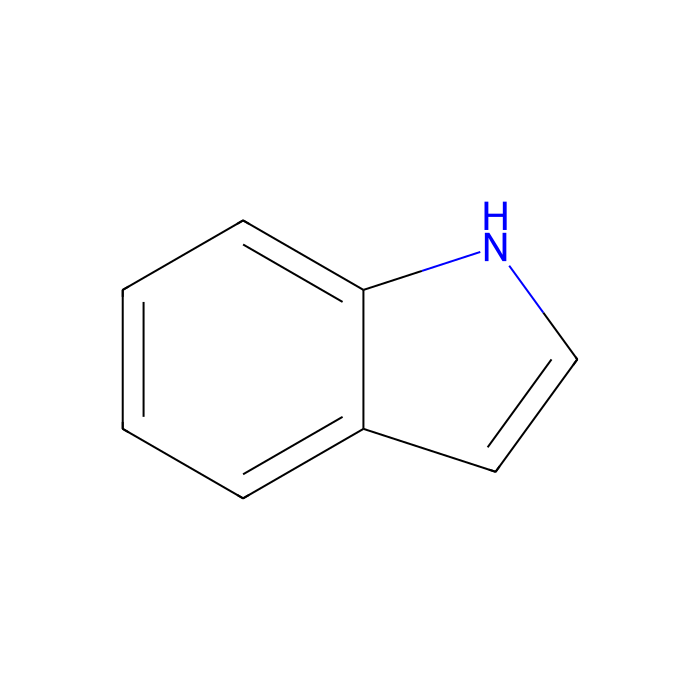
Indole - ≥99% , CAS No.120-72-9

CAS: 120-72-9 Cat. No.: I104726 Formula: C8H7N Molecular Weight: 117.15 Beilstein Registry Number: 107693 EC Number: 204-420-7
AVAILABLE TO ORDER
GRADE & PURITY ≥99%
Synonyms
Indole (white flake) | Indole, puriss., >=98.5% (GC) | I-0800 | SCHEMBL698 | SR-01000944736 | AMY3411 | BBL011739 | CCRIS 4421 | DB04532 | Tox21_302937 | BIDD:GT0304 | HSDB 599 | Indole 100 microg/mL in Acetonitrile | 1H-Benzo[b]pyrrole | INDOLE BENZO-P
Storage
Store at 2-8°C,Argon charged
Shipped In
Wet ice
★
Size
USA
Germany (EU)*
Price
Qty
25g
I104726-25g
7 In stock
—

$10.90

$16.90
Save $6.00 (35.50%)
100g
I104726-100g
3 In stock
—
$49.90
500g
I104726-500g
1 In stock
—

$79.90

$119.90
Save $40.00 (33.36%)
Enter a quantity for the sizes you want to add.
🧪
Why this grade

≥99% for sensitive chromatographic and analytical workflows requiring minimal baseline interference.

🌡

Storage & shipping

Store at 2-8°C,Argon charged Ships Wet ice Check lot-specific COA for exact specifications.

📋

Quality documents

SDS, COA, datasheet, and spec sheet available for download. Lot-specific COA accessible via lot number lookup.

📚

Literature proof

Cited in 113 peer-reviewed publications across chromatography, organic synthesis, and cross-coupling reactions.

Overview

· Indole is a nitrogen-containing heterocycle used in the total synthesis of compounds such as goniomitine,(?)-isatisine A, and (±)-aspidospermidine.

· It is used as an electron donor moiety in synthesizing dyes for organic photovoltaics.

· It can also be used in the preparation of indole based conjugated small molecules for nonlinear optics applications.

Specifications

Synonyms
Indole (white flake) | Indole, puriss., >=98.5% (GC) | I-0800 | SCHEMBL698 | SR-01000944736 | AMY3411 | BBL011739 | CCRIS 4421 | DB04532 | Tox21_302937 | BIDD:GT0304 | HSDB 599 | Indole 100 microg/mL in Acetonitrile | 1H-Benzo[b]pyrrole | INDOLE BENZO-P
Specifications & Purity
≥99%
Storage
Store at 2-8°C,Argon charged
Shipped In
Wet ice
This product requires cold chain shipping. Ground and other economy services are not available.
Purity
≥99%
Names and Identifiers
Pubchem Sid
Pubchem Sid Url
https://pubchem.ncbi.nlm.nih.gov/substance/504750419
Canonical Smiles
C1=CC=C2C(=C1)C=CN2
IUPAC Name
1H-indole
InChIKey
SIKJAQJRHWYJAI-UHFFFAOYSA-N
INCHI
1S/C8H7N/c1-2-4-8-7(3-1)5-6-9-8/h1-6,9H
Isomeric SMILES
C1=CC=C2C(=C1)C=CN2
WGK Germany
1
RTECS
NL2450000
UN Number
2811
Packing Group
III
Molecular Weight
117.15
Beilstein
107693
Reaxy-Rn
107693
Reaxys-RN_link_address
https://www.reaxys.com/reaxys/secured/hopinto.do?context=S&query=IDE.XRN=107693&ln=

Documentation

📋 Safety Data Sheet (SDS)

Comprehensive hazard, handling, storage, and regulatory compliance document.

Download SDS →

✅ Certificate of Analysis (COA)

Lot-specific quality data. Enter your lot number to retrieve the exact COA.

Look up COA →

📊 Datasheet

Quick-reference summary of product specifications and applications.

View datasheet →

🔬 Specification Sheet

Full quality attributes and acceptance criteria for this grade.

View spec sheet →

Advanced Data

Taxonomic Classification

Taxonomy Tree

KingdomOrganic compounds
SuperclassOrganoheterocyclic compounds
ClassIndoles and derivatives
SubclassIndoles
Intermediate Tree Nodes Not available
Direct ParentIndoles
Alternative Parents Benzenoids  Pyrroles  Heteroaromatic compounds  Azacyclic compounds  Organopnictogen compounds  Organonitrogen compounds  Hydrocarbon derivatives  
Molecular FrameworkAromatic heteropolycyclic compounds
Substituents Indole - Benzenoid - Heteroaromatic compound - Pyrrole - Azacycle - Organic nitrogen compound - Organopnictogen compound - Hydrocarbon derivative - Organonitrogen compound - Aromatic heteropolycyclic compound
DescriptionThis compound belongs to the class of organic compounds known as indoles. These are compounds containing an indole moiety, which consists of pyrrole ring fused to benzene to form 2,3-benzopyrrole.
External Descriptors an indole
3D Structure
Interactive Chemical Structure Model


Associated Targets(Human)
CA2 Tclin Carbonic anhydrase II (17698 Activities)
Activity TypeRelationActivity valueUnitsAction TypeJournalPubMed IddoiAssay Aladdin ID
ADK Tchem Adenosine kinase (1481 Activities)
Activity TypeRelationActivity valueUnitsAction TypeJournalPubMed IddoiAssay Aladdin ID
CA6 Tclin Carbonic anhydrase VI (993 Activities)
Activity TypeRelationActivity valueUnitsAction TypeJournalPubMed IddoiAssay Aladdin ID
CA1 Tclin Carbonic anhydrase I (13240 Activities)
Activity TypeRelationActivity valueUnitsAction TypeJournalPubMed IddoiAssay Aladdin ID
ALB Tchem Serum albumin (2651 Activities)
Activity TypeRelationActivity valueUnitsAction TypeJournalPubMed IddoiAssay Aladdin ID
CES1 Tchem Acyl coenzyme A:cholesterol acyltransferase (1029 Activities)
Activity TypeRelationActivity valueUnitsAction TypeJournalPubMed IddoiAssay Aladdin ID
MCF7 (126967 Activities)
Activity TypeRelationActivity valueUnitsAction TypeJournalPubMed IddoiAssay Aladdin ID
MRC5 (9203 Activities)
Activity TypeRelationActivity valueUnitsAction TypeJournalPubMed IddoiAssay Aladdin ID
SK-N-SH (1499 Activities)
Activity TypeRelationActivity valueUnitsAction TypeJournalPubMed IddoiAssay Aladdin ID
U-251 (51189 Activities)
Activity TypeRelationActivity valueUnitsAction TypeJournalPubMed IddoiAssay Aladdin ID
U-87 MG (3946 Activities)
Activity TypeRelationActivity valueUnitsAction TypeJournalPubMed IddoiAssay Aladdin ID
A549 (127892 Activities)
Activity TypeRelationActivity valueUnitsAction TypeJournalPubMed IddoiAssay Aladdin ID
NCI-H292 (733 Activities)
Activity TypeRelationActivity valueUnitsAction TypeJournalPubMed IddoiAssay Aladdin ID
MDA-MB-231 (73002 Activities)
Activity TypeRelationActivity valueUnitsAction TypeJournalPubMed IddoiAssay Aladdin ID
CDK5 Tchem Cyclin-dependent kinase 5/CDK5 activator 1 (3697 Activities)
Activity TypeRelationActivity valueUnitsAction TypeJournalPubMed IddoiAssay Aladdin ID
GSK3A Tclin Glycogen synthase kinase-3 (736 Activities)
Activity TypeRelationActivity valueUnitsAction TypeJournalPubMed IddoiAssay Aladdin ID
ITGAL Tclin Intercellular adhesion molecule (ICAM-1), Integrin alpha-L/beta-2 (760 Activities)
Activity TypeRelationActivity valueUnitsAction TypeJournalPubMed IddoiAssay Aladdin ID
Associated Targets(non-human)
CA4 Carbonic anhydrase IV (1713 Activities)
Activity TypeRelationActivity valueUnitsAction TypeJournalPubMed IddoiAssay Aladdin ID
Saccharomyces cerevisiae (19171 Activities)
Activity TypeRelationActivity valueUnitsAction TypeJournalPubMed IddoiAssay Aladdin ID
Cutibacterium acnes (887 Activities)
Activity TypeRelationActivity valueUnitsAction TypeJournalPubMed IddoiAssay Aladdin ID
Rattus norvegicus (775804 Activities)
Activity TypeRelationActivity valueUnitsAction TypeJournalPubMed IddoiAssay Aladdin ID
Hepatitis C virus (23859 Activities)
Activity TypeRelationActivity valueUnitsAction TypeJournalPubMed IddoiAssay Aladdin ID
INS1 (2867 Activities)
Activity TypeRelationActivity valueUnitsAction TypeJournalPubMed IddoiAssay Aladdin ID
E Lysozyme (95 Activities)
Activity TypeRelationActivity valueUnitsAction TypeJournalPubMed IddoiAssay Aladdin ID
Plutella xylostella (1838 Activities)
Activity TypeRelationActivity valueUnitsAction TypeJournalPubMed IddoiAssay Aladdin ID
PYGM Glycogen phosphorylase, muscle form (1331 Activities)
Activity TypeRelationActivity valueUnitsAction TypeJournalPubMed IddoiAssay Aladdin ID
Trpa1 Transient receptor potential cation channel subfamily A member 1 (1003 Activities)
Activity TypeRelationActivity valueUnitsAction TypeJournalPubMed IddoiAssay Aladdin ID
Spodoptera exigua (540 Activities)
Activity TypeRelationActivity valueUnitsAction TypeJournalPubMed IddoiAssay Aladdin ID
CA3 Carbonic anhydrase 3 (27 Activities)
Activity TypeRelationActivity valueUnitsAction TypeJournalPubMed IddoiAssay Aladdin ID
Mechanisms of Action
Certificates(CoA,COO,BSE/TSE and Analysis Chart)
C of A & Other Certificates(BSE/TSE, COO):
Analytical Chart:

Find and download the COA for your product by matching the lot number on the packaging.

31 results found

Lot NumberCertificate TypeDateItem
G2609118Certificate of AnalysisMar 25, 2026 I104726
D2608576Certificate of AnalysisMar 25, 2026 I104726
D2608566Certificate of AnalysisMar 25, 2026 I104726
D2608559Certificate of AnalysisMar 25, 2026 I104726
D2608555Certificate of AnalysisMar 25, 2026 I104726
L2509016Certificate of AnalysisJun 14, 2025 I104726
F2530246Certificate of AnalysisJun 14, 2025 I104726
F2530102Certificate of AnalysisJun 14, 2025 I104726
F2530099Certificate of AnalysisJun 14, 2025 I104726
C2630041Certificate of AnalysisJun 14, 2025 I104726
E2530062Certificate of AnalysisMar 17, 2025 I104726
C2527609Certificate of AnalysisMar 17, 2025 I104726
C2527608Certificate of AnalysisMar 17, 2025 I104726
C2527287Certificate of AnalysisMar 17, 2025 I104726
C2527610Certificate of AnalysisMar 17, 2025 I104726
A2517293Certificate of AnalysisJan 03, 2025 I104726
A2517301Certificate of AnalysisJan 03, 2025 I104726
A2517304Certificate of AnalysisJan 03, 2025 I104726
A2517307Certificate of AnalysisJan 03, 2025 I104726
J2422044Certificate of AnalysisOct 28, 2024 I104726
L2427217Certificate of AnalysisOct 28, 2024 I104726
I2418256Certificate of AnalysisApr 29, 2024 I104726
I2418257Certificate of AnalysisApr 29, 2024 I104726
I2202356Certificate of AnalysisAug 16, 2022 I104726
I2202357Certificate of AnalysisAug 16, 2022 I104726
I2202358Certificate of AnalysisAug 16, 2022 I104726
I2402442Certificate of AnalysisAug 16, 2022 I104726
J2418115Certificate of AnalysisAug 16, 2022 I104726
C23101240Certificate of AnalysisAug 03, 2021 I104726
H2311036Certificate of AnalysisAug 03, 2021 I104726
A2423048Certificate of AnalysisAug 03, 2021 I104726
Chemical and Physical Properties
SolubilitySoluble in methanol and water.
Sensitivitylight & air sensitive
Refractive Index1.609
Flash Point(°F)249°F
Flash Point(°C)121°C
Boil Point(°C)254°C
Melt Point(°C)52.5°C
Molecular Weight117.150 g/mol
XLogP32.100
Hydrogen Bond Donor Count1
Hydrogen Bond Acceptor Count0
Rotatable Bond Count0
Exact Mass117.058 Da
Monoisotopic Mass117.058 Da
Topological Polar Surface Area15.800 Ų
Heavy Atom Count9
Formal Charge0
Complexity101.000
Isotope Atom Count0
Defined Atom Stereocenter Count0
Undefined Atom Stereocenter Count0
Defined Bond Stereocenter Count0
Undefined Bond Stereocenter Count0
The total count of all stereochemical bonds0
Covalently-Bonded Unit Count1
Documents & Articles
Synthesis of molecular block “two-sided” indole
Boranes (Dimethylsulfide Borane, Borane-Tetrahydrofuran Complex)
Boc resin lysis protocol
Fragrance Science: From “Smells Nice” to a Chemical World That Can Be Studied and Standardized
Indole Product Navigation: How N-Position State, the C3 Connection Handle, and Core Scaffold Variants Map to Synthetic Interfaces and Research Uses (Tables A–E)
Pyrrole Research Reagent Selection Roadmap: Structure—Reactive Sites—Application Throughline and Reagent Classification Guide (Tables 1–4)
Reaction Roles of DBU in Different Systems: Experimental Judgment from a Strong Organic Base to Nucleophilic Catalysis and Participation in the Reaction Pathway
Experimental Selection of SEM-Cl: From O/N-SEM Protection and Directed Functionalization of N-Heterocycles to the Introduction of Protected C1 Fragments
Understanding Indoline: Analysis of the Structural Features, Properties, and Applications of the 2,3-Dihydroindole Scaffold
Overcoming the Electronic-Effect Limitations of Nucleophilic Aromatic Substitution in Fluoroarenes: Anion Activation, Concerted Substitution, and HF Capture by t-Bu-P4
Sources, Host-Regulatory Mechanisms, and Tumor-Immune Effects of Gut Microbiota-Derived Metabolites
Reaction Logic of I₂/DMSO-Mediated Oxidation of Aryl Methyl Ketones: In Situ Generation, Trapping, and Heterocycle Construction of Aryl Glyoxals
From a DENV-2 Screening Hit to Coverage of All Four Serotypes: Pan-Serotype Structure–Activity Relationship Optimization of JNJ-1802
From 459,000 Recorded Ring Systems to 3,902 Candidate Ring Systems: Selection Patterns of Clinically Relevant Ring Systems
From Serotonin to Triptans: Recognition of the Indole–Ethylamine Pharmacophore, C5 Substitution, and 5HT₁B/5HT₂B Selectivity
Citations of This Product
Solution Calculators
Reviews

Customer Reviews

Application Protocols

No assay-specific or antibody application protocols are applicable to this small-molecule chemical. For synthetic or analytical uses, refer to the Reaction Conditions and Synthetic Utility sections. For preparing stock solutions for biochemical assays, typical practice (literature) is to dissolve indole in DMSO or ethanol to 10–100 mM, filter (0.2 µm), and dilute into buffer with ≤1% v/v organic cosolvent, verifying solubility and absence of precipitation.

Biological Roles

Content in this section is general literature background and not specific to this catalog item’s specifications or intended use (research use only).

  • Origin and metabolism:
    • Indole is a natural product derived from tryptophan via bacterial tryptophanase (TnaA) and occurs in microbial, plant, and animal systems.
    • It serves as the core of numerous natural products (indole alkaloids) and is incorporated biosynthetically into tryptophan, serotonin, melatonin, and plant indole-3-acetic acid (IAA) pathways (as a structural motif).
  • Signaling (microbial ecology):
    • Acts as a bacterial signaling molecule, influencing biofilm formation, motility, and stress responses across diverse species; concentrations and effects are context-dependent.
  • Plant biology:
    • Indole and indole-3-acetaldoxime derivatives are precursors in auxin biosynthesis and in defense metabolites (e.g., indole glucosinolates) in certain plants.
  • Biophysical properties:
    • The indole ring in proteins (tryptophan residues) is a key intrinsic fluorophore (λ_ex ~280 nm, λ_em ~350 nm), widely used to probe protein folding and environment.

No medical or clinical claims are made. Any biological use of this product should be confined to laboratory research under appropriate approvals. For cell-based assays, prepare sterile stock solutions in DMSO/ethanol and verify vehicle controls due to indole’s UV absorbance and hydrophobicity.

Buffer Applications

This compound is a hydrophobic heteroaromatic building block and is not typically used as a buffering agent. It lacks suitable acid/base pairs in the physiological pH range to provide buffering capacity.

  • Practical note: If indole must be handled in aqueous systems (e.g., bioassays), use co-solvents (DMSO or ethanol at low percentage) or cyclodextrin inclusion to aid solubilization. Select your buffer (e.g., phosphate, HEPES, Tris) based on the biological system, not on indole’s properties, and confirm that the buffer and co-solvent do not react with added electrophiles or oxidants in subsequent steps.
Green Alternatives

As a solid building block, the “greenness” considerations for indole focus on solvent/reagent choices and sourcing rather than substituting the molecule itself.

Greener choices (literature/general):

  • Solvents:
    • Replace chlorinated solvents (e.g., DCM) with ethyl acetate, 2-MeTHF, CPME, or toluene/EtOAc blends where compatible.
    • For Vilsmeier-type formylations, consider minimizing DMF excess or using dimethyl carbonate as a greener medium when feasible.
  • Halogenations/formylations:
    • Use N-halosuccinimides under solvent-minimized or aqueous micellar conditions (e.g., TPGS-750-M) to reduce organic solvent usage.
    • Explore hypervalent iodine reagents (IBX, DMP) for oxidative steps in place of chromium(VI) oxidants.
  • Energy and protection economy:
    • Conduct reactions at ambient temperature with photocatalysis or electrochemistry for C–H functionalization, reducing cryogenic conditions and stoichiometric metals.
  • Sourcing:
    • Bio-based indole from tryptophan/bioprocess streams is emerging; it can reduce petrochemical footprint relative to coal-tar routes.

Tradeoffs:

  • Greener ethers (2-MeTHF/CPME) may change regioselectivity or rates in EAS; halogenation selectivity can vary with solvent polarity.
  • Micellar media can complicate workup and may extract indole due to hydrophobicity—optimize surfactant loading and salt content.

Note: Selection must balance safety, performance, and regulatory constraints. Validate on small scale before process adoption.

Pharmaceutical Uses

No excipient or pharmacopeial grade information is provided for this item; see CoA/Spec Sheet for any compliance notes. The following is general background for process chemists and formulators (no therapeutic claims).

  • Role in development and manufacturing (literature):
    • Indole is a foundational synthetic intermediate for numerous active pharmaceutical ingredient (API) candidates and approved drugs containing indole or indoline motifs.
    • Employed to access key building blocks such as 3-formylindoles, 2-substituted indoles, indolinones, and N-aryl indoles that are further elaborated by cross-coupling or condensation.
  • Analytical considerations:
    • Strong UV absorbance near 280 nm facilitates HPLC/UPLC tracking; ensure detector linearity and avoid saturating signals.
    • Potential for oxidative discoloration suggests storing reference and process samples under inert gas at 2–8 °C (as specified for this item).
  • Formulation context:
    • Indole itself is seldom used as an excipient; its volatility/odor and hydrophobicity limit direct use in dosage forms. For research formulations, dissolve in ethanol/PEG/DMSO co-solvent systems before dilution.

Regulatory note: Any GMP or pharmacopeial applicability must be established with item-specific documentation (not provided here).

Physical Properties

Only general (literature) properties are provided here for context; do not treat as product specifications.

  • Phase/appearance (typical literature): white to off-white crystalline solid with a characteristic fecal/flowery odor at very low concentrations.
  • Melting point (literature): ~52–54 °C.
  • Boiling point (literature): ~253–254 °C (may sublime before or during distillation under ambient pressure).
  • Density (literature): ~1.22 g/cm³ at 25 °C (solid).
  • Solubility (literature):
    • Water: sparingly soluble (on the order of a few g/L at 25 °C).
    • Miscible with many organic solvents: ethanol, methanol, acetone, dichloromethane, toluene, ethyl acetate.
  • LogP (XlogP3, literature): ~2.1 (moderately hydrophobic).
  • pKa (literature): N–H acidity pKa ~16.9 in DMSO (very weak acid); conjugate acid pKa ≲ −2 (very weak base at nitrogen).
  • UV/Vis (literature): strong π→π* absorption around 270–290 nm; weaker long-wavelength tail to ~320–340 nm depending on solvent.

Item-specific specifications such as exact melting range, assay, water/peroxide content, metal limits, or UV cutoff: Not specified for this item; refer to CoA/Spec Sheet.

Quality & Grades
  • Grade/purity for this specific item: Not specified for this item; refer to CoA/Spec Sheet.

Interpretation and implications (general guidance for professional users):

  • If supplied as “ACS/AR” grade, typical expectations include high assay with limited inorganic/organic impurities suitable for general analytical and synthetic work.
  • For “HPLC” or “UHPLC” grade, materials are controlled for low UV-absorbing impurities and particulates, favoring use as reference standards or chromatography mobile-phase additives (note: indole itself absorbs in UV; such grades minimize background from impurities rather than the solute itself).
  • For “Anhydrous” or “Dry” grade, residual water is tightly controlled and packaging may be under inert gas in moisture-barrier containers; valuable for moisture-sensitive transformations (e.g., strong-base-mediated deprotonations or metalations of N-protected indoles).
  • Stabilizers: Indole generally does not require stabilizers; however, inert-atmosphere packaging can slow oxidative discoloration. Any stabilizer or inhibitor, if present, will be declared on the label/CoA.

Verification:

  • Prior to critical applications, verify assay, residual solvents, and key trace impurities by CoA. For spectroscopy, record a baseline UV-Vis of solvent blank vs. indole solution to assess background.
  • For trace-metal-sensitive catalysis, consider pre-washing or recrystallization and ICP screening if the application is particularly metal-critical.
Reaction & Applications

Indole is a cornerstone scaffold in heterocyclic chemistry and a versatile nucleophile for electrophilic substitution and annulation chemistry.

  • Electrophilic substitution (literature):
    • C3-selective reactions dominate: halogenation (e.g., NBS/NCS to 3-haloindoles), formylation (Vilsmeier–Haack to indole-3-carboxaldehyde), acylation and sulfonylation at C3 under mild Lewis/Brønsted acid catalysis.
    • C2 functionalization achievable via directing groups or metalation (often after N-protection) or via transition-metal-catalyzed C–H activation.
  • N-functionalization (literature):
    • N-alkylation/acylation with alkyl halides or acyl chlorides using base (NaH, K2CO3) to give N-substituted indoles which tune electronics and regioselectivity.
  • Annulations and ring construction (literature):
    • While indole is the product of the Fischer indole synthesis, it also participates in Dearomatizing cycloadditions, Pictet–Spengler-type condensations (from tryptamine derivatives), and oxidative couplings to advanced polycycles.
  • Cross-coupling (literature):
    • Indole itself is typically prefunctionalized (e.g., 3-bromoindole) for Suzuki, Buchwald–Hartwig, Sonogashira reactions, enabling rapid diversification.
  • Oxidations and functional group interconversions (literature):
    • Controlled oxidation at C3 to indolinones or diones (with DDQ, hypervalent iodine reagents) and C–H amination/arylation under Pd/Cu catalysis.

Applications span synthesis of natural products, materials (e.g., OLED/OPV donor units from N-aryl indoles), and as a probe scaffold in chemical biology (without implying therapeutic use). Dry, oxygen-limited conditions often improve selectivity and color stability.

Reaction Conditions

Typical conditions below are literature guidelines for indole transformations; optimize per substrate and scale. They are not item-specific specifications.

  • C3 halogenation (literature):
    • Reagent: NBS or NCS (1.0–1.2 equiv); Solvent: DMF, MeCN, THF, or DCM; Temp: 0–25 °C; Time: 0.5–3 h. Often affords 3-haloindole in good to excellent yields (70–95%). Control light and add portionwise to minimize over-halogenation.
  • Vilsmeier–Haack formylation (literature):
    • Reagents: POCl3 (1.2–1.5 equiv) in DMF (5–10 equiv to serve as reagent/solvent); Temp: 0 °C to rt, then 40–70 °C as needed; Workup: aqueous quench then basification; Typical yields: 60–85% of 3-formylindole.
  • N-alkylation (literature):
    • Base: NaH (1.1–1.5 equiv, 60% in mineral oil) or K2CO3 (2–3 equiv for milder conditions); Electrophile: alkyl halide (1.1–1.5 equiv); Solvent: DMF, DMSO, or THF; Temp: 0–25 °C; Time: 1–6 h. Monitor for C3 alkylation side products under strongly basic conditions.
  • Directed C2 metalation (literature):
    • Protect N (e.g., N-Boc); Base: sBuLi or LDA (1.1–1.3 equiv) in THF or Et2O at −78 to −30 °C; Trap with electrophile (carbonyls, halides, B(OR)3) to install C2 substituents.
  • Oxidations to indolinones (literature):
    • Reagents: PIFA/PhI(OAc)2, DDQ, or catalytic Pd with oxidant; Solvent: DCM/MeCN/AcOH; Temp: 0–25 °C; Yields: substrate dependent (40–85%).

General tips: exclude moisture/oxygen when strong bases or sensitive electrophiles are used; apply inert gas blanketing (argon, consistent with item storage). Control exotherms and add electrophiles slowly to maintain C3 selectivity.

Safety & Handling

Follow standard precautions for aromatic heterocycles; consult the SDS for authoritative classifications for this catalog item.

  • GHS/SDS status for this item: Not specified in Product Data. Always defer to the product’s SDS for signal word, hazard statements, and pictograms.
  • General hazards (literature):
    • Harmful if swallowed; may cause skin/eye irritation.
    • Combustible solid; dust may form combustible mixtures with air.
    • Strong, penetrating odor at trace levels; ensure good ventilation.
  • Storage guidance (item-specific):
    • Store at 2–8 °C, under argon (argon charged).
    • Ship condition: Wet ice (as provided). Minimize air/moisture exposure; keep container tightly closed.
  • Incompatibilities (general): strong oxidizers; electrophilic halogenating agents; nitrating mixtures. Avoid prolonged exposure to light/air that can promote slow oxidation/polymerization.
  • Handling/PPE (general best practice): wear lab coat, safety glasses, and suitable gloves (nitrile recommended). Use in a fume hood. Avoid dust generation; ground equipment if transferring powders.
  • First aid (overview; follow SDS):
    • Inhalation: move to fresh air; seek medical attention if symptoms persist.
    • Skin/eye: rinse with water for ≥15 minutes; remove contaminated clothing; seek medical advice.
    • Ingestion: rinse mouth; do not induce vomiting unless directed by medical personnel; seek medical attention.

Note: Dispose of waste according to institutional and local regulations; incineration in approved facilities is typical for nitrogen-containing aromatics.

Solvent Selection

This product is a solid heteroaromatic building block rather than a solvent. Nonetheless, selecting appropriate solvents for dissolution and reaction media is important.

  • Polarity and miscibility (literature):
    • Moderately hydrophobic (logP ~2.1). Sparingly soluble in water; readily soluble in many polar aprotic and polar protic organic solvents (e.g., DMSO, DMF, NMP, MeOH, EtOH, acetone, EtOAc, DCM, toluene).
  • Typical choices by task:
    • Spectroscopy/stock solutions: DMSO or ethanol for stable, concentrated stocks; filter if needed.
    • Electrophilic substitutions (e.g., halogenation, Vilsmeier formylation): DMF, acetonitrile, DCM, or THF depending on reagent compatibility.
    • Base-mediated N-alkylation: DMF, DMSO, or THF under inert atmosphere; dry solvents recommended.
    • Metalation/C–H functionalization (via N-protected indoles): THF or Et2O at low temperature for lithiation; dioxane/DMF mixtures for palladium-catalyzed couplings of prehalogenated indoles.
  • Practical notes:
    • Avoid aqueous media for high concentrations due to limited solubility; co-solvents (≤5–10% DMSO or ethanol) can facilitate aqueous workups or bioassays.
    • Minimize strongly acidic media that can lead to polymerization/oligomerization.

Comparison (general):

  • DMSO enables highest solubility but can interfere in some reactions; ethanol offers benign handling but lower solubility ceiling. Aprotic halogenated solvents (DCM) provide inert media for electrophilic steps but are less green than esters or ethers.
Storage & Reconstitution

Item-specific storage and shipping:

  • Store at 2–8 °C, Argon charged.
  • Shipped on wet ice. Keep container tightly closed; minimize headspace air exposure to reduce oxidation and discoloration.

General handling guidance:

  • Allow container to equilibrate to room temperature before opening to avoid moisture condensation. Reseal promptly and, if possible, backfill with inert gas (argon) after use.
  • Protect from light and oxidants. Avoid prolonged exposure to elevated temperatures which can accelerate degradation.

Reconstitution/solution preparation (general):

  • Solid requires no reconstitution. For stock solutions, dissolve in DMSO, ethanol, methanol, acetone, acetonitrile, or DCM as appropriate to the application. Filter if clarity is required.
  • For aqueous applications, use co-solvents (e.g., 0.5–5% DMSO or ethanol) and verify solubility; prepare fresh to minimize oxidation.
  • Store solutions in amber vials under inert gas at 2–8 °C. For longer-term storage, freeze at −20 °C, avoiding repeated freeze–thaw cycles.

Specifications such as assay, water content, stabilizers, or exact shelf-life are Not specified for this item; refer to CoA/Spec Sheet and SDS for definitive guidance.

Structure & Identity

Indole is the parent bicyclic heteroaromatic comprising a benzene ring fused to a five-membered pyrrolic ring with an N–H at the 1-position; it is the prototypical indole scaffold used widely in synthesis.

  • Item-specific identifiers (from Product Data)

    • Product name: Indole
    • SKU: I104726
    • CAS: 120-72-9
    • CID: 798
    • InChIKey (as listed): 336798
    • Grade/Purity: Not specified for this item; refer to CoA/Spec Sheet.
  • Literature identifiers and structural description (general reference)

    • Molecular formula (literature): C8H7N
    • Molecular weight (literature): 117.15 g/mol
    • Canonical SMILES (literature): c1ccc2c(c1)[nH]cc2
    • Canonical InChIKey (literature): BBSFHMZRFWMZHR-UHFFFAOYSA-N
    • Core features: fused benzene–pyrrole system; one pyrrolic N–H; 10 π-electron aromatic system (Hückel 4n+2). Positions are numbered with N as position 1; the most nucleophilic site for electrophilic substitution is typically C3.
  • 2D structure in words (general)

    • A six-membered benzene ring shares two adjacent carbon atoms with a five-membered ring containing one nitrogen. The five-membered ring bears an N–H; adjacent to N (C2) and opposite N (C3) define key reactive sites. The benzene ring contributes to extended conjugation and planarity.

Note: Item-specific structural identifiers beyond what is listed should be confirmed against the product’s CoA/Spec Sheet.

Synthetic Utility

Indole’s fused aromatic system and pyrrolic N–H confer rich reactivity that underpins its widespread use in target- and diversity-oriented synthesis.

  • Key reactive elements (literature):
    • Activated C3 position: undergoes rapid electrophilic substitution (halogenation, acylation, formylation, sulfenylation, Friedel–Crafts).
    • Pyrrolic N–H: amenable to deprotonation and subsequent N-alkylation/acylation/sulfonylation; N-protection modulates ring electronics and directs C2 lithiation.
    • Benzenoid ring: engages in cross-coupling once prefunctionalized (e.g., 5-, 6-, 7-halogenation patterns).
  • Named reactions and strategies:
    • Vilsmeier–Haack: indole → 3-formylindole.
    • Mannich at C3 with iminium equivalents; Friedel–Crafts acylation under mild Lewis acids.
    • Directed ortho-metalation/lithiation of N-protected indoles (e.g., N-Ts, N-Boc) for C2 substitution at −78 to −30 °C.
    • Electrophilic cyclizations/oxidations to indolinones and spiroindolines (e.g., with I(III) reagents).
  • Divergent synthesis:
    • Rapid library generation via stepwise C3 functionalization then N-arylation (Buchwald–Hartwig) or N-alkylation; or via 3-haloindole cross-couplings (Suzuki/Sonogashira) to install aryl/alkynyl groups.

Practical tips:

  • Work under inert gas (as per item storage) to limit oxidation/discoloration.
  • Dry solvents and controlled addition of electrophiles improve regioselectivity and minimize polymerization.
  • Pre-generate and use 3-haloindole intermediates when cross-coupling is the end goal.
Target Specificity

Not applicable. This product is a small-molecule chemical building block, not a biologic or affinity reagent. No antigen/epitope, species reactivity, clone, or isotype information applies.

Frequently Asked Questions

What is the purity of this product?
This product is supplied at ≥99% purity (chemical assay). Lot-specific values are stated on the Certificate of Analysis.
How should this product be stored?
Store at 2–8 °C under argon. It is supplied under an argon blanket; reseal under inert gas after each use.
How is this product shipped?
This product ships chilled on wet ice. Unpack on arrival and transfer it to the storage condition stated above.
What are the CAS number, molecular formula and molecular weight?
The CAS Number is 120-72-9, the molecular formula is C8H7N, and the molecular weight is 117.15 g/mol. InChIKey SIKJAQJRHWYJAI-UHFFFAOYSA-N.
What documentation is provided?
Available product documentation, including Certificates of Analysis (COA), Safety Data Sheets (SDS), and specification sheets, is shown in the product document area. Document availability and access follow the current site policy.

Shall we send you a message when we have discounts available?

Remind me later

Thank you! Please check your email inbox to confirm.

Oops! Notifications are disabled.