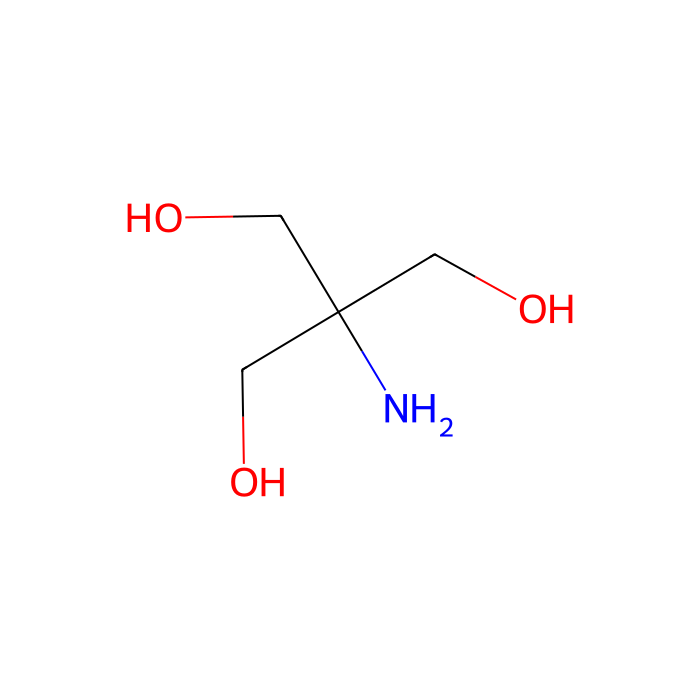
Tris(hydroxymethyl)aminomethane (Tris base) - ≥99%(T) , CAS No.77-86-1

CAS: 77-86-1 Cat. No.: T434094 Formula: C4H11NO3 Molecular Weight: 121.14 Beilstein Registry Number: 741883 EC Number: 201-064-4
AVAILABLE TO ORDER
GRADE & PURITY ≥99%(T)
Synonyms
Triladyl | Tris-hydroxymethyl-aminomethan [German] | Trometamole | NSC65434 | Trometamolum | TROMETHAMINE (II) | CAS-77-86-1 | (tris(hydroxymethyl)aminomethane) | THAM-E | tris-amine | 1,1,1-tris(hydroxymethyl)methanamine | 2-Amino-2-hydroxymethyl-1,3-pro
Storage
Room temperature
★
Size
USA
Germany (EU)*
Price
Qty
100g
T434094-100g
1 In stock
—
$29.90
Enter a quantity for the sizes you want to add.
🧪
Why this grade

≥99%(T) for sensitive chromatographic and analytical workflows requiring minimal baseline interference.

🌡

Storage & shipping

Room temperature Ships Check lot-specific COA for exact specifications.

📋

Quality documents

SDS, COA, datasheet, and spec sheet available for download. Lot-specific COA accessible via lot number lookup.

📚

Literature proof

Cited in 2452 peer-reviewed publications across chromatography, organic synthesis, and cross-coupling reactions.

Overview

Tris is an established basimetric standard and buffer used in biochemistry and molecular biology. It may be used by itself as a buffer or as a component of mixed buffer formulations, such as Tris-EDTA (TE) buffer, Tris-acetate-EDTA (TAE) buffer, Tris-borate-EDTA (TBE) buffer, etc. It is pure, essentially stable, relatively non-hygroscopic and has a high equivalent weight.


Application

Trizma ® base was used as buffer for the following studies: Electrophoretic transfer for the specific identification of isozymes of starch debranching enzyme, α-amylase and 9-amylase. Electrophoretic separation of lipoproteins in polyacrylamide gels. Preparation of TRIS buffer having pH 8. It may be used to compose DN buffer for DNA nick-end labeling of tissue sections.


Other Notes

The pH values of all buffers are temperature- and concentration-dependent. For Tris buffers, pH increases about 0.03 unit per °C decrease in temperature, and decreases 0.03-0.05 unit per ten-fold dilution. For precise applications, use a carefully calibrated pH meter with a glass/calomel combination electrode.

Specifications

Synonyms
Triladyl | Tris-hydroxymethyl-aminomethan [German] | Trometamole | NSC65434 | Trometamolum | TROMETHAMINE (II) | CAS-77-86-1 | (tris(hydroxymethyl)aminomethane) | THAM-E | tris-amine | 1,1,1-tris(hydroxymethyl)methanamine | 2-Amino-2-hydroxymethyl-1,3-pro
Specifications & Purity
≥99%(T)
Storage
Room temperature
Purity
≥99%(T)
Names and Identifiers
Canonical Smiles
C(C(CO)(CO)N)O
IUPAC Name
2-amino-2-(hydroxymethyl)propane-1,3-diol
InChIKey
LENZDBCJOHFCAS-UHFFFAOYSA-N
INCHI
1S/C4H11NO3/c5-4(1-6,2-7)3-8/h6-8H,1-3,5H2
Isomeric SMILES
C(C(CO)(CO)N)O
WGK Germany
2
RTECS
TY2900000
Molecular Weight
121.14
Beilstein
741883

Documentation

📋 Safety Data Sheet (SDS)

Comprehensive hazard, handling, storage, and regulatory compliance document.

Download SDS →

✅ Certificate of Analysis (COA)

Lot-specific quality data. Enter your lot number to retrieve the exact COA.

Look up COA →

📊 Datasheet

Quick-reference summary of product specifications and applications.

View datasheet →

🔬 Specification Sheet

Full quality attributes and acceptance criteria for this grade.

View spec sheet →

Advanced Data

Taxonomic Classification

Taxonomy Tree

KingdomOrganic compounds
SuperclassOrganic nitrogen compounds
ClassOrganonitrogen compounds
SubclassAmines
Intermediate Tree Nodes Alkanolamines
Direct Parent1,2-aminoalcohols
Alternative Parents Primary alcohols  Organopnictogen compounds  Monoalkylamines  Hydrocarbon derivatives  
Molecular FrameworkAliphatic acyclic compounds
Substituents 1,2-aminoalcohol - Organic oxygen compound - Organopnictogen compound - Hydrocarbon derivative - Primary amine - Primary alcohol - Organooxygen compound - Primary aliphatic amine - Alcohol - Aliphatic acyclic compound
DescriptionThis compound belongs to the class of organic compounds known as 1,2-aminoalcohols. These are organic compounds containing an alkyl chain with an amine group bound to the C1 atom and an alcohol group bound to the C2 atom.
External Descriptors a small molecule
3D Structure
Interactive Chemical Structure Model


Associated Targets(Human)
PDE5A Tclin Phosphodiesterase 5A (5113 Activities)
Activity TypeRelationActivity valueUnitsAction TypeJournalPubMed IddoiAssay Aladdin ID
EGFR Tclin Epidermal growth factor receptor erbB1 (33727 Activities)
Activity TypeRelationActivity valueUnitsAction TypeJournalPubMed IddoiAssay Aladdin ID
CA2 Tclin Carbonic anhydrase II (17698 Activities)
Activity TypeRelationActivity valueUnitsAction TypeJournalPubMed IddoiAssay Aladdin ID
ESR1 Tclin Estrogen receptor alpha (17718 Activities)
Activity TypeRelationActivity valueUnitsAction TypeJournalPubMed IddoiAssay Aladdin ID
HMGCR Tclin HMG-CoA reductase (2475 Activities)
Activity TypeRelationActivity valueUnitsAction TypeJournalPubMed IddoiAssay Aladdin ID
NR3C1 Tclin Glucocorticoid receptor (14987 Activities)
Activity TypeRelationActivity valueUnitsAction TypeJournalPubMed IddoiAssay Aladdin ID
INSR Tclin Insulin receptor (5558 Activities)
Activity TypeRelationActivity valueUnitsAction TypeJournalPubMed IddoiAssay Aladdin ID
PGR Tclin Progesterone receptor (8562 Activities)
Activity TypeRelationActivity valueUnitsAction TypeJournalPubMed IddoiAssay Aladdin ID
ADRB2 Tclin Beta-2 adrenergic receptor (11824 Activities)
Activity TypeRelationActivity valueUnitsAction TypeJournalPubMed IddoiAssay Aladdin ID
CHRM2 Tclin Muscarinic acetylcholine receptor M2 (10671 Activities)
Activity TypeRelationActivity valueUnitsAction TypeJournalPubMed IddoiAssay Aladdin ID
ADRB1 Tclin Beta-1 adrenergic receptor (6630 Activities)
Activity TypeRelationActivity valueUnitsAction TypeJournalPubMed IddoiAssay Aladdin ID
HTR1A Tclin Serotonin 1a (5-HT1a) receptor (14969 Activities)
Activity TypeRelationActivity valueUnitsAction TypeJournalPubMed IddoiAssay Aladdin ID
ADRA2A Tclin Alpha-2a adrenergic receptor (9450 Activities)
Activity TypeRelationActivity valueUnitsAction TypeJournalPubMed IddoiAssay Aladdin ID
AR Tclin Androgen Receptor (11781 Activities)
Activity TypeRelationActivity valueUnitsAction TypeJournalPubMed IddoiAssay Aladdin ID
CHRM1 Tclin Muscarinic acetylcholine receptor M1 (12690 Activities)
Activity TypeRelationActivity valueUnitsAction TypeJournalPubMed IddoiAssay Aladdin ID
ACE Tclin Angiotensin-converting enzyme (1423 Activities)
Activity TypeRelationActivity valueUnitsAction TypeJournalPubMed IddoiAssay Aladdin ID
DRD2 Tclin Dopamine D2 receptor (23596 Activities)
Activity TypeRelationActivity valueUnitsAction TypeJournalPubMed IddoiAssay Aladdin ID
MAOA Tclin Monoamine oxidase A (11911 Activities)
Activity TypeRelationActivity valueUnitsAction TypeJournalPubMed IddoiAssay Aladdin ID
CNR1 Tclin Cannabinoid CB1 receptor (20913 Activities)
Activity TypeRelationActivity valueUnitsAction TypeJournalPubMed IddoiAssay Aladdin ID
DRD1 Tclin Dopamine D1 receptor (9720 Activities)
Activity TypeRelationActivity valueUnitsAction TypeJournalPubMed IddoiAssay Aladdin ID
DRD4 Tchem Dopamine D4 receptor (7907 Activities)
Activity TypeRelationActivity valueUnitsAction TypeJournalPubMed IddoiAssay Aladdin ID
ACHE Tclin Acetylcholinesterase (18204 Activities)
Activity TypeRelationActivity valueUnitsAction TypeJournalPubMed IddoiAssay Aladdin ID
PTGS1 Tclin Cyclooxygenase-1 (9233 Activities)
Activity TypeRelationActivity valueUnitsAction TypeJournalPubMed IddoiAssay Aladdin ID
SLC6A2 Tclin Norepinephrine transporter (10102 Activities)
Activity TypeRelationActivity valueUnitsAction TypeJournalPubMed IddoiAssay Aladdin ID
HRH2 Tclin Histamine H2 receptor (5428 Activities)
Activity TypeRelationActivity valueUnitsAction TypeJournalPubMed IddoiAssay Aladdin ID
ADRA1D Tclin Alpha-1d adrenergic receptor (4171 Activities)
Activity TypeRelationActivity valueUnitsAction TypeJournalPubMed IddoiAssay Aladdin ID
HTR1B Tclin Serotonin 1b (5-HT1b) receptor (2801 Activities)
Activity TypeRelationActivity valueUnitsAction TypeJournalPubMed IddoiAssay Aladdin ID
HTR2A Tclin Serotonin 2a (5-HT2a) receptor (14758 Activities)
Activity TypeRelationActivity valueUnitsAction TypeJournalPubMed IddoiAssay Aladdin ID
HTR2C Tclin Serotonin 2c (5-HT2c) receptor (11471 Activities)
Activity TypeRelationActivity valueUnitsAction TypeJournalPubMed IddoiAssay Aladdin ID
ADORA1 Tclin Adenosine A1 receptor (17603 Activities)
Activity TypeRelationActivity valueUnitsAction TypeJournalPubMed IddoiAssay Aladdin ID
CALCR Tclin Calcitonin receptor (2215 Activities)
Activity TypeRelationActivity valueUnitsAction TypeJournalPubMed IddoiAssay Aladdin ID
SLC6A4 Tclin Serotonin transporter (12625 Activities)
Activity TypeRelationActivity valueUnitsAction TypeJournalPubMed IddoiAssay Aladdin ID
ADRA1A Tclin Alpha-1a adrenergic receptor (8359 Activities)
Activity TypeRelationActivity valueUnitsAction TypeJournalPubMed IddoiAssay Aladdin ID
PTGS2 Tclin Cyclooxygenase-2 (13999 Activities)
Activity TypeRelationActivity valueUnitsAction TypeJournalPubMed IddoiAssay Aladdin ID
HRH1 Tclin Histamine H1 receptor (7573 Activities)
Activity TypeRelationActivity valueUnitsAction TypeJournalPubMed IddoiAssay Aladdin ID
ADRA1B Tclin Alpha-1b adrenergic receptor (2912 Activities)
Activity TypeRelationActivity valueUnitsAction TypeJournalPubMed IddoiAssay Aladdin ID
OPRM1 Tclin Mu opioid receptor (19785 Activities)
Activity TypeRelationActivity valueUnitsAction TypeJournalPubMed IddoiAssay Aladdin ID
DRD3 Tclin Dopamine D3 receptor (14368 Activities)
Activity TypeRelationActivity valueUnitsAction TypeJournalPubMed IddoiAssay Aladdin ID
AVPR1A Tclin Vasopressin V1a receptor (5412 Activities)
Activity TypeRelationActivity valueUnitsAction TypeJournalPubMed IddoiAssay Aladdin ID
OPRD1 Tclin Delta opioid receptor (15096 Activities)
Activity TypeRelationActivity valueUnitsAction TypeJournalPubMed IddoiAssay Aladdin ID
OPRK1 Tclin Kappa opioid receptor (16155 Activities)
Activity TypeRelationActivity valueUnitsAction TypeJournalPubMed IddoiAssay Aladdin ID
SLC6A3 Tclin Dopamine transporter (10535 Activities)
Activity TypeRelationActivity valueUnitsAction TypeJournalPubMed IddoiAssay Aladdin ID
KCNH2 Tclin HERG (29587 Activities)
Activity TypeRelationActivity valueUnitsAction TypeJournalPubMed IddoiAssay Aladdin ID
HTR4 Tclin Serotonin 4 (5-HT4) receptor (2068 Activities)
Activity TypeRelationActivity valueUnitsAction TypeJournalPubMed IddoiAssay Aladdin ID
ESR2 Tclin Estrogen receptor beta (9272 Activities)
Activity TypeRelationActivity valueUnitsAction TypeJournalPubMed IddoiAssay Aladdin ID
CYSLTR1 Tclin Cysteinyl leukotriene receptor 1 (2118 Activities)
Activity TypeRelationActivity valueUnitsAction TypeJournalPubMed IddoiAssay Aladdin ID
ERBB2 Tclin Receptor protein-tyrosine kinase erbB-2 (7851 Activities)
Activity TypeRelationActivity valueUnitsAction TypeJournalPubMed IddoiAssay Aladdin ID
CHRM4 Tclin Muscarinic acetylcholine receptor M4 (6041 Activities)
Activity TypeRelationActivity valueUnitsAction TypeJournalPubMed IddoiAssay Aladdin ID
CHRM5 Tclin Muscarinic acetylcholine receptor M5 (4677 Activities)
Activity TypeRelationActivity valueUnitsAction TypeJournalPubMed IddoiAssay Aladdin ID
ADRA2B Tclin Alpha-2b adrenergic receptor (4412 Activities)
Activity TypeRelationActivity valueUnitsAction TypeJournalPubMed IddoiAssay Aladdin ID
Associated Targets(non-human)
Agtr2 Angiotensin II type 2 (AT-2) receptor (803 Activities)
Activity TypeRelationActivity valueUnitsAction TypeJournalPubMed IddoiAssay Aladdin ID
Mc4r Melanocortin receptor 4 (1205 Activities)
Activity TypeRelationActivity valueUnitsAction TypeJournalPubMed IddoiAssay Aladdin ID
Ltc4s Leukotriene C4 synthase (1 Activities)
Activity TypeRelationActivity valueUnitsAction TypeJournalPubMed IddoiAssay Aladdin ID
Sigmar1 Sigma opioid receptor (160 Activities)
Activity TypeRelationActivity valueUnitsAction TypeJournalPubMed IddoiAssay Aladdin ID
Npy1r Neuropeptide Y receptor type 1 (8 Activities)
Activity TypeRelationActivity valueUnitsAction TypeJournalPubMed IddoiAssay Aladdin ID
Cckar Cholecystokinin A receptor (90 Activities)
Activity TypeRelationActivity valueUnitsAction TypeJournalPubMed IddoiAssay Aladdin ID
Nos2 Nitric oxide synthase, inducible (3573 Activities)
Activity TypeRelationActivity valueUnitsAction TypeJournalPubMed IddoiAssay Aladdin ID
Mapk1 MAP kinase ERK2 (650 Activities)
Activity TypeRelationActivity valueUnitsAction TypeJournalPubMed IddoiAssay Aladdin ID
Hdac6 Histone deacetylase 6 (222 Activities)
Activity TypeRelationActivity valueUnitsAction TypeJournalPubMed IddoiAssay Aladdin ID
Mmp9 Matrix metalloproteinase 9 (38 Activities)
Activity TypeRelationActivity valueUnitsAction TypeJournalPubMed IddoiAssay Aladdin ID
Spinacia oleracea (250 Activities)
Activity TypeRelationActivity valueUnitsAction TypeJournalPubMed IddoiAssay Aladdin ID
Rattus norvegicus (775804 Activities)
Activity TypeRelationActivity valueUnitsAction TypeJournalPubMed IddoiAssay Aladdin ID
Luciferin 4-monooxygenase (66902 Activities)
Activity TypeRelationActivity valueUnitsAction TypeJournalPubMed IddoiAssay Aladdin ID
rep Replicase polyprotein 1ab (378 Activities)
Activity TypeRelationActivity valueUnitsAction TypeJournalPubMed IddoiAssay Aladdin ID
Glra2 Glycine receptor (1745 Activities)
Activity TypeRelationActivity valueUnitsAction TypeJournalPubMed IddoiAssay Aladdin ID
Mechanisms of Action
Certificates(CoA,COO,BSE/TSE and Analysis Chart)
C of A & Other Certificates(BSE/TSE, COO):
Analytical Chart:

Find and download the COA for your product by matching the lot number on the packaging.

6 results found

Lot NumberCertificate TypeDateItem
D2307708Certificate of AnalysisJan 20, 2026 T434094
D2307699Certificate of AnalysisFeb 23, 2023 T434094
D2307701Certificate of AnalysisFeb 23, 2023 T434094
D2307702Certificate of AnalysisFeb 23, 2023 T434094
D2307703Certificate of AnalysisFeb 23, 2023 T434094
D2307707Certificate of AnalysisFeb 23, 2023 T434094
Chemical and Physical Properties
SolubilityH2O: 1M at20°C, clear, colorless
Boil Point(°C)219-220 °C/10 mmHg (lit.)
Melt Point(°C)167-173 °C
Molecular Weight121.140 g/mol
XLogP3-2.900
Hydrogen Bond Donor Count4
Hydrogen Bond Acceptor Count4
Rotatable Bond Count3
Exact Mass121.074 Da
Monoisotopic Mass121.074 Da
Topological Polar Surface Area86.700 Ų
Heavy Atom Count8
Formal Charge0
Complexity54.000
Isotope Atom Count0
Defined Atom Stereocenter Count0
Undefined Atom Stereocenter Count0
Defined Bond Stereocenter Count0
Undefined Bond Stereocenter Count0
The total count of all stereochemical bonds0
Covalently-Bonded Unit Count1
Documents & Articles
Aladdin@Guidelines for the formulation of commonly used buffers for biological experiments
Purifying Antibodies with Magnetic Agarose Beads
Differences Between Transformation and Transfection
Eight Common Lysis Buffers
11 Common Methods for Protein Concentration Determination
Five Key Structural Features of Plasmids
Differences Among Antibodies for WB/FC/IP/ChIP/IF/IHC
His-Tagged Protein Purification
General Principles of Antibody Labeling with NHS-Activated Esters, F/P Calculation, and Troubleshooting Guide
Protease & Phosphatase Inhibitor Cocktails: Research Applications and Principles
Pepsin——Structural Features, Enzymatic Properties, and Experimental Application Guide
Scientific Decision-Making for Chromatography Buffer Selection: Tris-HCl vs Phosphate Systems
Electrophoretic Mobility Shift Assay (EMSA) Standard Operating Procedure (SOP)
Alkaline Phosphatase (AP) and Horseradish Peroxidase (HRP) Colorimetric Detection Systems—A Complete Guide: Mechanisms of Soluble Colorimetric vs. Precipitating Substrates, Selection, and Troubleshooting (with Product Navigator Tables 1–3)
Installing a Redox Switch on Biomolecules: Principles, Conjugation Essentials, and an Application Guide for ATTO MB2 NHS ester
A Review of Ten Commonly Used Techniques for Detection, Quantification, and Interaction Analysis in Nucleic Acid Research
Protein Tags Demystified: Classification, Properties, and Suitable Experimental Applications
Why Acridine Can Turn “Trace Molecules” into a Measurable Light Signal: A Mechanistic, Selection, and Troubleshooting Guide to Acridinium Ester Chemiluminescent Immunoassays (Including Product Tables 1–4)
16 Frequently Asked Questions About Nourseothricin
Proteinase K: Frequently Asked Questions
Phycocyanin: A Review of Sources, Structural Features, Production Processes, Applications, and Claimed Benefits
Plant Omics Panorama: Workflow Frameworks and Multi-Omics Integration from Genomics to Transcriptomics, Proteomics, and Metabolomics
Acid Phosphatase: Dephosphorylation Reactions in Acidic Microenvironments and Their Research, Assay, and Detection Applications
Amino Acid Oxidases: Oxygen-Dependent Oxidative Deamination Systems and Their Analytical and Applied Uses
Diaphorase: NAD(P)H-Dependent Electron-Transfer Activity and Its Applications in Detection and Research
Glutathione (GSH) Quantification: Method Systems, Experimental Workflows, and Key Quality-Control Considerations
Haptoglobin (Hp): A Key Carrier in the Free Hemoglobin Clearance–Detoxification Axis, with Assays and Applications
Deoxyribonuclease (DNase): DNA Hydrolytic Cleavage Properties, Methodological Value, and Multi-Context Applications
Urinary Follicle-Stimulating Hormone (uFSH): Source Attributes, Molecular Properties, and Research Application Frameworks
Lipase (Triacylglycerol Hydrolase): Interfacial Catalysis, Selectivity Classes, and Assay/Application Systems
Cholesterol Esterase: Mechanistic Insights and Application Frameworks Driven by Interfacial Hydrolysis
Agarose Precast Gels: Composition, Advantages, and Application Workflows for Standardized Nucleic Acid Electrophoresis Matrices
EMSA PAGE Precast Gels: Principle Alignment, Performance Advantages, and Application Scenarios
Angiotensin-Converting Enzyme (ACE): A Review of Molecular Features, Catalytic Functions, and Research and Translational Applications
Chymosin: A Review of Molecular Features, Coagulation Kinetics, and Activity Evaluation
Micrococcal Nuclease (MNase): A Technical Review of Enzymatic Properties, Reaction Control, and Research and Biomanufacturing Applications
Hemicellulases: A Review of Substrate Specificity, Catalytic Systems, and Research and Industrial Applications
Phytase: Enzymological Properties, Mechanism of Action, and Applications in Feed and Food
Chitinases: Substrate-Specific Degradation Mechanisms, Enzymatic Properties, and Application Directions
Paeonol: Physicochemical Features, Uses, and Key Points for Research Applications
Glutaraldehyde-mediated Microbial Inactivation: Chemical Mechanisms, Determinants, and Key Validation Considerations
Methodological Studies on Glycoprotein Structural Characterization and Quality Attribute Analysis
Sulfation Landscape Remodeling and Its Biological Effects
The Methodological Value of DSC: Building NHS-Type Activated Intermediates and Deciding When to Use Them
Acetyl-Group Metabolic Enzyme Network and In Vitro Enzymology Analysis
Research Framework for Multi-Enzyme Digestion Strategies and Optimization of Proteomic Coverage
Decision Logic for Peptide Synthesis Routes: Applicability and Criteria for Choosing among SPPS, LPPS, and Recombinant Expression
The Positioning of pNPP in ALP Testing: Quantitative Detection Logic, Application Scenarios, and Selection Criteria
Selection Strategy for PBS, TBS, PBST, and TBST Washing Systems in IHC
Why Did Nickel Agarose Beads Lose Their Color?
Buffer exchange of a sample using a dialysis bag
Stability of Recombinant Enterokinase at 25 °C
Peptide Mapping for Protein Structure Identification
Common Types of Buffer Solutions
Why Is EDTA So Widely Used?
Standard Operating Procedure (SOP) for Bis-Tris Polyacrylamide Gel Electrophoresis (SDS-PAGE)
Protein Tris-Acetate Electrophoresis System Standard Operating Procedure
Common Protectants and Formulations for Protein Storage
Structural and Catalytic Roles of Metal Ions in Protein Enzyme Activity
Why Did My Ni-Agarose Beads Turn Black or Brown?
Standard Operating Procedure (SOP) for the Protein Tris–Glycine Electrophoresis System
Protein Tris-Tricine Electrophoresis System Standard Operating Procedure
Citations of This Product
Solution Calculators
Reviews

Customer Reviews

Application Protocols

No item-specific, validated protocols are provided for this SKU. The following literature-style outlines are provided for guidance only and should be validated in your laboratory.

Example: 1 M Tris–HCl, pH 8.0 (literature)

  • Dissolve 121.14 g Tris base in ~800 mL water.
  • Adjust temperature to 25 °C; titrate with concentrated HCl to pH 8.0.
  • Bring to 1 L with water; 0.22 µm filter if sterility is required; store at RT or 2–8 °C.

Example: 10× TBE buffer (literature)

  • Dissolve appropriate amounts to give ~0.89 M Tris base, ~0.89 M boric acid, 20 mM EDTA; bring to volume with water.
  • Mix until clear; dilute to 1× for use in DNA electrophoresis.

Example: Quenching an acylation (literature)

  • After reaction completion, add an aqueous solution of Tris (1–2 eq relative to residual acylating agent) with stirring at 0–25 °C.
  • Separate layers; wash organic phase with water; dry and concentrate.

For antibody-type application fields (WB, IHC, IF, FC): Not applicable to this product.

Biological Roles

Tris is not a natural metabolite but is widely used as a buffering agent in biological research due to its amine functionality and suitable pKa near physiological pH.

General biochemical characteristics (literature):

  • Protonation behavior: Tris accepts a proton to form its conjugate acid (Tris·H+), providing buffering capacity in the ~7–9 pH window.
  • Minimal UV absorbance: Compatible with nucleic acid and protein quantification at 260/280 nm with low background.
  • Metal interactions: Exhibits weak coordination to some metal ions; typically less chelating than amine-polycarboxylates. In presence of borate, forms borate esters (basis of TBE buffers).
  • Enzyme compatibility: Often suitable for enzymes operating near neutral pH, but the primary amine can interact with active sites or cofactors; assay validation is recommended.
  • Biomolecular interactions: The amine can react with activated esters (e.g., NHS esters), potentially quenching labeling reactions; avoid Tris in such steps.

Use considerations:

  • Temperature sensitivity: Buffer pH shifts with temperature; prepare and calibrate at the intended working temperature.
  • CO2 exposure: Although less sensitive than bicarbonate buffers, open containers can undergo slight pH drift over time; seal and minimize prolonged air exposure to maintain pH accuracy.
Buffer Applications

Primary use-case: Tris is a cornerstone buffer component across molecular biology and protein chemistry.

Key buffering characteristics (literature):

  • pKa (25 °C): ~8.06; effective range ~pH 7.2–9.0.
  • Temperature coefficient: ΔpKa/ΔT ≈ −0.028/°C; always adjust pH at the working temperature.

Common formulations (literature examples):

  • 1.0 M Tris–HCl, pH 8.0: Dissolve Tris base in ~80% of final volume of water (e.g., 121.14 g per 1 L for 1 M), cool/heat to working temperature, adjust to pH 8.0 with concentrated HCl, bring to volume, and filter-sterilize (0.22 µm) if sterility is required.
  • TAE (50× stock): 2 M Tris base, 1 M acetic acid, 50 mM EDTA (disodium), dilute to 1× for agarose electrophoresis.
  • TBE (10× stock): ~0.89 M Tris, ~0.89 M boric acid, 20 mM EDTA; dilute to 1× for nucleic acid electrophoresis.
  • Tris–glycine buffers: Standard SDS-PAGE running buffer and Western transfer buffer formulations use Tris with glycine (and SDS for running buffer; methanol often for transfer).

Practical tips:

  • Use high-purity, nuclease-free Tris for DNA/RNA applications.
  • Calibrate pH meter at the buffer’s working temperature; pH can shift by ~0.3 units between 4 °C and 37 °C for Tris solutions.
  • Avoid Tris during amine-reactive labeling (e.g., NHS-ester conjugations); substitute phosphate/HEPES during coupling, then exchange back to Tris if desired.
Green Alternatives

Environmental and safety profile (general):

  • Tris base is nonflammable, has low volatility, and is typically of low acute toxicity—attributes favorable from a green chemistry and EHS perspective.
  • Main considerations are aquatic release of high-ionic-strength buffers and energy associated with temperature control due to Tris’s temperature-dependent pKa.

Alternatives and trade-offs (literature/general):

  • HEPES/MOPS/MES (Good’s buffers): Offer low metal binding and minimal temperature/pCO2 sensitivity. Trade-offs include higher cost and, in some cases, more complex synthesis with larger environmental footprints.
  • Phosphate buffers: Abundant and inexpensive with excellent biodegradability, but can precipitate with Ca2+/Mg2+ and may inhibit phosphoryl-transfer enzymes.
  • Bicarbonate/CO2 systems: Renewable and biocompatible but require CO2 atmosphere control; pH drifts in open systems.

Comparison snapshot (general):

  • Tris: pKa ~8.06 at 25 °C; strong temperature dependence; very low UV absorbance; economical.
  • HEPES: pKa ~7.5; very low temperature coefficient; higher cost; minimal UV.
  • Phosphate: Multiple pKa values; minimal temperature effect; potential precipitation with divalent cations.

Greener use tips:

  • Prepare only the volume needed; avoid unnecessary disposal of high-salt buffers.
  • Reuse/recirculate electrophoresis buffers where method allows, monitoring conductivity and pH.
  • Use room temperature protocols when possible to reduce active temperature control demands.
Pharmaceutical Uses

No therapeutic claims are made. The following are general excipient and manufacturing roles for tromethamine (Tris) in pharmaceutical contexts (literature/general):

  • Buffering agent: Maintains pH in the mildly alkaline range for small-molecule and biologic formulations where stability requires pH ~7–9.
  • Process buffer: Widely used in upstream and downstream bioprocessing (chromatography equilibration/wash, viral inactivation quench, UF/DF diafiltration buffers), subject to grade and documentation.
  • Excipient status: Tromethamine/Tris appears in major pharmacopeias (e.g., USP–NF, Ph. Eur.) as a compendial excipient; specific monograph tests and limits apply per pharmacopeia (consult the current compendium and CoA).
  • Compatibility notes: The primary amine can react with activated esters and aldehydes; assess interactions with actives and packaging (e.g., epoxy-lined closures) during development.
  • Analytical considerations: Low UV absorbance facilitates UV-based release assays; ionic strength and pH should be controlled to meet method system-suitability criteria.

Item-specific compliance or grade claims are not provided for this SKU; refer to the CoA/Spec Sheet and regulatory documentation requirements for your intended use.

Physical Properties

Item-specific specs: Not specified for this item; refer to CoA/Spec Sheet.

Typical physical constants (literature/general):

  • Appearance: White crystalline solid (literature)
  • Molecular weight: 121.14 g/mol (literature)
  • Melting point: ~168–172 °C (literature; may discolor/decompose on prolonged heating)
  • Boiling point: Not applicable (decomposes before boiling, literature)
  • Density (solid): Not well-defined; bulk density varies with granulation (literature)
  • Solubility: Highly soluble in water (e.g., >500 g/L at 25 °C, literature); soluble in methanol and ethanol; practically insoluble in nonpolar solvents (literature)
  • LogP (oct/water): Strongly negative (very hydrophilic; XlogP3 ≈ −2 to −3, literature)
  • pKa (Tris·H+/Tris): ~8.06 at 25 °C; temperature coefficient ΔpKa/ΔT ≈ −0.028 per °C (literature)
  • pH of solutions (for guidance): 1.0 M Tris base in water typically ~10.4–10.6 before acid adjustment (literature)
  • UV cut-off: Tris is weakly UV-absorbing; usable at 260/280 nm with minimal background compared to many organic buffers (literature)

Practical notes (general):

  • Hygroscopicity: Low-to-moderate; keep container tightly closed to prevent moisture uptake and caking (general practice).
  • Heat sensitivity: Extended heating can cause Maillard-type browning in presence of sugars or carbonyls; prepare fresh when purity of buffer is critical (general).
Quality & Grades

Item-specific grade/purity: Not specified for this item; refer to CoA/Spec Sheet.

Context for common Tris grades (general information to aid selection):

  • Reagent grade/AR: Suitable for routine buffer preparation where trace organics/UV background are not critical.
  • Molecular biology/bioultra grade: Low nuclease (RNase/DNase) and protease activity; low UV-absorbing impurities; intended for nucleic acid/protein electrophoresis and enzymology.
  • BioPerformance/HPLC grade: Tight control of particulates and UV absorbance at 210–280 nm; recommended when UV detection is used or when background must be minimal.
  • Endotoxin-tested/cGMP-supporting grades: For bioprocess buffers; documentation packages (BSE/TSE, residual solvents, elemental impurities) typically available from suppliers.

Stabilizers/antioxidants: Tris base is typically offered neat without stabilizers; if any stabilizer is used, it will be declared on the CoA/Spec (not specified for this item).

What to check on the CoA/Spec Sheet:

  • Assay (typically by acidimetric titration), loss on drying, UV absorbance (230/260/280 nm), heavy metals/elemental impurities, residue on ignition/ash, chloride/nitrate/sulfate tests, bioburden/endotoxin and nuclease testing for bio grades.

Traceability and lot consistency:

  • For sensitive biological workflows (e.g., long electrophoresis runs, enzyme assays), prefer a grade with certified low UV background and nuclease-free status.
Reaction & Applications

This product is most commonly used as a buffer component in biochemical and molecular biology workflows. It can also participate in organic reactions due to its primary amine and triol functionalities.

Biochemical applications (literature/general):

  • Electrophoresis buffers: TAE (Tris–acetate–EDTA), TBE (Tris–borate–EDTA), Tris–glycine (SDS-PAGE running/transfer buffers), and Tris–glycine–HCl (Laemmli).
  • Nucleic acid workflows: pH-stable environments for ligation, PCR setup, and storage when nuclease-free quality is ensured.
  • Protein biochemistry: Lysis buffers, chromatography equilibration/wash buffers, enzyme assay media (after confirming compatibility), dialysis and sample storage.

Synthetic/analytical applications (literature):

  • Base/nucleophile: Catalyzes acylation/esterification in protic media, promotes epoxide ring-opening, and can quench acylating/sulfonylating reagents.
  • Scavenger: Captures acid and electrophiles in workups; forms salts with strong acids for facilitated separation.
  • Complexation: Forms weak complexes/borate esters (basis of Tris–borate buffers), and transient imine/Schiff-base adducts with reactive carbonyls.

Practical tips:

  • Buffer prep: Adjust pH with HCl (for Tris–HCl) at the working temperature; Tris pH drifts with temperature (−0.028 pKa/°C, literature).
  • Electrophoresis: Use high-purity Tris to reduce background conductivity and Joule heating; verify ionic strength for long runs.
  • Enzymology: Verify enzyme compatibility; some enzymes exhibit activity shifts in Tris due to amine interactions or metal coordination.
Reaction Conditions

Guidance below summarizes common, literature-based conditions for typical uses of Tris base; adapt to your system and consult primary references.

Buffer preparation (literature):

  • Solvent: Water (Type 1 recommended for analytical/biological work).
  • Concentration: 10–1000 mM depending on application (e.g., 25–50 mM for enzyme assays; 0.89 M stocks for electrophoresis buffers).
  • Temperature: Adjust pH at working temperature due to ΔpKa/ΔT ≈ −0.028/°C. Example: a solution at pH 8.0 at 25 °C may read ~pH 7.7 at 4 °C.
  • Sterilization: Filter through 0.22 µm; avoid autoclaving with carbonyl-containing components (risk of reactions/browning).

As base/nucleophile in synthesis (literature/general):

  • Solvents: Water, MeOH, EtOH; for less polar substrates consider DMSO/DMF co-solvents.
  • Temperatures: Ambient to 60 °C commonly sufficient for neutralizations and epoxide openings; higher temperatures may lead to side reactions.
  • Catalysis/quenching: Use 1–3 equivalents relative to electrophile for scavenging; monitor by TLC/LC.
  • Metal complexation: Typically weak; if metal catalysis is involved, verify that Tris does not inhibit the catalyst.

Electrophoresis buffers (literature):

  • TAE/TBE working concentrations: 1×; reuse possible with monitoring of conductivity and pH.
  • SDS-PAGE running buffer: Tris–glycine–SDS at pH ~8.3; maintain temperature to limit Joule heating.

Expected performance:

  • Tris buffers provide stable pH within their effective range under moderate ionic strengths; verify by pH-meter calibration and ionic strength adjustments.
Safety & Handling

Item-specific hazard data: Not specified for this item; refer to SDS.

General GHS guidance (literature/typical):

  • Classification: Often not classified as hazardous or may be Eye Irrit. 2A; check the specific SDS for this SKU.
  • Signal word and H/P statements: Not specified for this item; refer to SDS.

Safe handling and PPE (best practice):

  • Wear appropriate PPE: laboratory coat, safety glasses/goggles, and nitrile gloves.
  • Avoid creating or breathing dust; use local exhaust ventilation when weighing.
  • Wash thoroughly after handling; avoid contact with eyes and prolonged skin contact.

Storage and incompatibilities (general):

  • Storage temperature: Room temperature (per Product Data); keep tightly sealed in a dry place.
  • Incompatible materials: Strong acids (will form Tris salts and heat may evolve upon neutralization), acylating agents, sulfonyl chlorides, isocyanates, strong oxidizers, aldehydes (may undergo Schiff base or other reactions), and reactive carbonyl compounds.
  • Container advice: Use clean, dry utensils; reseal promptly to minimize moisture uptake and contamination.

First aid overview (general):

  • Inhalation: Move to fresh air; if symptoms persist, seek medical attention.
  • Skin contact: Wash with soap and water; remove contaminated clothing.
  • Eye contact: Rinse cautiously with water for several minutes; remove contact lenses if present and easy to do; seek medical attention if irritation persists.
  • Ingestion: Rinse mouth; seek medical advice if unwell.

Always consult the SDS for authoritative, product-specific safety information.

Solvent Selection

Applicability: Tris base is a solid buffer component rather than a solvent. However, proper solvent choice is essential for dissolving and using Tris effectively.

Solubility/miscibility profile (literature):

  • Highly soluble in water; readily forms clear solutions over a wide concentration range.
  • Soluble in lower alcohols (methanol, ethanol); limited or negligible solubility in aprotic nonpolar solvents (e.g., hexanes, toluene) and limited in chlorinated solvents.

Polarity and dielectric considerations (general):

  • Tris is strongly hydrophilic and ionizable; aqueous systems are preferred. For organic syntheses requiring Tris as a base/nucleophile, polar protic (MeOH, EtOH) or highly polar aprotics (DMSO, DMF) can be used to improve dissolution.

When to choose Tris-based buffers vs alternatives:

  • Choose Tris when pH 7.2–9.0 is desired, with low UV absorbance and minimal metal chelation.
  • Consider HEPES/MOPS/MES for reduced temperature dependence of pH or where CO2 absorption and pH drift must be minimized in open systems.
  • Consider phosphate when buffering near pH 6.5–7.5 and compatibility with enzymes/life science assays is validated; avoid phosphate with calcium/magnesium precipitation risks.

Quick comparison (general):

  • Tris: pKa ~8.06 (25 °C), ΔpKa/ΔT ≈ −0.028/°C; excellent conductivity for electrophoresis; minimal UV background.
  • HEPES: pKa ~7.5, very low temperature coefficient; zwitterionic Good’s buffer; higher cost.
  • Phosphate: Multiple pKa values; may interact with metal-dependent enzymes; UV-transparent.
Storage & Reconstitution

Item-specific storage condition:

  • Storage Conditions: Room temperature (per Product Data).
  • Shipped in: Not specified for this item; refer to CoA/Spec Sheet.

General storage guidance (solid):

  • Keep tightly closed in a clean, dry container; protect from moisture and reactive vapors (acids, carbonyls).
  • Store away from strong oxidizers and acids.

Reconstitution/preparation (literature/general):

  • Dissolution: Add Tris base to water with stirring; it dissolves readily. For sterile applications, use sterile water and 0.22 µm filter-sterilize the final solution.
  • pH adjustment: For Tris–HCl, adjust with HCl at the intended working temperature due to temperature-dependent pKa.
  • Typical stock solutions: 0.5–2.0 M (depending on downstream dilution); label with concentration, pH, and preparation temperature.

Solution stability (literature/general):

  • Room temperature: Clear, unsterilized Tris solutions are typically stable for days to weeks; for critical assays, prepare fresh or store at 2–8 °C.
  • Refrigerated (2–8 °C): Weeks to months when sterile and in clean containers; minimize headspace and seal to reduce pH drift.
  • Freezing: Generally not necessary; if frozen, allow to thaw completely and mix before use.

Research Use Only: For research use only (per Product Data).

Structure & Identity

Overview: Tris(hydroxymethyl)aminomethane (Tris base) is a small, highly polar, primary alkanolamine widely used as a biological buffer component.

Item-specific (from Product Data):

  • SKU: T434094
  • Product name: Tris(hydroxymethyl)aminomethane (Tris base)
  • CAS: 77-86-1
  • PubChem CID: 6503
  • InChIKey: 197534 (as provided)
  • SMILES: Not specified for this item; refer to CoA/Spec Sheet.

Literature identity (for reference):

  • Synonyms: Tris base; THAM; Tromethamine; 2-amino-2-(hydroxymethyl)-1,3-propanediol
  • Molecular formula: C4H11NO3 (literature)
  • Molecular weight: 121.14 g/mol (literature)
  • SMILES (one representation): N(CO)(CO)C(O)CO (literature)
  • InChIKey: KQNIJPIBGCXZOO-UHFFFAOYSA-N (literature)

Structural features (general description):

  • Core scaffold: A quaternary carbon (C-2) bearing one primary amino group (–NH2) and three hydroxymethyl substituents (–CH2OH).
  • Functional groups: One primary amine and three primary alcohols (triol). No rings, no stereocenters (achiral).
  • 2D description: Central carbon connected to –NH2 and three –CH2OH groups, producing a highly hydrogen-bonding, polyfunctional molecule.
  • Acid/base character: A weak base (conjugate acid pKa ~8.06 at 25 °C, literature), enabling buffering around neutral to slightly basic pH when protonated (as Tris·H+).
Synthetic Utility

Although best known as a buffer, Tris base is a versatile multifunctional reagent owing to its primary amine and triol functionality.

Functional-group reactivity (literature/general):

  • As a base/nucleophile: Neutralizes acids; participates in nucleophilic acyl substitution (forms amides/carbamates with activated carboxylic derivatives and isocyanates) and promotes epoxide ring-opening in protic/polar media.
  • Triol reactivity: Forms borate esters with boric acid (reversible), enabling borate-complexation chemistry; can form carbonate/carbamate derivatives under activating conditions.
  • Scavenging: Efficiently traps acid chlorides/sulfonyl chlorides and activated esters during workup, improving product purity.
  • Ligand behavior: The amine and hydroxyls can chelate metals weakly; Tris-derived ligands (e.g., TREN variants) illustrate the scaffold’s utility in coordination chemistry.

Retrosynthetic value and practical use:

  • Protecting/derivatization: The amine can transiently protect/react with electrophilic handles, assisting in purification or analysis.
  • Phase-transfer aid: In water-rich biphasic systems, protonated Tris can enhance partitioning of acidic species into the aqueous phase.
  • Green aspect: Nonvolatile, low-toxicity base alternative in place of volatile amines for some neutralizations.

Caveats:

  • Limited solubility in many nonpolar organics; choose solvent systems accordingly (water/MeOH/EtOH, DMSO, DMF).
  • Competing hydrogen bonding may slow some reactions; catalysts or activation may be required.
Target Specificity

Not applicable to this product type. This item is a small-molecule buffer component and not a biological targeting reagent (e.g., antibody, ligand, or probe). No antigen/epitope specificity data are associated with this SKU.

Shall we send you a message when we have discounts available?

Remind me later

Thank you! Please check your email inbox to confirm.

Oops! Notifications are disabled.